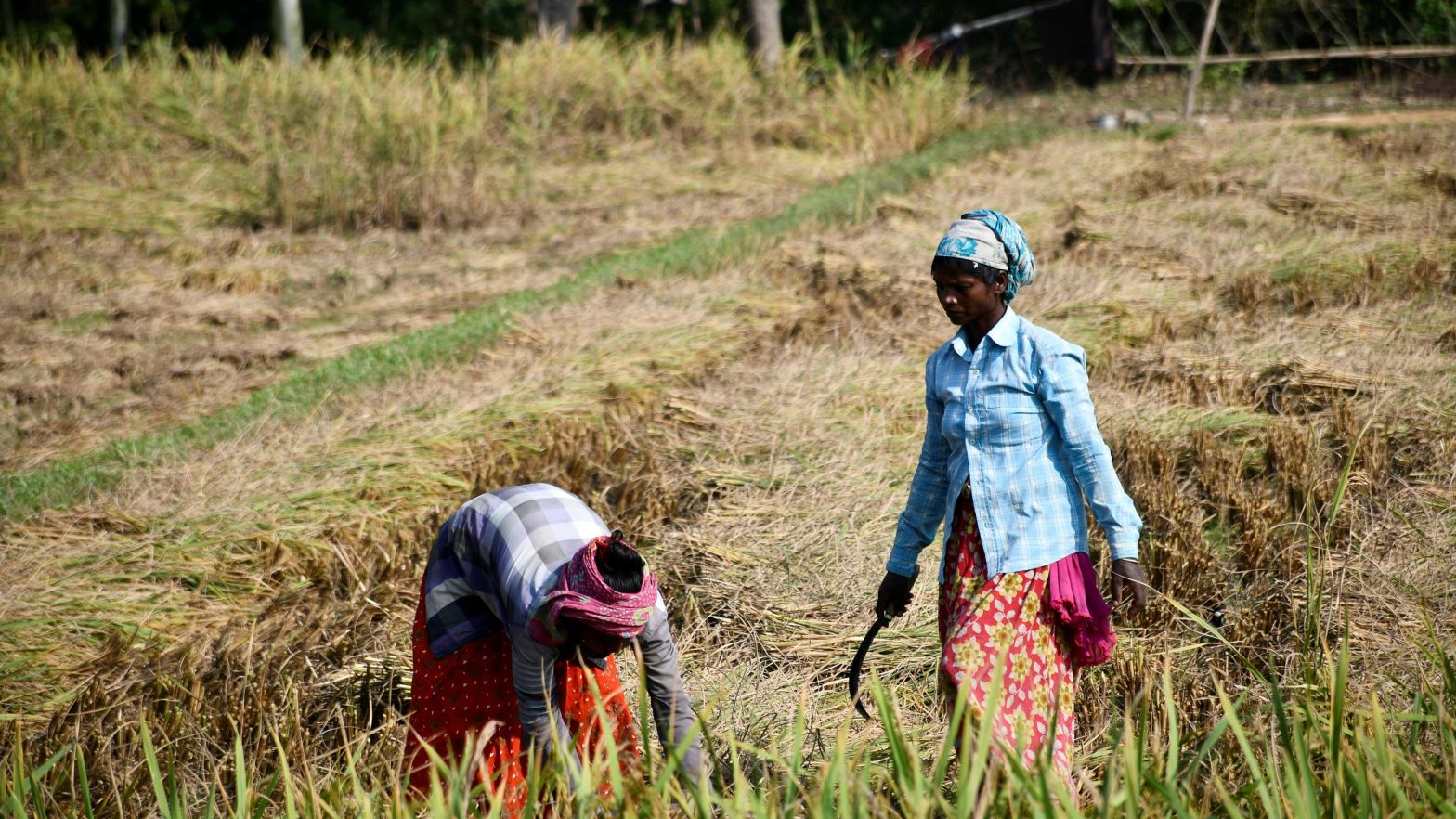
Rice is not just Bangladesh’s principal crop — it is the backbone of the nation’s food system, rural economy, and cultural identity. From daily meals to national economic planning, rice underpins nearly every aspect of agricultural life in Bangladesh. Despite having limited arable land and one of the highest population densities in the world, Bangladesh consistently ranks among the world’s top rice‑producing countries, a position achieved through decades of research, farmer innovation, and policy focus.
While Bangladesh is not a major rice exporter by global standards, its ability to consistently feed its population of more than 175 million people places it firmly among global leaders in rice production efficiency and resilience. This distinction is more accurately framed as production leadership rather than export dominance, reflecting the country’s priority on domestic food security.
Bangladesh’s Global Standing in Rice Production
Bangladesh is regularly ranked as the third‑largest rice producer globally, following India and China. Annual production has surpassed 40 million metric tonnes in recent years, a milestone reflecting improved yields rather than significant land expansion.
This production capacity is remarkable given Bangladesh’s geographic constraints. The country covers approximately 148,000 square kilometres, yet rice alone accounts for the vast majority of agricultural output. Rice represents about three‑quarters of total cropped land and nearly all cereal production nationwide.
Rather than exporting large volumes, Bangladesh produces rice primarily to stabilize domestic prices, ensure food availability, and limit reliance on international markets, which can be volatile during climate or geopolitical disruptions.
How Much Land Is Devoted to Rice?
Rice cultivation in Bangladesh spans roughly 10.5 to 11 million hectares annually, reaching nearly 12 million hectares in 2024 according to the Yearbook of Agricultural Statistics. When compared with the total land area of the country, rice farming occupies an extraordinary share of usable terrain, accounting for around 80 percent of land use.
READ: Saudi Arabia, the Desert Kingdom That Decided to Feed Itself
Key characteristics of land use in Bangladesh’s rice sector include the widespread practice of cultivating multiple cropping cycles on the same plots of land throughout the year. Production is heavily reliant on irrigated dry-season, or Boro, rice, which allows farmers to maintain output despite limited rainfall during parts of the year. At the same time, rice cultivation continues to face pressure from urban expansion and industrial development, which gradually reduce the amount of land available for agriculture. Despite this long-term decline in total farmland, rice production has remained resilient due to ongoing improvements in yield and the intensification of farming practices.
Three Rice Seasons That Power Production
Bangladesh’s rice dominance is built on a unique three‑season cultivation system:
Aus (Pre-Monsoon)
Aus rice is cultivated during the pre-monsoon period, typically between March and July, when rising temperatures signal the start of the agricultural cycle. This season contributes a comparatively smaller share to Bangladesh’s overall rice production due to its shorter growing period and lower yield potential, accounting for roughly 7 percent of national rice output. Because Aus cultivation relies heavily on natural rainfall rather than controlled irrigation, it is particularly vulnerable to climate variability, including delayed monsoons and early dry spells. Aus rice is grown primarily in the north-eastern region of the country, including areas around Netrakona, Sylhet, and Kishoreganj, with additional cultivation extending into parts of the north-west.
Aman (Monsoon)
Aman rice is grown throughout the monsoon months and has historically formed the backbone of Bangladesh’s rice economy, accounting for approximately 41 percent of total production. Cultivated during the peak rainy season, Aman once represented the largest share of national output prior to the expansion of dry-season irrigation. Despite its continued importance, Aman rice remains highly sensitive to flooding, as excessive rainfall or prolonged waterlogging can sharply reduce yields in low-lying landscapes. Cultivation is concentrated in the southern and coastal regions, particularly around areas such as Patuakhali and Khulna, where monsoon rainfall is abundant, but flood risk is elevated.
Boro (Dry Season)
Boro rice is produced during the dry season and has become the single largest contributor to Bangladesh’s rice output, accounting for approximately 52 percent of total production. Unlike Aus and Aman, Boro cultivation depends entirely on irrigation, giving farmers greater control over water availability, planting schedules, and crop management. This season has benefited most from the widespread adoption of high-yield seed varieties, mechanized farming equipment, and modern input practices, making it the most productive rice cycle in the country. Boro rice is primarily cultivated in the northern region, including areas around Rangpur, Bogura, and Rajshahi, which are comparatively drier and face periodic freshwater scarcity.
READ: The Long Rise of California’s Almond Industry
The expansion of Boro rice cultivation since the 1980s has been a defining factor in Bangladesh’s agricultural transformation, enabling sustained production growth despite land constraints. Together, the Aus, Aman, and Boro seasons produced an estimated 40.7 million tonnes of rice in 2024, with an additional million-plus tonnes coming from aromatic rice varieties, which serve both domestic and niche export markets.
Rice Exports: Limited but Strategic
Although Bangladesh produces rice at a global scale, exports remain modest. Annual rice exports typically account for a very small percentage of total production and are carefully regulated by the government.
Exports mainly consist of aromatic and specialty rice varieties that are produced in limited quantities and command higher value in select markets. These shipments are typically small in scale and are directed toward neighbouring countries as well as niche international buyers rather than mass commodity markets. In years when domestic production exceeds national demand, the government may authorize temporary export windows, allowing controlled shipments while safeguarding local food supply and price stability.
This cautious export strategy reflects a long‑standing policy priority: domestic food security first. Rather than competing aggressively with global exporters like India or China, Bangladesh focuses on price stability and availability at home.
Who Owns and Controls Rice Farms in Bangladesh?
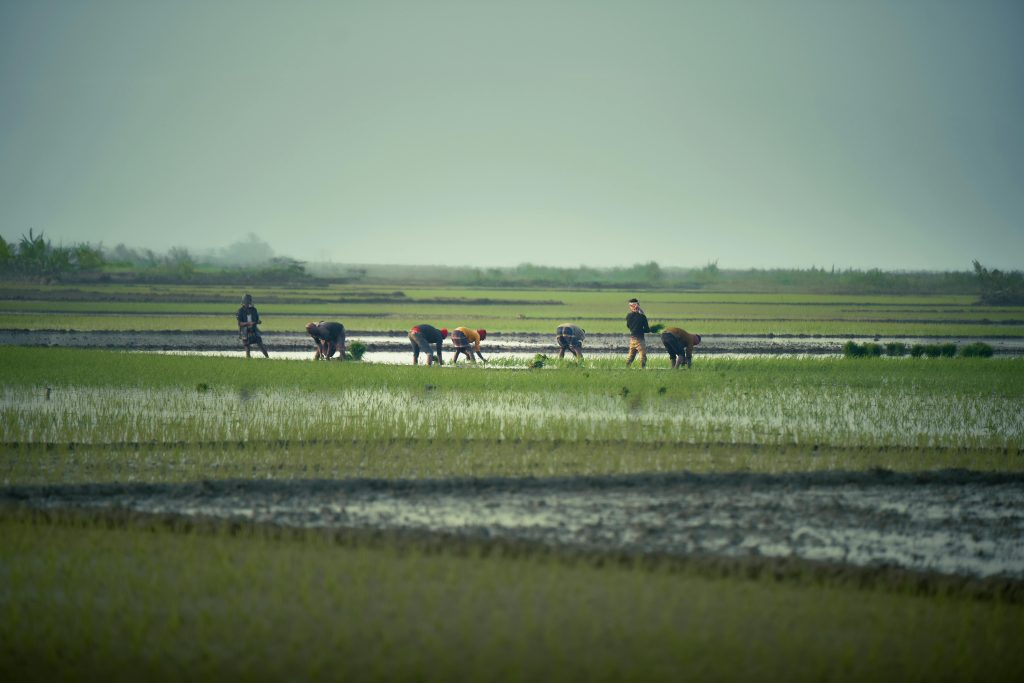
Bangladesh’s rice sector is overwhelmingly smallholder‑driven. Millions of farmers cultivate rice on plots that are often less than two hectares in size.
Farm Ownership Structure
Rice farming in Bangladesh is predominantly carried out on privately owned, family-managed farms that are passed down through generations. Large-scale corporate farming operations play only a limited role in rice production, with most cultivation remaining decentralized and small in scale. In many rural areas, sharecropping continues to be a common arrangement, allowing landowners and tenant farmers to divide production risks and returns.
Cooperatives and Farmer Groups
Formal agricultural cooperatives exist in Bangladesh, but do not play a dominant role in the rice sector. Instead, farmers more commonly rely on informal groups and local associations to support day-to-day farming operations. These collaborations often focus on coordinating shared access to irrigation infrastructure, pooling resources for the use of farming equipment, and jointly purchasing inputs such as seeds and fertilizer to reduce costs and improve efficiency.
Large-scale corporate control of rice farmland is minimal compared to many other countries, helping preserve a decentralized farming model dominated by smallholder producers. Within this structure, a limited number of domestic food companies — including PRAN Foods and Square Food and Beverages — participate primarily at the processing, branding, and distribution stages, building market presence through packaged rice and value-added products rather than direct ownership of agricultural land.
Role of Government and Public Institutions
Government involvement has been central to Bangladesh’s rice success. The most influential institution is the Bangladesh Rice Research Institute (BRRI), established in 1970.
BRRI has played a central role in advancing rice production by developing hundreds of high-yield and stress-tolerant rice varieties suited to Bangladesh’s diverse growing conditions. Its research efforts have significantly improved resistance to pests and diseases, reducing crop losses, and stabilizing yields. The institute has also tailored rice varieties specifically for saline coastal zones, flood-prone lowlands, and drought-affected regions, helping farmers maintain production in challenging environments.
READ: How Much of Canada Is Actually Farmland?
Beyond research, other government bodies support rice farmers through targeted policy and financial mechanisms. These include subsidies for fertilizer and irrigation equipment to reduce input costs, guaranteed minimum procurement prices that protect farmers from market volatility, and public grain storage systems that help stabilize supply, and prices. Taken together, this institutional support lowers production risk and encourages farmers to continue investing in rice cultivation.
Technological Advancements Transforming Rice Farming
Bangladesh’s rice productivity gains are rooted in steady technological adoption.
High‑Yield and Hybrid Seeds
Modern varieties produce significantly higher yields than traditional strains while maturing faster and tolerating adverse conditions. ACI Hybrid Dhan 6 is a popular slender variety from ACI Seeds, valued for its consistency and adaptability. ISPAHANI Hybrid Dhan 9 stands out for its robust grains, impressive spikelet count of up to 350, and reliable performance in both Boro and late Boro seasons. Elite varieties like AZ7006, Dhani Gold, and INH-16019 have been tested for challenging coastal regions, with Dhani Gold demonstrating excellent tillering and strong yield potential even under stress conditions.
Mechanization
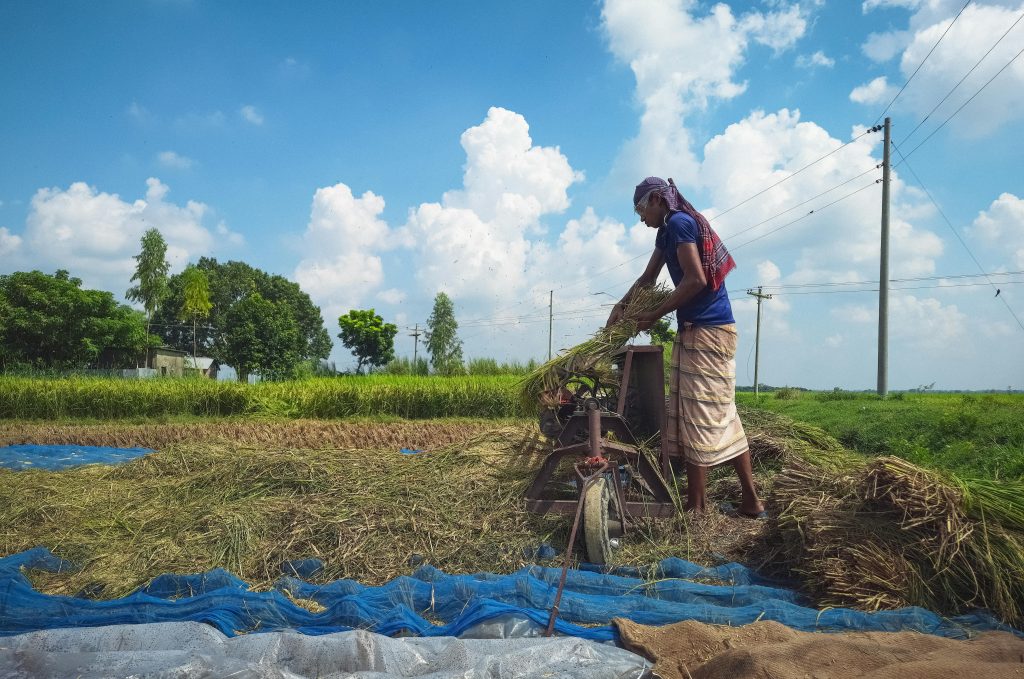
The increased use of power tillers, mechanical reapers, and small-scale harvesters has significantly reduced labour shortages in Bangladesh’s rice sector. These machines have improved operational efficiency across planting and harvesting stages, particularly during peak harvest periods when labour demand is highest and time sensitivity is critical.
Irrigation Expansion
The widespread use of shallow tube wells and pump‑based irrigation systems has enabled reliable dry‑season farming, particularly for Boro rice.
Digital Advisory Services
Mobile-based agricultural advisory services now play an expanding role in supporting rice farmers with timely, field-level guidance. These digital tools assist growers in determining optimal planting schedules, identifying pests and crop diseases, and applying fertilizer more accurately, helping improve productivity while reducing unnecessary input use.
Corporate and Private‑Sector Involvement
Private companies play a growing, though largely supportive role in Bangladesh’s rice sector by strengthening upstream and downstream segments of the value chain rather than controlling farmland. Corporate involvement is most visible in seed production and distribution, fertilizer manufacturing, and the operation of rice milling, storage, and logistics facilities that link farmers to markets.
Domestic firms such as Lal Teer Seed, ACI Agribusiness, and BRAC Enterprises, along with food processors like PRAN Foods and Square Food and Beverages noted earlier, contribute to input supply, processing, and distribution infrastructure. While multinational agricultural input providers also operate in the country, rice land ownership remains primarily in the hands of small farmers, limiting consolidation and preventing corporate dominance at the production level.
Challenges Facing Bangladesh’s Rice Sector
Despite its strong performance, Bangladesh’s rice sector is confronting growing obstacles:
Environmental Pressures
The sector must contend with frequent flooding, increasing soil salinity in coastal areas, and unpredictable rainfall patterns, all of which put significant strain on rice production. For instance, one study highlights that during a nearly four-decade span, from 1973-2009, coastal salination levels in soil rose from 833,450 hectares to 1,056,190 hectares, an increase of about 27%.
Land Limitations
Expanding cities, new infrastructure projects, and the growth of industrial zones are reducing the availability of arable land for rice cultivation, creating pressure on farmers to maintain yields.
Rising Costs
Farmers face higher expenses for fertilizers, energy needed for irrigation, and securing sufficient labour, all of which add to the overall cost of production.
Tackling these issues will demand sustained investment in agricultural research, the development of resilient rice varieties, and more efficient water management strategies.
The Future of Rice in Bangladesh
Bangladesh’s strength lies not in dominating global rice exports, but in mastering high‑density, high‑efficiency production under challenging conditions. As population growth stabilizes and technology advances, the future of the sector will depend on productivity per hectare rather than expansion.
By focusing on environmental resilience, farmer support, and sustainable intensification, Bangladesh is positioned to remain a global leader in rice production, even as it carefully balances domestic needs with selective participation in international markets.
With climate change increasing flooding and soil salinity in coastal Bangladesh, do you think small-scale farming can remain viable there long-term — or does the future require a fundamentally different approach?
Sources
- Bangladesh Bureau of Statistics (BBS) Statistics and Informatics Division (SID) Ministry of Planning Government of the People’s Republic of Bangladesh. (2025). Yearbook of Agricultural Statistics-2024. Bangladesh Bureau of Statistics (BBS) Statistics and Informatics Division (SID) Ministry of Planning. Retrieved March 5, 2026, from https://objectstorage.ap-dcc-gazipur-1.oraclecloud15.com/n/axvjbnqprylg/b/V2Ministry/o/office-bbs/2024/12/58f325576f9a47cc91e7d227e336e40f.pdf
- Food and Agriculture Organization of the United Nations. (2026). Bangladesh at a glance | FAO in Bangladesh | Food and Agriculture Organization of the United Nations. Retrieved March 5, 2026, from https://www.fao.org/bangladesh/fao-in-bangladesh/bangladesh-at-a-glance/en/
- Halder, B. K. a. S. (2025, January 25). Aromatic rice production nearly doubles in seven years. The Daily Star. Retrieved March 5, 2026, from https://www.thedailystar.net/business/news/aromatic-rice-production-nearly-doubles-seven-years-3808151
- Rahman, N. M. F., Malik, W. A., Kabir, M. S., Baten, M. A., Hossain, M. I., Paul, D. N. R., Ahmed, R., Biswas, P. S., Rahman, M. C., Rahman, M. S., Iftekharuddaula, K. M., Hadasch, S., Schmidt, P., Islam, M. R., Rahman, M. A., Atlin, G. N., & Piepho, H. (2023). 50 years of rice breeding in Bangladesh: genetic yield trends. Theoretical and Applied Genetics, 136(1), 18. https://doi.org/10.1007/s00122-023-04260-x
- Rice Today. (2025, May 21). Seeing is believing: Farmers evaluate hybrid rice varieties in Bangladesh Field Days – Rice Today. Retrieved March 5, 2026, from https://ricetoday.irri.org/seeing-is-believing-farmers-evaluate-hybrid-rice-varieties-in-bangladesh-field-days/
- Sarkar, S. K., Haydar, M., Rudra, R. R., Mazumder, T., Nur, M. S., Islam, M. S., Sany, S. M., Noor, T. A., Ahmed, S., Ahmad, M., Sakib, A., & Ravela, S. (2025). A topsoil salinity observatory for arable lands in coastal southwest Bangladesh. Scientific Data, 12(1), 1204. https://doi.org/10.1038/s41597-025-05447-1
- Sarwar, A. K. M. G., & Biswas, J. K. (2021). Cereal Grains of Bangladesh – Present status, constraints and Prospects. In IntechOpen eBooks. https://doi.org/10.5772/intechopen.97072