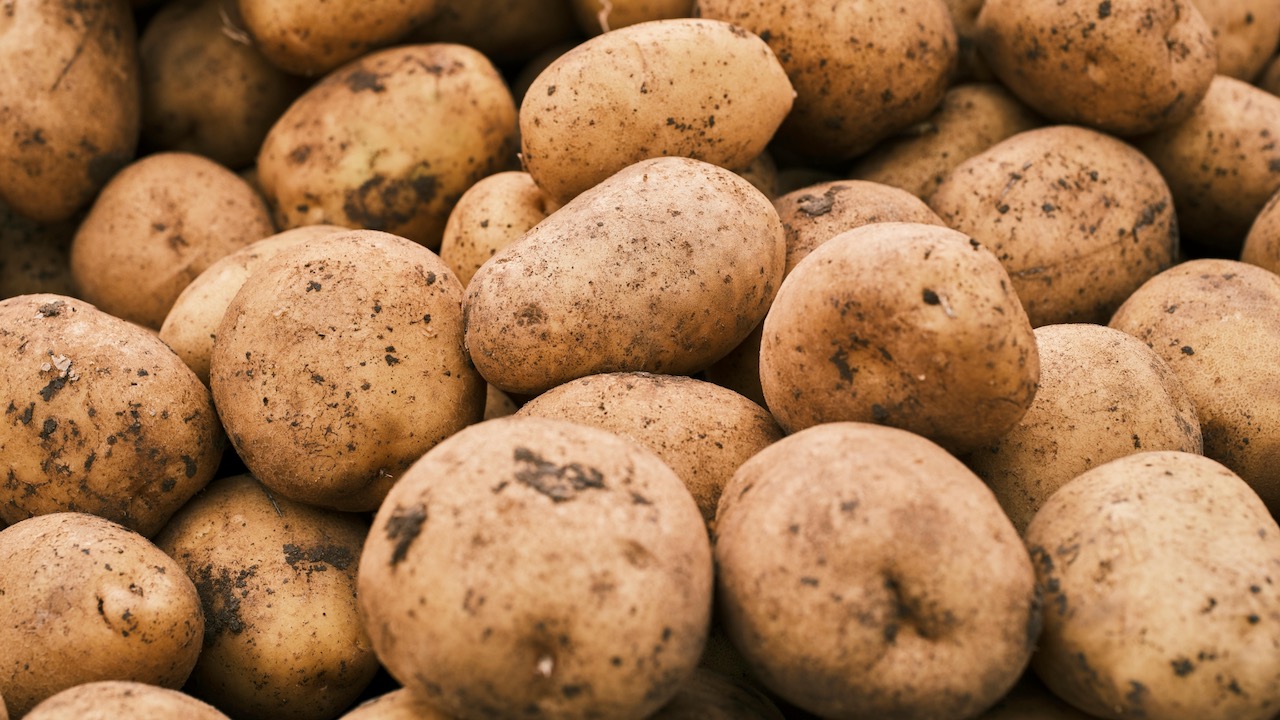
For generations, Idaho’s vast fields of russet potatoes have symbolized American agricultural might and supplied chips, fries and fresh spuds across the United States and the world. Yet in 2026, many potato farmers in Idaho are navigating one of the toughest periods in recent memory. Declining prices, rising costs, contract cuts, staffing, labour policy pressures, and broader market disruptions have converged to squeeze farm incomes, and shake the stability of an industry once seen as reliable. What are the root causes of the current struggles? Where does Idaho’s challenges sit in a national and global context? Are there recent policy changes that are reshaping the landscape for growers?
Falling Prices and Revenue Squeeze
One of the most acute challenges facing Idaho’s potato growers is the dramatic fall in the price they receive for their crop. According to the Idaho Farm Bureau Federation, in 2024, the average price for 100 pounds of fresh russet potatoes was recorded at $6.54, but by 2025 this had fallen to around $4.40, well below the estimated break-even cost of roughly $9 per 100 pounds for many growers. After accounting for transport and other costs, actual net returns can be as low as $1.97 per 100 pounds — a fraction of what was typical only a few years ago. How are prices in 2026? Some reports indicate that prices have dropped even lower, reaching $2 per 100 pounds. This revenue collapse has contributed to steep declines in total farm income across Idaho’s agricultural economy.
READ: Agriculture in Guam and the Northern Mariana Islands
The weakness in potato prices initially raised concerns that planting decisions would shift sharply. Early industry speculation suggested Idaho could see a reduction of as much as five percent in planted acreage for the 2025 season, driven largely by major processors scaling back contract volumes in response to an emerging supply–demand imbalance. However, those fears ultimately did not materialize. Final figures confirmed Idaho potato acreage at approximately 315,000 acres, effectively unchanged from 2024, rather than meaningfully lower. Moreover, despite flat acreage, Idaho’s 2025 potato production was estimated to rise by around 2.3 percent, or roughly 3.15 million hundredweight, reflecting improved yield expectations rather than expanded plantings. At present, comprehensive USDA data for the full 2025 marketing year and forward-looking figures for 2026 have not yet been released, limiting the ability to assess how these yield gains translate into realized market outcomes.
READ: Why Are Used Tractors So Expensive?
Both falling prices and acreage reductions reflect structural imbalance between supply and demand. Major processors of frozen potato products reduced contract volumes for 2025, which means growers now have less guaranteed income and are facing more open-market sales — where prices tend to be lower, and more volatile.
Rising Production Costs
While farmgate prices have weakened, production costs remain near record levels and have grown faster than profits. Input expenses such as fertilizer, pesticides, machinery hire, fuel, storage and transportation have all increased in recent years, continuing to put pressure on farmer margins. Even where some input categories have seen slight declines — for example, fertilizer, though the U.S./Israel-Iran conflict threatens to disrupt this trend — the overall burden of intermediate production expenses remains high relative to stagnant or falling commodity prices.
The discrepancy between costs and returns is not unique to potatoes, but has been pronounced for this crop because of its intensive production requirements, and sensitivity to market shifts. Increased labour costs in particular, tied to both domestic wage expectations and the administration of guest-worker programs, have added to the financial strains on growers.
Labour Challenges and Changing Workforce Dynamics
Labour availability and cost have emerged as central concerns for Idaho’s potato industry. Many farms rely on seasonal workers to plant, tend, and harvest crops, yet both domestic and international recruitment have become more difficult and expensive. Idaho growers have increasingly turned to the H-2A guest-worker program, which allows employers to fill temporary agricultural labour needs from abroad. But administrative costs, housing requirements, transportation logistics, and wage mandates — the Adverse Effect Wage Rate (AEWR), which guarantees a set wage that varies by state — significantly raise the cost and complexity of participating in the program. The AEWR itself has risen substantially in recent years, indicating upward pressure on labour costs that farms must absorb.
Moreover, evolving immigration enforcement practices and uncertainty around guest worker policy add another layer of stress for growers who depend on reliable seasonal labour. These issues are mirrored in other agricultural sectors across the United States, where farm labour shortages are cited as a major factor in labour costs and farm viability overall. For instance, according to a 2025 study by the Baker Institute, when housing, transportation, insurance, and government fees are tallied up, farm owners are looking at a cost that can be as high as $15,000 per worker.
Market Structure and Processor Contracting
The structure of potato markets in the United States also influences farm fortunes. Historically, large processors have entered into multi-year contracts with growers, guaranteeing volumes and pricing. Today, however, these commitments have shifted. Contracts for processing potatoes have been scaled back significantly, meaning that farmers face more of their production sold on thinner open markets where price discovery is less stable.
READ: How India Became the World Leader in Rice Production
This reduction in contracting has systemic implications. Uncontracted potatoes typically fetch lower prices and expose growers to greater risk if timed shipments fail to align with peak demand. In the case of a combination of lower overall acreage and weakening fresh-market prices, this dynamic could deepen financial pressures even further for many producers.
Global and National Trends: Not an Idaho-Only Story
While Idaho represents the largest potato-producing state in the U.S., growers in other regions are facing analogous pressures. According to the United States Department of Agriculture (USDA), forecasts for total U.S. potato acreage show a general decline from 930,000 acres in 2024 to approximately 912,000 acres in 2025, the lowest levels seen since the early 1950s. Similar acreage reductions are projected in states such as Washington, North Dakota, and Maine.
These trends underscore that the difficulties are not confined to Idaho. Across the United States, growers are grappling with declining contract volumes, market oversupply in some channels, changing consumer demand patterns, and rising costs of inputs, and labour. The broader U.S. potato industry is at a point where structural challenges — including consolidation in processing sectors and variable export dynamics — are exerting downward pressure on farmer incomes. Even north of the border, growers are feeling the pinch. For example, in March 2025, growers from Manitoba noted that orders from processors were down anywhere between 10 and 100 percent.
Globally, potato production trends are shaped by additional factors such as climate variability, water scarcity, and pest pressures, particularly in regions without irrigation infrastructure. These environmental risks complicate crop planning, and contribute to yield uncertainty worldwide.
READ: Saudi Arabia, the Desert Kingdom that Decided to Feed Itself
Compounding the pressure on Idaho growers has been stronger-than-expected production overseas. Large harvests in parts of Europe — especially France and Germany — have added substantial volume to global potato supplies. When major exporting regions post above-average yields, the resulting surplus can weigh on international prices and increase competition in processing, and fresh markets. Even if Idaho farmers face higher input costs or weather variability, abundant European output can still influence overall market dynamics, and contribute to softer prices.
Policy Changes and Their Effects
Policy decisions at both federal and state levels have played a role in shaping the current economic realities for potato farms. In response to widespread financial stress among crop growers, including potato producers, the U.S. government under President Donald Trump announced a multibillion-dollar relief package aimed at providing emergency payments to affected farmers. This scheme is intended to offset losses caused by declining crop prices and trade disruptions, with payments expected to be distributed by early 2026.
Recent updates to the H-2A program, such as changes in wage calculation methods under the AEWR and procedural adjustments tied to housing costs, have attempted to balance labour affordability for farmers with worker protections. However, these changes have also introduced uncertainty and administrative burden, with mixed responses from agricultural stakeholders.
Trade policy, including tariffs imposed on imported goods and reciprocal tariffs from trading partners, has also drawn concern among potato growers. Tariff adjustments could influence input costs and export opportunities, potentially increasing costs for fertilizer and equipment while reducing competitiveness abroad — although the full impact on potato exports remains a developing issue.
Looking Ahead: Adaptation and Resilience
Despite the severity of current challenges, there are still signs of adaptation and longer-term resilience within the potato sector, not just in Idaho. By most measures, production conditions in 2025 were relatively strong, with yields meeting or exceeding expectations, with the exception of Prince Edward Island and New Brunswick which suffered through a drought during the growing season. The difficulty for growers has not been an inability to grow potatoes, but rather a surplus of supply coinciding with reduced processor contracts and weaker market absorption, leaving many farmers with limited outlets for their crop. Even so, growers are increasingly exploring measures that could strengthen their operations over the longer term. These include greater use of precision irrigation systems, improved soil management techniques, and targeted technological tools designed to improve efficiency and reduce exposure to future drought, and climate stress.
READ: How Much of Canada Is Actually Farmland?
One of the most tangible areas of progress has been in the adoption of precision irrigation, and smart water management technologies. In regions where water scarcity or regulatory pressures intensify risk, farmers are increasingly installing drip and precision irrigation systems that deliver water directly to plant roots, reducing waste, and exposure to drought conditions. Trials of these systems have shown that they can reduce water usage by up to 40 percent while maintaining or increasing yields, making them a powerful tool for coping with climatic uncertainties. These systems often integrate soil moisture sensors and weather data models that guide irrigation decisions in real time, conserving water resources, and cutting overall production costs.
READ: The Long Rise of California’s Almond Industry
In parallel, broader industry collaboration with research institutions and federal agencies continues to focus on developing more drought-tolerant varieties and resource-efficient production systems, not in response to current yield shortfalls, but as a form of longer-term risk management. A concrete example is the Tri-State Potato Consortium’s 2025 clone selection process in Aberdeen, Idaho, where scientists from the USDA and regional universities evaluated potato clones with improved traits, such as disease resistance, tuber quality, and potential stress resilience for future advancement in breeding programs. This ongoing selection and evaluation process is part of a broader effort to identify and advance germplasm — the living genetic material (ex. seeds, pollen) — that could offer growers more robust options in the face of increasing climatic variability, and resource pressures.
Yet for many Idaho potato farmers, the immediate reality remains challenging. Rising costs, unstable pricing, and constrained market access mean that near-term profitability is uncertain, even in years of solid production. Uncertain acreage and more cautious capital investment reflect an industry that is capable of producing efficiently, but increasingly constrained by market structure, and policy conditions. For growers, the coming years are likely to test not their agronomic capacity, but the economic sustainability of traditional production models in the absence of stronger demand growth, and more stable contracting environments.
The Road Ahead for Idaho Potato Growers
In 2026, Idaho’s potato industry stands at a crossroads. Deep reductions in prices, rising input and labour expenses, contracting processor commitments, and global market pressures have combined to shrink profitability for many growers. While these problems are most visible in Idaho, similar conditions are evident across other U.S. potato-producing states, and parts of the global agricultural landscape. Recent policy interventions offer modest relief, yet structural dynamics continue to challenge farm incomes. As the sector evolves, the resilience of growers and the responsiveness of policy will be critical in shaping the future of this iconic crop.
Idaho potato farmers are selling below their break-even cost while grocery store potato prices haven’t dropped nearly as much — where do you think the disconnect is, and who’s responsible for fixing it?
Sources
- Bernhardt, D. (2025, March 26). Manitoba potato industry fears big losses as companies cut orders. CBC. Retrieved March 19, 2026, from https://www.cbc.ca/news/canada/manitoba/potato-producers-contracts-1.7492787
- Columbia Media Group. (2026, January 9). 2025 US potato production down. . . but not enough. Potato Country. Retrieved March 19, 2026, from https://potatocountry.com/2026/01/09/2025-us-potato-production-down-but-not-enough/
- Farmers are facing dire times financially | Idaho Farm Bureau. (2025, November 5). Idaho Farm Bureau. Retrieved March 19, 2026, from https://www.idahofb.org/news-room/posts/farmers-are-facing-dire-times-financially/
- Gutiérrez-Li, A. (2024). Feeding America: How Immigrants Sustain US agriculture. In Fondren Library. https://doi.org/10.25613/z5by-gz22
- H-2A Adverse Effect Wage Rates (AEWRs) | Flag.dol.gov. (2026, January 20). U.S. Department of Labor. Retrieved March 19, 2026, from https://flag.dol.gov/wage-data/adverse-effect-wage-rates
- Idaho, U.S. potato acres forecast to decline | Idaho Farm Bureau. (2025, April 18). Idaho Farm Bureau. Retrieved March 19, 2026, from https://www.idahofb.org/news-room/posts/idaho-u-s-potato-acres-forecast-to-decline/
- Trump Administration Announces $12 Billion Farmer Bridge Payments for American Farmers Impacted by Unfair Market Disruptions. (2025, December 8). United States Department of Agriculture. Retrieved March 19, 2026, from https://www.usda.gov/about-usda/news/press-releases/2025/12/08/trump-administration-announces-12-billion-farmer-bridge-payments-american-farmers-impacted-unfair
- United States Department of Agriculture, National Agricultural Statistics Service, Meyer, S., & Honig, L. (2025). Acreage. In Acreage. Retrieved March 19, 2026, from https://downloads.usda.library.cornell.edu/usda-esmis/files/j098zb09z/4455bc157/6q184j42c/acrg0625.pdf
- Washington Potatoes. (2025, October 1). Tri-State Potato Consortium Advances New Varieties At 2025 Clone Selection. Washington State Potato Commission. Retrieved March 19, 2026, from https://www.potatoes.com/spud-topics-archive/item/tri-state-potato-consortium-advances-new-varieties-at-2025-clone-selection
- Wisconsin potato industry navigates volatile national market. (2026, February 2). Potato News Today. Retrieved March 19, 2026, from https://www.potatonewstoday.com/2026/02/02/wisconsin-potato-industry-navigates-volatile-national-market/
- Yifa, R., & Gazette, P. (2026, January 7). The Smart Potato: How Precision Irrigation is Climate-Proofing Global Yields. Potato Gazette. Retrieved March 19, 2026, from https://potatogazette.com/agro/the-smart-potato-how-precision-irrigation-is-climate-proofing-global-yields/