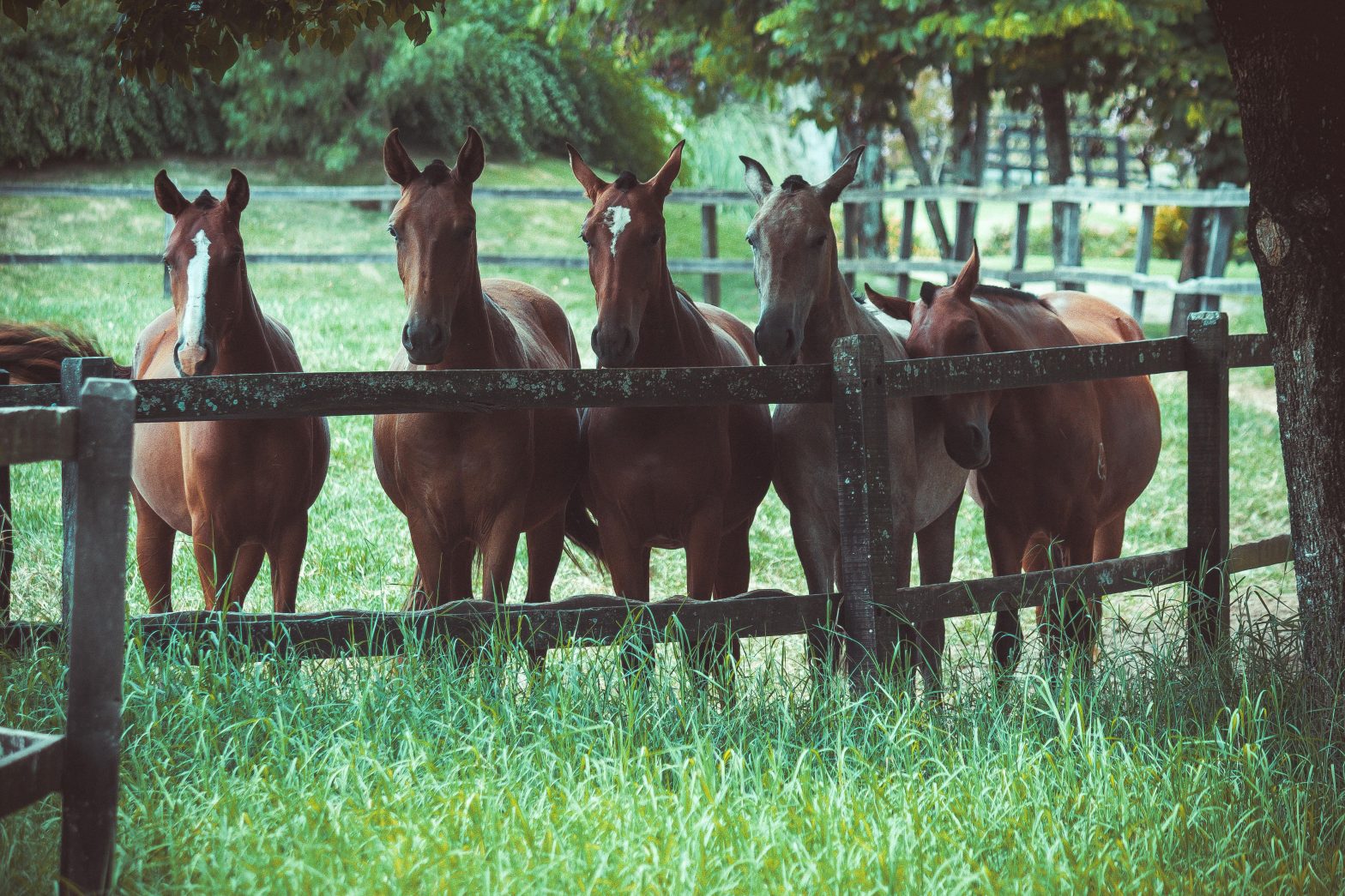
Horse farming, also known as equine farming in Canada spans a wide range of activities, from breeding and sport-horse production to recreational riding, traditional work purposes and, controversially, meat production. Although horses aren’t usually classified as conventional “livestock” in the same way as cattle or pigs, they play a significant role in Canadian rural economies, recreational life and, in select markets, international trade.
Who Are the Horse People?
Across Canada, equine operations vary widely in scale and purpose. Some are family-run farms where a few horses are bred or kept for riding, training, or local competitions. Others are commercial breeding farms with significant reputations. For example, Hill ’n’ Dale Farms in King City, Ontario founded in 1960 by a Czechoslovakian immigrant John Sikura Jr., is well known for thoroughbred breeding with links into the United States racing circuit. They also have a farm located in the state of Kentucky.
READ: How Much of Canada Is Actually Farmland?
Beyond Ontario, Alberta offers one of the clearest examples of a province where equine farming is deeply embedded in both culture, and commerce. Operations, such as Spruce Meadows near Calgary are internationally recognized, not only as a premier show-jumping venue, but also as a centre for breeding, training, and elite horse management. Alberta’s equine farmers range from large ranch-style breeding operations focused on warmbloods and quarter horses to smaller family-run outfits supporting rodeo, ranch work, and recreational riding. The province’s strong cattle-ranching heritage has translated naturally into a robust horse-breeding sector, supported by vast pastureland, experienced horsemen and a year-round demand for working, and sport horses. Many Alberta breeders also sell horses into the United States, reinforcing the province’s role as one of Canada’s most outward-facing equine regions.
Québec also represents a distinct and influential segment of Canada’s equine farming community. The province has a long tradition of horse breeding tied to both European riding disciplines, and rural agricultural practices. Many equine farms in Québec specialize in warmbloods, standardbreds and sport horses, supplying animals for dressage, show jumping, and harness racing. Unlike the large ranch-style operations common in western Canada, Québec’s horse people often operate medium-sized, highly specialized farms, combining breeding with training, boarding, and professional instruction. The province also supports a strong network of racetracks, such as the Hippodrome 3R in Trois-Rivières and Circuit Régional des Courses de Chevaux du Québec (Regional Circuit), breeding associations, and veterinary expertise, allowing equine farming to function as an integrated rural industry rather than a standalone activity. Québec breeders regularly sell horses across Canada and into the northeastern United States, reinforcing the province’s role as a key contributor to the North American equine economy.
READ: How Much of the U.S. Is Actually Farmland?
Some owners run professional riding and boarding facilities, offering lessons, boarding, retraining, and equestrian tourism. Others specialize in ranching, cowboy skills and rodeo training — particularly in the prairie provinces where horse culture remains strong.
Provincial Hubs of Equine Activity
Equine farming isn’t evenly distributed. According to data from 2022, Alberta consistently has the most horses, representing around 37 percent of the national total, followed by Ontario (approximately 25 percent), and Saskatchewan (about 13 percent). As of 2021, the total number of equines in Canada, including on farm and non-farm properties is over 500,000. These regions benefit from vast rural landscapes, historical ranching traditions and a deep culture of riding, and racing.
Smaller, but vibrant sectors exist in Québec and British Columbia, where horses are often used for recreation, tourism and sport. In many cases, these provincial industries support jobs in training, farriery, veterinary services, and equestrian tourism.
The Domestic Market: Riding, Racing and Recreation
Canada’s equine sector supports hundreds of thousands of people through sport, recreation, leisure and employment, forming an important part of the rural, and peri-urban economy. Participation spans a wide range of disciplines, including dressage, show jumping, competitive racing and pleasure riding, with involvement from professional breeders, trainers, riders, and recreational owners across the country.
Domestic demand for equine services and products includes:
- Riding lessons and equestrian centres which attract hobby riders and youth.
- Competitive sport with provincial and national shows throughout the year.
- Horse care services, including feed, tack, farriers, and veterinary work.
- A niche but stable meat market — both for domestic consumption, and processing.
Even though some horses are used for work in rural settings, much of the modern equine economy revolves around lifestyle and sport, creating a diversified domestic market that goes beyond traditional farming.
Export and Global Markets
Canada does participate in international trade involving horses — but this is a complex area with economic and ethical dimensions.
Breeding and Bloodstock
High-quality breeding stock, especially thoroughbreds and standardbreds, can be sold overseas or to international buyers seeking competitive horses or proven bloodlines. Equine farms with established reputations often leverage long-standing global networks, linking Canadian breeders with buyers across North America, Europe, and Asia. These transactions operate within a tightly regulated export framework designed to protect animal health, traceability, and welfare.
READ: Why Are Idaho Potato Farmers Struggling So Much?
All horses exported from Canada must meet national health and identification standards enforced by the Canadian Food Inspection Agency (CFIA). Prior to export, an accredited veterinarian must issue an official health certificate confirming the animal is free from contagious diseases, supported by a negative Equine Infectious Anaemia (EIA) test. Horses are required to carry permanent, verifiable identification, such as a microchip or brand, to ensure traceability. Transport conditions are also regulated under federal animal-welfare rules, including limits on the length of time horses may travel without rest, water, and feed. For registered standardbreds, an export certificate issued by the relevant breed authority is mandatory, documenting breeding, ownership, and racing history.
Exports to the United States, which are currently tariff-free, represent the most common international destination for Canadian horses, particularly for racing, breeding, and sport. U.S. entry rules require a recent veterinary examination, valid disease testing, and proof that the horse has resided in Canada for a minimum period prior to shipment. At the border, horses intended for permanent sale, breeding or commercial use must undergo inspection by U.S. agricultural authorities, with documentation, such as a bill of sale, and detailed physical descriptions provided. In many commercial transactions, a licensed customs broker is required.
For overseas markets, such as Japan and parts of Europe, export requirements are more stringent. Federal veterinarians must inspect and certify horses at the farm before transport to the airport, and destination countries may impose additional residency, vaccination, and origin rules. Long-distance air transport requires the use of specialized shipping crates and compliance with international aviation standards, with veterinary oversight to ensure horses are not overcrowded, and are fit to travel.
This export system continues to evolve, particularly in response to growing scrutiny around animal welfare. Canada has moved toward stronger enforcement following high-profile incidents involving live horse exports, and regulatory authorities have increased oversight of shipments, sometimes refusing certification where conditions do not meet federal standards. Proposed policy changes, including a ban on the live air export of horses for slaughter, signal a shift that could significantly reshape Canada’s role in certain international equine markets.
Meat and Live Exports
Perhaps the most controversial equine export from Canada involves horses raised for slaughter, particularly in Western Canada. A small number — generally between 2,000-3,000 horses annually — are shipped live by air to markets, such as Japan for meat. Much of Canada’s horse meat is exported overseas; while there are domestic consumers, a large share of the output (over 85 percent) goes to international buyers. Export flights typically operate out of airports in Edmonton, Calgary, and Winnipeg.
These live exports remain a niche by value compared with other agricultural trade, but they are significant in terms of public awareness and animal-welfare debates.
How Canada Compares with the U.S. and the World
North American Context
In North America, the United States leads the world in horse population, representing roughly 18 percent, with estimates of over 10 million horses in 2022, and an equine industry valued in the tens of billions annually. States like Kentucky are renowned for thoroughbred production, contributing heavily to exports, and domestic sport.
The U.S. also has a larger commercial market for equine goods and services — from feed and tack manufacturing to breeding and training enterprises — and a broader base of recreational, and competitive riders.
Worldwide Production and Export
Globally, horse meat production and equine populations are concentrated in a few countries. According to Food and Agriculture Organization (FAO) of the United Nations data, countries like Kazakhstan, China, Mexico, Russia, and Mongolia rank among the biggest producers of horse meat, followed by nations, such as Canada, and the United States.
READ: Agriculture in Guam and the Northern Mariana Islands
However, the majority of horses worldwide are kept for sport, cultural use or traditional roles rather than meat production. The global horse population is estimated at around 60 million, with the highest concentrations in the Americas and Asia.
Animal Rights and Welfare Debates
Equine farming and export practices are not without controversy. In Canada, animal-welfare groups and some lawmakers have raised concerns about the conditions experienced by horses exported live for slaughter. Critics argue that long flights in confined crates, sometimes over extended periods with limited food and water, are inherently stressful, and inhumane.
Efforts such as Bill C-355, introduced in 2023, aim to ban live export of horses for slaughter, but have seen slow legislative progress. Organizations, such as the British Columbia Society for the Prevention of Cruelty to Animals (BC SPCA) campaign against these exports, describing them as outdated practices that many Canadians do not support.
Animal-rights advocates in both Canada and the U.S. argue for stronger welfare standards and greater transparency in equine production, and transport. In the U.S., groups also focus on welfare issues in racing, training, and slaughter practices, advocating for regulation that balances industry viability with ethical treatment.
Looking Ahead: Trends and Challenges
Equine farming in Canada continues to evolve. While breeding, recreational riding and sport remain stable, sectors like live export face growing public scrutiny. International competition in breeding, changing consumer preferences and shifting agricultural priorities present both opportunities, and challenges.
Efforts to enhance domestic markets for horse products, increase animal-welfare standards, and support equine-related tourism and recreation may shape the future of this unique agricultural sector.
Sources
- Canadian Food Inspection Agency. (2025, August 22). Regulatory oversight for live horse exports to Japan. inspection.canada.ca. Retrieved March 24, 2026, from https://inspection.canada.ca/en/animal-health/terrestrial-animals/humane-transport/horses/regulatory-oversight
- C-355 (44-1) – LEGISinfo – Parliament of Canada. (2026). LEGISinfo. Retrieved March 24, 2026, from https://www.parl.ca/legisinfo/en/bill/44-1/c-355
- Debates (Hansard) No. 251 – November 20, 2023 (44-1) – House of Commons of Canada. (2023, November 20). Retrieved March 24, 2026, from https://www.ourcommons.ca/documentviewer/en/44-1/house/sitting-251/hansard
- Food and Agricultural Organization STAT. (2021). Horse meat, fresh or chilled [Dataset]. Food and Agriculture Organization. Retrieved March 24, 2026, from https://data.un.org/Data.aspx?q=meat+datamart%5BFAO%5D&d=FAO&f=itemCode%3a1097%3bcountryCode%3a108%2c138%2c141%2c185%2c231%2c33%2c41%3byear%3a2021&c=2,4,5,6,7&s=countryName:asc,elementCode:asc,year:desc&v=1
- Klosowicz, J., Laroche, K., Wilton Consulting Group, Serecon, Department of Canadian Heritage, Sport Canada Branch, Alberta Equestrian Federation, & Horse Council British Columbia. (2023). Socio-Economic Impact Assessment of the Canadian Equine Sector Report. Retrieved Retrieved March 24, 2026, from https://equestrian.ca/wp-content/uploads/2023/11/The-Canadian-Equine-Sector_Socio-Economic-Insights-2023.pdf
- Lincoln, J. (2023, October 27). New data about Canada’s $8.69B horse industry can help businesses target clientele – American Horse Publications. Retrieved March 24, 2026, from https://www.americanhorsepubs.org/newsgroup/new-data-about-canadas-8-69b-horse-industry-can-help-businesses-target-clientele/
- Snowdon, W. (2023, October 19). A contentious export: The anatomy of Canada’s horsemeat industry. CBC. Retrieved March 24, 2026, from https://www.cbc.ca/news/canada/edmonton/horsemeat-industry-live-exports-ban-canada-1.6987841
- World Population Review. (2026, February 26). Horse population by country. Retrieved March 24, 2026, from https://worldpopulationreview.com/country-rankings/horse-population-by-country