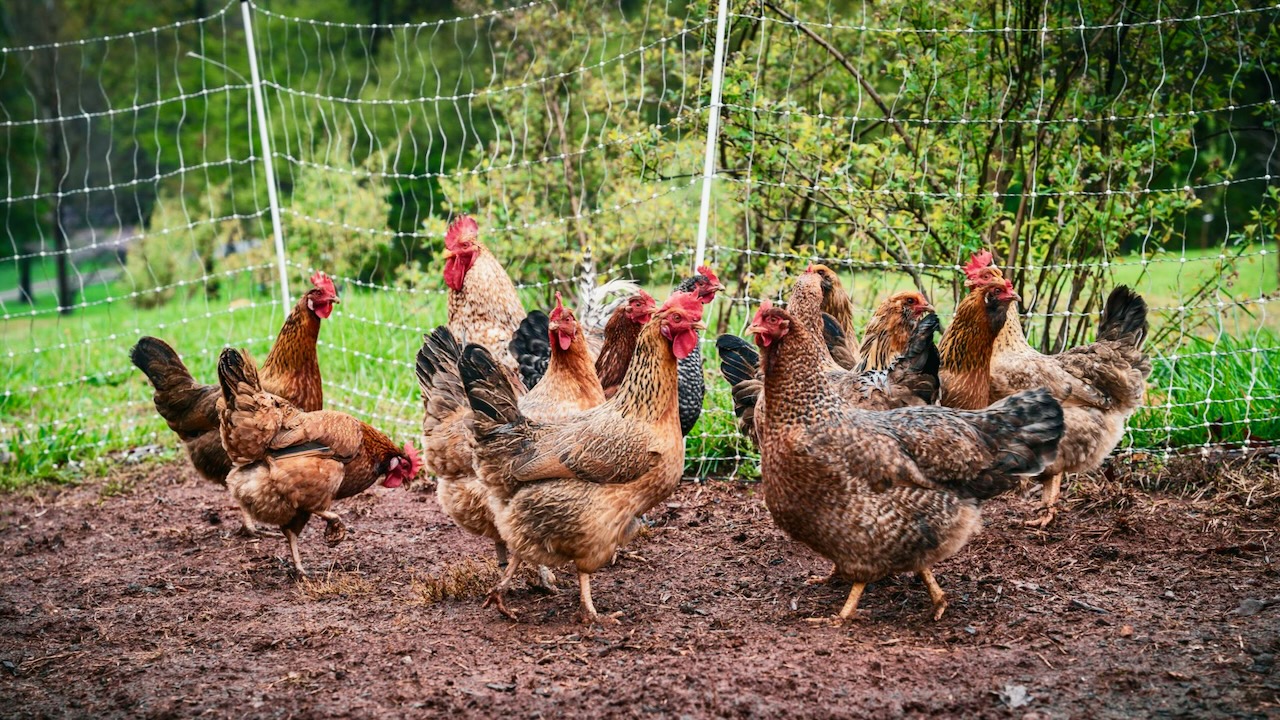
Chicken farming is a cornerstone of Kentucky’s agricultural economy, reflecting both the deep rural traditions of the Commonwealth and its modern role in the national food supply. From small family-owned operations to extensive commercial enterprises, poultry production in Kentucky not only supplies vast quantities of chicken and eggs to consumers, but also underpins significant economic activity across the state. Key aspects of the industry, including its scale, economic impact, sustainability efforts, challenges and future prospects highlight its unique position in the U.S. market and beyond.
A Pillar of Kentucky Agriculture
Poultry farming in Kentucky is far more than a modest sideline; it stands as the state’s leading agricultural and food commodity. Broiler production and egg laying operations have grown substantially over the past decades, positioning Kentucky among the top producers in the United States. The Commonwealth regularly ranks within the top ten states for broiler output, producing hundreds of millions of birds annually for meat consumption. Additionally, egg production is prolific, with over a billion eggs laid each year to meet both regional and national demand.
READ: Fertilizer and the Fragile Future of Feeding the World
This robust production is supported by a dense network of farms spread across dozens of counties. There are over 850 poultry farms and more than 3,000 poultry houses in operation, reflecting the diversity of enterprises that range from family-run layer operations to larger broiler facilities. Many of these farms historically transitioned from tobacco production as farmers sought more sustainable and profitable alternatives after tobacco’s economic decline that began in the late 1980s.
Economic Significance and Job Creation
The economic footprint of the chicken farming industry in Kentucky is profound. Poultry and egg production together contribute billions of dollars to the state’s agricultural cash receipts, with continual growth in recent years. This contribution comprises direct revenues from chicken and egg sales as well as indirect economic benefits across related sectors such as feed production, transportation, processing and agribusiness services. According to the United States Department of Agriculture (USDA), Kentucky’s agricultural cash receipts totalled $8.3 billion in 2022, with broilers making up $1.43 billion, and chicken eggs approximately $255 million, an increase of roughly 39 and 76 percent respectively from the previous year.
Employment figures further demonstrate the sector’s importance. Direct employment within poultry operations supports thousands of jobs across the state, with additional tens of thousands of indirect positions in supply chains and ancillary industries. According to the Kentucky Department of Agriculture, this amounts to over 31,000 jobs for Kentuckians. These roles span a variety of skill levels, from on-farm caretakers and technicians to professional drivers and quality assurance staff. The industry’s capacity to generate employment also helps sustain rural communities where other job opportunities may be limited.
READ: Is Newfoundland & Labrador Under-utilizing Its Farming Potential?
Moreover, poultry production creates a reliable market for Kentucky’s corn and soybean growers, who supply the vast quantities of feed required for chicken and egg production. A substantial portion of the state’s corn and soybean crops is sold to poultry producers, strengthening the agricultural ecosystem, and adding value to farm-gate revenues for grain producers.
Infrastructure and Industry Organisation
Kentucky’s chicken farming industry is supported by extensive infrastructure that enables efficient production, processing and distribution. The state hosts multiple broiler hatcheries, primary breeder hatcheries, feed mills, processing plants and egg production complexes. This network of facilities ensures that the supply chain from hatchery to retailer remains strong and responsive to market needs.
Industry organizations play a critical role in this success. The Kentucky Poultry Federation, established in 1957, serves as a key advocate and liaison, promoting improved production practices, marketing poultry products, coordinating with government agencies and supporting farmer education initiatives. Together with the Kentucky Egg Council, the Federation works to enhance the competitiveness and sustainability of poultry and egg producers across the state.
Sustainability and Innovation in Production
In recent years, the industry has seen a growing emphasis on sustainability and innovation. Poultry producers increasingly adopt technologies and practices designed to improve efficiency, reduce environmental impact and enhance animal welfare. Energy efficiency projects, for instance, help reduce the significant utility costs associated with poultry houses by optimizing lighting, heating, ventilation and other systems, thereby lowering the carbon footprint and production expenses.
Research from the Kentucky Poultry Energy Efficiency Project shows that when six poultry farms in the state implemented recommended energy improvements based on professional energy assessments, they achieved noteworthy reductions in utility costs. Across the group, the collective annual value of energy savings was around $6,240 per year, which is roughly $1,040 per farm annually. Simple payback periods for the upgrades were around six years before incentives were applied.
Another study from Greece, surrounding energy-efficient technologies in poultry housing shows sizeable opportunities for energy reduction. Poultry houses with more advanced climate control, ventilation and insulation technologies can cut total energy consumption by about 27 to 31 percent compared with older conventional systems. Proper automation can further reduce electrical use for ventilation and cooling by approximately 15 to 20 percent, and high-efficiency lighting can save up to 5 percent of electrical energy related to lighting.
READ: Why 99 Percent of Canadians Are Denied Entry into Farming
Beyond conventional operations, there is notable growth in alternative and niche segments, such as pastured poultry production. These smaller-scale farms raise chickens outdoors on pasture, offering consumers an option that aligns with growing demand for locally produced and pasture-raised poultry, including among buyers seeking birds raised without routine vaccination programs. Such enterprises contribute to rural diversification and provide producers with opportunities to differentiate their products in a competitive market. One example is Lakewatcher Farms near Smiths Grove that began operations in 2022 with only 480 broiler chickens and exploded to about 8,000 annually.
Market Dynamics and Consumer Demand
The market for chicken and eggs remains strong, driven by consumer preferences for affordable, versatile and protein-rich foods. Chicken is one of the most consumed meats in the United States, and demand continues to rise as households seek lean, nutrient-dense protein sources. Egg consumption has also shown upward trends, with per capita consumption increasing as consumers recognize eggs for their nutritional value and culinary flexibility.
Kentucky’s producers play a central role in meeting this demand. Broilers raised in the state supply both domestic markets and contribute to broader national supply chains. Eggs from Kentucky farms travel beyond state borders, supporting retail and food service sectors. While a portion of production is exported internationally, the majority serves the substantial domestic market.
Challenges Facing the Industry
Despite its strengths, the chicken farming sector in Kentucky faces ongoing challenges. Maintaining biosecurity to prevent diseases such as avian influenza is a constant priority, as outbreaks can lead to significant losses and disrupt supply chains. For instance, in December 2025, a case of Highly Pathogenic Avian Influenza (HPAI) was confirmed in Jessamine County, just south of Lexington. Producers must invest in strict sanitation, monitoring, and contingency planning to protect flocks and ensure food safety.
Labour availability is another concern, particularly in remote rural areas where attracting and retaining skilled workers can be difficult. Automation and technology help mitigate some labour pressures, but human expertise remains essential across production and processing stages.
READ: Why Are Idaho Potato Farmers Struggling So Much?
Environmental considerations also present challenges, including managing waste, reducing greenhouse gas emissions and addressing community concerns related to intensive livestock operations. The industry continues to engage with stakeholders, regulators and researchers to find balanced solutions that protect both productivity and environmental quality.
Policy Update and Regulatory Considerations
Recent policy developments are beginning to shape the regulatory environment for poultry production in Kentucky, particularly at the intersection of commercial farming, backyard production and animal health oversight. During the 2026 legislative session, proposed backyard chicken protection measures under Kentucky House Bill 276 and its 2025 predecessor, House Bill 806 sought to establish clearer statewide standards by preventing cities and counties from outright banning small-scale poultry keeping, though neither bill has fully passed the legislature. Sponsored by Representative Steven Doan after the initial House Bill 806 failed to advance last year, the updated House Bill 276 would allow residents to keep up to six hens on residential property while preserving local health and safety regulations. However, after passing the House on February 5, 2026, the bill remains stalled in a Senate committee.
In response to this broader legislative direction, several municipalities have begun revising their local ordinances. Cities such as Owensboro have moved to permit backyard hens for personal use under defined conditions, including minimum setback distances from property lines and requirements for secure, rodent-resistant feed storage. These revisions aim to balance growing public interest in small-scale poultry keeping with concerns related to nuisance, sanitation and biosecurity.
Animal health policy has also been notable, particularly in relation to the Highly Pathogenic Avian Influenza previously highlighted. In late 2025 and early 2026, the Kentucky Department of Agriculture intensified surveillance and control measures following detections in backyard flocks. These efforts included temporary movement restrictions, enhanced reporting requirements, and targeted biosecurity guidance designed to limit the spread of the disease between small-scale and commercial operations.
READ: How Much of the U.S. Is Actually Farmland?
At the federal level, changes to competition and fair practice regulations are also relevant to Kentucky’s poultry sector. Reforms finalized by the U.S. Department of Agriculture in 2025 strengthened protections for contract poultry growers, particularly by limiting retaliation from large integrator companies when farmers communicate with regulators or government agencies. Together, these policy developments reflect a shifting regulatory landscape that increasingly emphasizes biosecurity, fair competition, and clearer standards for both commercial and non-commercial poultry production within the state.
The Future of Chicken Farming in Kentucky
Looking ahead, the chicken farming industry in Kentucky appears poised for continued growth, underpinned by strong demand, ongoing innovation and supportive infrastructure. Investments in technology, sustainability, and workforce development will shape the sector’s ability to adapt to evolving market conditions and regulatory expectations.
Efforts to expand value-added products, such as organic, free-range, and specialty poultry offerings, suggest opportunities for diversification and enhanced profitability. Engagement with younger farmers and newcomers to agricultural production also signals a positive demographic shift that may help sustain rural economies and invigorate the state’s agricultural tradition. For those still exploring long-term career options in an era increasingly shaped by artificial intelligence and automation, the poultry industry may continue to offer stable hands-on employment and valuable agricultural experience.
Chicken farming is a vital and dynamic industry in Kentucky, deeply integrated into the state’s agricultural landscape and economic fabric. Is there a “gold rush” of sorts sweeping through the region? In some parts of rural Kentucky, it certainly feels that way. Through a combination of large-scale commercial operations and emerging niche enterprises, the Commonwealth continues to strengthen its role in feeding both local and national markets while navigating the challenges and opportunities that lie ahead.
Does contract poultry farming in Kentucky offer a reliable, bankable path to financial stability, or do high integrator debt and equipment upgrades place too much risk on growers?
Sources
- Aldridge, C. (2025, September 8). South central Kentucky farm’s production of pastured poultry is booming. KYAGR Press Release (archived). Retrieved May 19, 2026, from https://www.kyagr.com/Ky-agriculture/AgNews/2025/South-central-Kentucky-farms-production-of-pastured-poultry-is-booming (archived copy hosted for access)
- Baxevanou, C., Fidaros, D., Giannenas, I., Bonos, E., & Skoufos, I. (2021). Reduction of energy intensity in broiler facilities: Methodology and Strategies. Frontiers in Veterinary Science, 8, 671183. https://doi.org/10.3389/fvets.2021.671183
- Dangerous poultry virus detection confirmed in Kentucky backyard flock. (2025, December 15). KYAGR Press Release (archived). Retrieved May 19, 2026, from https://www.kyagr.com/Ky-agriculture/PressRelease/2025/Dangerous-poultry-virus-detection-confirmed-in-Kentucky-backyard-flock (archived copy hosted for access)
- Extension: Commercial Poultry Production | Animal & Food Sciences. (2026). Retrieved February 19, 2026, from https://afs.mgcafe.uky.edu/extension/poultry/commercial-production
- Kentucky Legislative Research Commission. (2025, February 19). 25RS HB 806. Retrieved May 19, 2026, from https://apps.legislature.ky.gov/record/25rs/hb806.html
- Kentucky Legislative Research Commission. (2026, January 8). 26RS HB 276. Retrieved May 19, 2026, from https://apps.legislature.ky.gov/record/26rs/hb276.html
- Kentucky Livestock Coalition. (2026). Poultry — Kentucky Livestock Coalition. Retrieved May 19, 2026, from https://www.kylivestockcoalition.org/poultry
- Kentucky Poultry Industry Facts. (2026). Retrieved May 19, 2026, from https://www.kypoultry.org/pfacts/
- Kentucky’s poultry industry celebrated in September. (2024, September 23). KYAGR Press Release (archived). Retrieved May 19, 2026, from https://www.kyagr.com/Ky-agriculture/PressRelease/2024/Kentuckys-poultry-industry-celebrated-in-September (archived copy hosted for access)
- Kers. (2026). University of Kentucky. Retrieved February 28, 2026, from https://kers.ca.uky.edu/core/reports/Story/s/21613/2026
- Owensboro KY. (2025, September 17). Retrieved May 19, 2026, from https://owensboro.org/departments/public_works/property_maintenance/permit_for_backyard_chickens/index.php
- Quarles, R. (2023, September 5). Kentucky agricultural receipts reach new high (By United States Department of Agriculture) [Press release]. Retrieved May 19, 2026, from https://www.nass.usda.gov/Statistics_by_State/Kentucky/Publications/Current_News_Release/2023/PRTopTen23.pdf
- United States Department of Agriculture & National Agricultural Statistics Service. (2025). Poultry – Production and Value 2024 Summary. United States Department of Agriculture. Retrieved May 19, 2026, from https://downloads.usda.library.cornell.edu/usda-esmis/files/m039k491c/ws85cd48j/q524mm00n/plva0425.pdf
- United States Department of Agriculture Press. (2025, January 14). USDA Finalizes Third New Regulation Under the Biden-Harris Administration to Create Fairness and Transparency for Contract Farmers [Press release]. Retrieved May 19, 2026, from https://www.usda.gov/about-usda/news/press-releases/2025/01/14/usda-finalizes-third-new-regulation-under-biden-harris-administration-create-fairness-and