
At first glance, the question of whether Newfoundland & Labrador is underutilizing its farming potential might appear absurd. With its rugged coastline, storied fishing communities and dramatic landscapes, agriculture is not the first industry many associate with Canada’s easternmost province. Yet, beneath the Atlantic winds and steep hillsides lies a compelling argument that the province could do far more with its agricultural capacity, unlocking economic opportunity, employment and greater food self-sufficiency.
Newfoundland & Labrador, aka “The Rock” is geographically vast, covering 405,720 square kilometres. While significant portions are forested or mountainous, there remain thousands of acres of potentially cultivable land in valleys and coastal plains that are currently under-exploited for systematic farming. More importantly, the province’s recent agricultural performance raises questions about whether it is maximizing what is obtainable from this land.
Current Agricultural Footprint and Trends
According to the 2021 Census of Agriculture, Newfoundland & Labrador reported only 344 farms operating across the province, covering a total of 49,425 acres of agricultural land. Both figures reflect a decline from 2016: farms declined by 15.5 percent and total farm area by 30.1 percent. The average farm size decreased from 174 acres to 144 acres between 2016 and 2021. Vegetable and melon farming was the most common operation, with nearly a quarter of all farms reporting this classification, followed by greenhouse, nursery and floriculture production. While livestock pasture and woodlands make up a large portion of the province’s raw farm acreage, cropland — specifically used for field crops and vegetables — accounted for 39 percent of total farm land use in 2021. This makes it the dominant active cultivation category in the province, despite the overall contraction in land area.
READ: How Much of Canada Is Actually Farmland?
These data indicate not only shrinkage in the number of farms and total acreage, but also a concentration in a few commodity types. Field vegetables in particular — carrots, rutabagas, turnips and cabbages — accounted for significant acreage, yet other sectors such as grains, oilseeds and large-scale livestock production remain relatively marginal.
Comparatively, Newfoundland & Labrador’s agricultural footprint is tiny alongside other provinces. For example, Prince Edward Island — Canada’s smallest province by land area — supported more than three times as many farms in 2021.
Fishing Seasonality and Employment Pressures
Central to the province’s working-class identity is its connection to the sea. The commercial fishing industry remains a cultural and economic cornerstone in many coastal communities. Species such as snow crab, shrimp, lobster and groundfish dominate catches from April to October, employing thousands and sustaining local economies through harvest, processing and related services.
READ: Why 99 Percent of Canadians Are Denied Entry into Farming
However, the seasonal nature of the fishery creates labour gaps outside peak months. Statistics from employment insurance (EI) claims reveal that fishing employment insurance (FEI) claims in Newfoundland & Labrador are among the highest in the country, at times representing over 40% of all national FEI claims. Many fishermen submit multiple seasonal claims due to the cyclical nature of the work, with nearly half active in both summer and winter seasons. This reliance on federal support during the off-season underscores economic instability that might be partly alleviated through complementary year-round industries, such as agriculture and on-land food production.
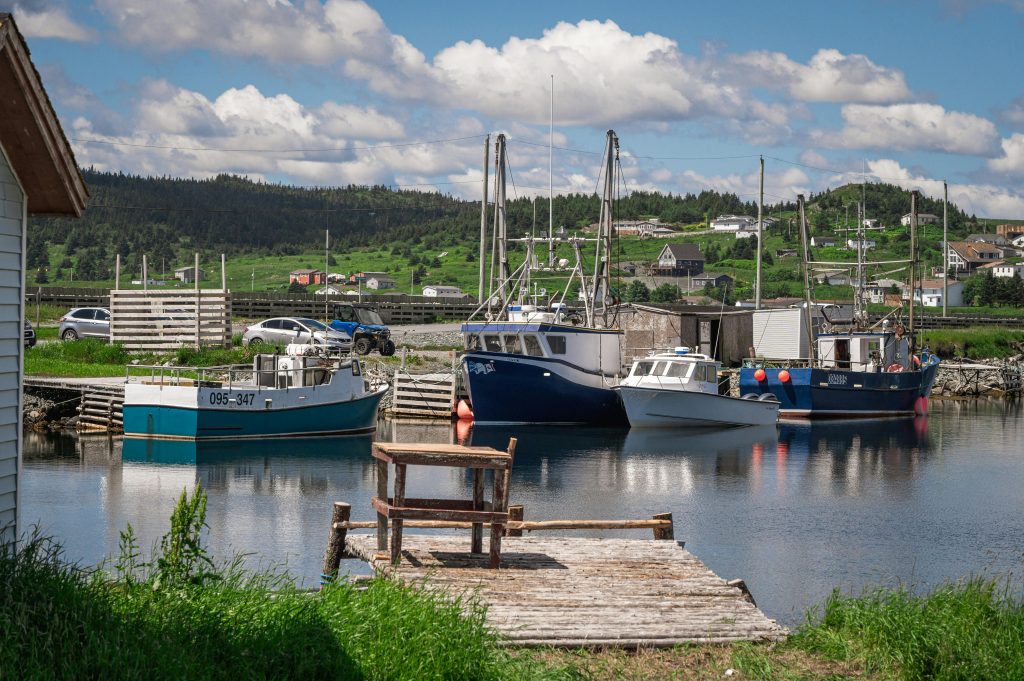
Diversifying employment opportunities for portions of the seasonal labour force, especially in communities with limited alternative employment options, would not be easy. Fishing is often passed down through generations and is deeply rooted in local identity. Yet, the question remains: if stable, year-round employment opportunities in farming existed, would they not benefit provincial labour dynamics and reduce seasonal economic vulnerability?
Under-explored Agricultural Sectors
Despite geographic and climatic challenges, there are areas of farming that Newfoundland & Labrador could reasonably expand. Greenhouse production, for example, has already seen growth, and greenhouse operations — which include controlled environment agriculture — present significant potential to mitigate the impact of harsh winters. In 2020, the province invested around $13 million towards a wide variety of projects, including building agricultural roads, a honeybee development program and construction of a new greenhouse complex. Between 2023-2024, greenhouses have expanded across Canada by about 4%, surpassing 30 million square metres. It will be interesting to see where Newfoundland & Labrador sits in the 2026 census once it is released.
READ: Fertilizer and the Fragile Future of Feeding the World
Other areas showing underutilization include:
Dairy and livestock: Dairy farms remain among the most valuable agricultural commodities in the province, yet quota systems (supply management) and high capital costs for entry present barriers to new producers. Poultry/egg production (operates under supply management as well) and hog/pig farming are minor components of the agricultural landscape, representing less than 6 percent and 1 percent of farm types. This suggests that limited investment may stem from structural challenges to industry growth and institutional barriers associated with supply management.
Oilseed and grain production: Also under 1 percent of farm types, grains and oilseeds represent an area largely undeveloped, yet these crops could complement local livestock feed production and modest regional market opportunities.
According to a recent report by the Atlantic Economic Council, aquaculture has rapidly expanded in Newfoundland & Labrador’s south coast, with production rising from around 5,600 tonnes in 2004 to over 26,000 tonnes in 2024, and a reported value of around CAD$280 million, supporting more than 2,000 jobs. However, industry stakeholders raised critical concerns that the proposed South Coast Fjords National Marine Conservation Area (NMCA) could restrict future aquaculture development. These tensions culminated in the Government of Newfoundland & Labrador officially withdrawing from the NMCA feasibility study, highlighting the delicate balance the province must strike between conservation ideals and industrial food production. While this sector is often grouped with agriculture in broader economic definitions, its ecology and capital structure differ substantially from on-land farming; yet it remains an example of what sustained investment and market focus can achieve in a challenging environment.
Policy Environment: Provincial and Federal Initiatives
The question of agricultural potential cannot be separated from the policy context shaping investment, incentives and barriers.
Federal Policy: Sustainable Canadian Agricultural Partnership (Sustainable CAP)
At a federal level, the Sustainable Canadian Agricultural Partnership (Sustainable CAP) — a five-year, $3.5-billion agreement between federal, provincial and territorial governments running from April 2023 to March 2028 — aims to strengthen the agriculture sector’s competitiveness, innovation and resilience. Newfoundland & Labrador farmers have access to cost-shared funding through this program, supporting initiatives ranging from mental health and safety to innovation and market development. Since its launch, the partnership has approved over $7 million in funding for more than 110 projects in the province, including support for the Newfoundland and Labrador Federation of Agriculture’s educational and professional development initiatives.
Another component, the Resilient Agricultural Landscape Program, has invested in beneficial land-use practices to improve soil health, biodiversity and climate adaptation, with considerable interest from local producers indicated by nearly double the number of applications in recent intake periods.
READ: Banana Farming in the Heart of the Colorado Rockies
Additionally, the On-Farm Climate Action Fund provides opportunities for farms to adopt practices that reduce emissions, improve soil health and strengthen resilience to climate change, making farming more sustainable and potentially more productive.
Provincial Policy: Land Access and Agrifoods Support
Provincially, the Government of Newfoundland & Labrador has taken steps to support agriculture through programs that expand access to Crown land for farming, enabling non-farm landowners to sell land to the government, which can then distribute it to active or aspiring commercial producers. This land consolidation approach is intended to make productive agricultural land more accessible for farming operations.
Recent provincial budgets have also allocated funds — over $12 million — through combined federal-provincial initiatives such as Sustainable CAP and the Provincial Agrifoods Assistance Program to strengthen food processing, market development and environmental innovation in rural communities.
Despite these efforts, barriers remain. Access to capital, labour shortages, market distance from large consumer centres and production costs are persistent hurdles that require ongoing policy attention.
Barriers to Growth and Structural Challenges
While the policy environment includes supportive elements, significant structural challenges hold back the agricultural sector.
Quotas and capital constraints: Industries such as dairy, chicken, turkey, table eggs, and broiler hatching eggs are tightly regulated through quota systems. For new entrants, acquiring quota represents a major financial hurdle. High start-up costs for infrastructure, land and equipment further discourage new farm businesses.
Labour shortages and demographics: The agricultural labour market in Newfoundland & Labrador is small, with domestic employment in agriculture comparatively low. It also faces demographic pressures, including an ageing workforce and declining numbers of young people in rural areas, leading to projected labour gaps by 2030. While temporary foreign workers are part of the mix nationally, reliance on external labour sources presents uncertainty.
Climate and geography: Harsh winters and short growing seasons limit traditional field crop production, increasing reliance on protected agriculture such as greenhouses or imported produce.
Opportunities for Growth and Sustainability
Despite these challenges, there is reason to believe Newfoundland & Labrador’s agricultural sector can grow. Expansion of greenhouse and controlled environment agriculture could allow fresh produce to be grown year-round. Investments in alternative farming models — such as agroforestry, niche grains, legumes and livestock breeds adapted to the local climate — could diversify outputs.
READ: The Fertilizer Ban That Broke Sri Lanka
Enhancing value-added production — processing local agricultural outputs into higher-value foods for regional and export markets — would capture more economic value within the province.
Furthermore, aligning education and vocational training streams to bring young people and skilled labour into agricultural careers could help fill labour gaps and stimulate innovation. At the same time, Canada should offer more enticing economic benefits, such as lowering corporate tax rates for domestic and foreign investors committed to creating jobs for Canadians.
Untapped, But Not Impossible
So, is Newfoundland & Labrador underutilizing its farming potential? The answer appears to be “yes” — in the sense that the province’s agricultural land, human capital and policy frameworks have not yet translated into agricultural output that matches capacity or economic opportunity. Yet this is not merely a question of untapped land. It is about overcoming economic, demographic and sectoral limitations, and making thoughtful investments in infrastructure, education and market connectivity in an environmentally conscious way.
With coordinated policy action at provincial and federal levels, and strategic investments by both public and private actors, there is a pathway for Newfoundland & Labrador to expand its agricultural footprint, create jobs, stabilize rural economies and reduce seasonal volatility. In doing so, it would not only benefit local communities, but also contribute to a stronger, more resilient Canadian food system overall.
What incentives should St. John’s offer to attract young producers and expand the province’s agricultural self-sufficiency?
Sources
- About Newfoundland and Labrador – Land Area. (2024, May 8). Government of Newfoundland & Labrador. Retrieved May 13, 2026, from https://www.gov.nl.ca/aboutnl/area.html
- Agriculture and Agri-Food Canada. (2024). Resilient Agricultural Landscape Program (RALP). Retrieved May 13, 2026, from https://www.canada.ca/en/agriculture-agri-food/news/2024/07/resilient-agricultural-landscape-program-ralp.html
- Agriculture and Agri-Food Canada. (2024, January 23). Sustainable Canadian Agricultural Partnership investing in farmers’ mental health, wellness and safety. Retrieved May 13, 2026, from https://www.canada.ca/en/agriculture-agri-food/news/2024/01/sustainable-canadian-agricultural-partnership-investing-in-farmers-mental-health-wellness-and-safety.html
- Agriculture and Agri-Food Canada. (2024, July 16). Resilient Agricultural Landscape Program investing in improved agricultural lands. Retrieved May 13, 2026, from https://www.canada.ca/en/agriculture-agri-food/news/2024/07/resilient-agricultural-landscape-program-investing-in-improved-agricultural-lands.html
- Agriculture Land consolidation – Forestry, agriculture and lands. (2026, January 14). Forestry, Agriculture and Lands. Retrieved May 13, 2026, from https://www.gov.nl.ca/fal/faa/agrifoods/land/land-use/consolidation/
- Canada, A. a. A. (2023, June 19). Sustainable Canadian Agricultural Partnership. agriculture.canada.ca. Retrieved May 13, 2026, from https://agriculture.canada.ca/en/department/initiatives/sustainable-canadian-agricultural-partnership
- Canada, A. a. A. (2025, September 29). Agricultural Climate Solutions – On-Farm Climate Action Fund. agriculture.canada.ca. Retrieved May 13, 2026, from https://agriculture.canada.ca/en/programs/agricultural-climate-solutions-farm-climate-action-fund
- Canadian Agricultural Human Resource Council. (2023). Agriculture labour market information and forecast 2023-2030. In https://cahrc-ccrha.ca/. Retrieved May 13, 2026, from https://cahrc-ccrha.ca/sites/default/files/2024-03/ProvNFLD-Factsheet_2024-ENG_0.pdf
- Employment Insurance | Monitoring and Assessment Report 2024-2025. (2025). Canada Employment Insurance Commission (CEIC). Retrieved May 13, 2026, from https://www.canada.ca/content/dam/esdc-edsc/images/programs/ei/ei-list/reports/monitoring2024/2023-2024-EI-MAR-EN.pdf
- Government of Canada, Statistics Canada. (2022a, May 11). Farms classified by total farm area, Census of Agriculture historical data. Retrieved May 13, 2026, from https://www150.statcan.gc.ca/t1/tbl1/en/tv.action?pid=3210015601&pickMembers%5B0%5D=1.3&cubeTimeFrame.startYear=2001&cubeTimeFrame.endYear=2021&referencePeriods=20010101%2C20210101
- Government of Canada, Statistics Canada. (2022b, May 11). The Daily — Canada’s 2021 Census of Agriculture: A story about the transformation of the agriculture industry and adaptiveness of Canadian farmers. Retrieved May 13, 2026, from https://www150.statcan.gc.ca/n1/daily-quotidien/220511/dq220511a-eng.htm?indid=22863-1&indgeo=0
- Government of Canada, Statistics Canada. (2022c, June 15). Vegetable and melon farms make up the biggest share of farms in Newfoundland and Labrador. Retrieved May 13, 2026, from https://www150.statcan.gc.ca/n1/pub/96-325-x/2021001/article/00001-eng.htm
- Government of Canada, Statistics Canada. (2025, April 24). The Daily — Greenhouse, sod and nursery industries, 2024. Retrieved May 13, 2026, from https://www150.statcan.gc.ca/n1/daily-quotidien/250424/dq250424c-eng.htm
- Hood, J. (2024, December 19). Minister Byrne highlights 2024 progress on land and sea – news releases. News Releases. Retrieved May 13, 2026, from https://www.gov.nl.ca/releases/2024/ffa-en/1219n02
- Hood, J. (2026, February 3). Provincial Government provides update on the Memorandum of Understanding regarding South Coast National Marine Conservation Area and National Park Feasibility Assessment – news releases. News Releases. Retrieved May 13, 2026, from https://www.gov.nl.ca/releases/2026/eccc/0203n01/
- Newfoundland Fisheries and Land Resources. (2020, June 19). Newfoundland invests in greenhouse vegetable facilities, research and training. Greenhouse Canada. Retrieved May 13, 2026, from https://www.greenhousecanada.com/newfoundland-invests-in-greenhouse-vegetable-facilities-research-and-training/
- Newfoundland’s South Coast at a Turning Point: An Economic Snapshot of Division 3. (2025). In Atlantic Economic Council. Retrieved May 13, 2026, from https://atlanticeconomiccouncil.ca/page/nlecongrowth
- Parks Canada Agency, Government of Canada. (2025, February 13). Proposed South Coast Fjords National Marine Conservation Area. Government of Canada. Retrieved May 13, 2026, from https://parks.canada.ca/amnc-nmca/cnamnc-cnnmca/fjords-cote-sud-south-coast-fjords
- St. Pierre, M., & McComb, M. (2022). Vegetable and melon farms make up the biggest share of farms in Newfoundland and Labrador. Statistics Canada. Retrieved May 13, 2026, from https://publications.gc.ca/collections/collection_2022/statcan/96-325-x/CS96-325-2021-1-eng.pdf