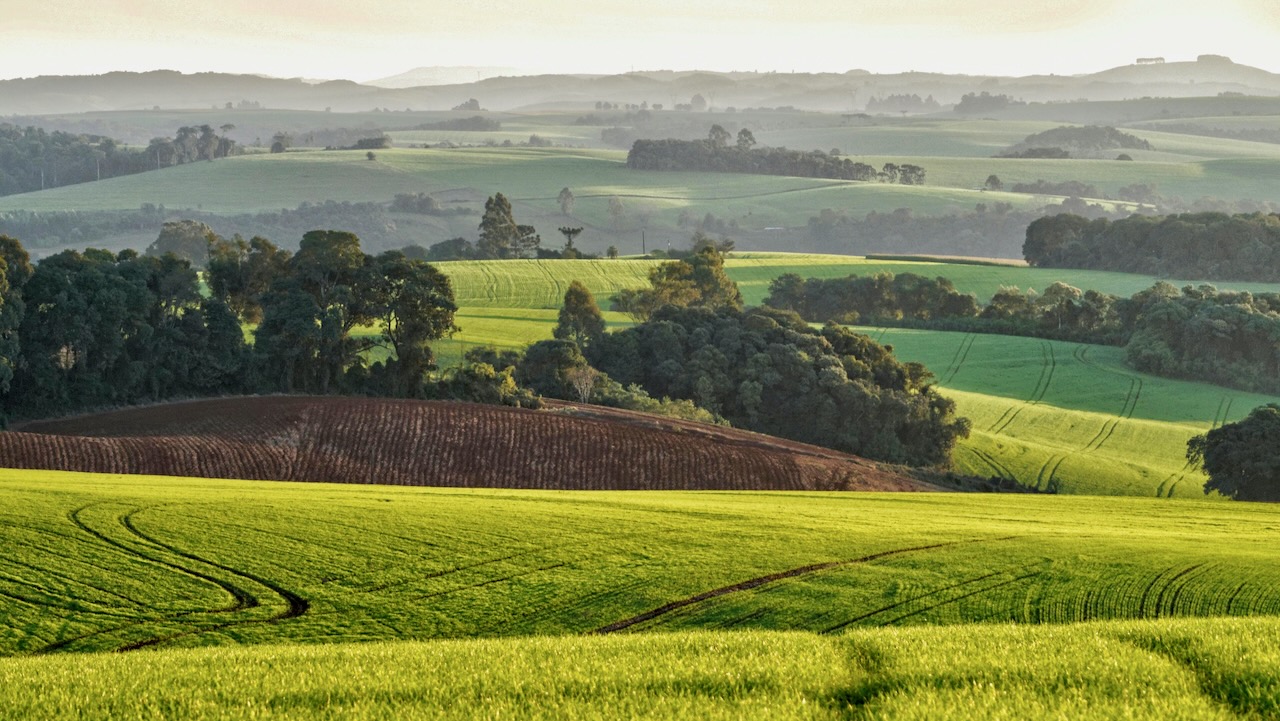
Food self-sufficiency has become an increasingly important measure of national resilience in a world shaped by geopolitical tension, climate volatility, and supply chain disruption. While very few countries can claim complete independence from food imports, several stand out for producing far more agricultural output than they consume. This level of self-sufficiency is not accidental. It is the result of a powerful combination of natural geography and long-term policy decisions that prioritize agricultural productivity, innovation, and export capacity.
Brazil: Turning Geography into Global Dominance
Brazil has emerged as one of the most agriculturally self-sufficient nations in the world, largely due to its immense land base, and favourable climate. The country benefits from vast tracts of arable land, particularly in the central Cerrado region, which was once considered unsuitable for farming. Through scientific advancement and soil management, this region has been transformed into one of the most productive agricultural zones globally. Brazil’s tropical and subtropical climates allow for multiple growing seasons each year, significantly increasing output.
READ: Will Japan Survive Its Aging Farmer Crisis?
Equally important has been government policy. Public investment in agricultural research, particularly through state-backed institutions, has driven innovation in crop science, and farming techniques. Brazil also embraced export-oriented agriculture, building infrastructure to move commodities efficiently to global markets. The result is a country that not only feeds itself, but plays a central role in supplying soybeans, beef, and sugar to the world.
In caloric terms, Brazil produces approximately 3100–3,300 calories per person per day domestically, compared to the global average consumption of roughly 2,900 calories. Its soybean exports alone hovers around 100 million tonnes annually (2023, 2024), which, when converted to caloric output, represent enough protein and energy to feed hundreds of millions of people beyond its borders.
Argentina: Fertility and Export Focus
Argentina’s agricultural strength is deeply rooted in the Pampas, a vast expanse of fertile plains in the central-east part of the country, which rank among the most productive farmland on Earth. This natural advantage allows for high yields of soybeans, wheat, and corn, as well as a globally recognized beef industry. The country’s temperate climate and flat terrain further enhance efficiency, making large-scale farming both practical, and cost-effective.
READ: The Fertilizer Ban That Broke Sri Lanka
Policy decisions have historically reinforced this natural advantage. Argentina developed an agricultural system geared toward exports, supported by mechanization, and relatively large farm operations. While the country has experienced periods of economic instability, its agricultural sector has remained a consistent source of productivity, and foreign exchange. The combination of rich soil and an outward-looking farming model has ensured that Argentina produces well beyond its domestic needs.
With a population of about 46 million, the country produces enough grain and livestock calories to theoretically support 90 million or more people. Argentina’s export surplus is substantial when viewed on a per capita basis. According to the Buenos Aires Grains Exchange, total grain and soybean exports were forecasted at 101.5 million tonnes in 2024–25 — a figure that approached roughly 2 tonnes for every Argentine citizen when processed agricultural products such as soybean meal, and oil are included. Focusing strictly on cereal grains, USDA data for 2023-24 showed corn exports alone at 37 million tonnes and wheat exports over 13 million tonnes, putting combined cereal exports at approximately 1.1 tonnes per person — still an exceptionally high level by global standards, though one that varies considerably year to year depending on weather and market conditions.
Australia: Efficiency in a Harsh Landscape
Australia presents a unique case of agricultural self-sufficiency, as much of the continent is arid or semi-arid. However, the country’s relatively small population compared to its land area allows it to produce significantly more food than it consumes. Key agricultural regions, particularly in the southeast and southwest, benefit from more moderate climates and access to water systems like the Murray-Darling Basin.
Government policy has played a critical role in overcoming environmental limitations. Australia has invested heavily in water management, drought resilience, and agricultural research. Farmers have adopted highly efficient practices, including precision agriculture, and advanced livestock management. Trade liberalization has also encouraged producers to compete globally, reinforcing a system built on efficiency and scale. Despite its environmental challenges, Australia has become one of the world’s leading exporters of wheat, meat, and other commodities.
Australia ranks among the most export-oriented agricultural producers globally. Data from the Australian Bureau of Agricultural and Resource Economics and Sciences (ABARES) indicates that, over the three years leading up to 2024–25, roughly 71% of the nation’s agricultural output by volume was shipped abroad. This leaves less than one-third for domestic use, pointing to a food self-sufficiency level exceeding 300%, though it varies by sector. Export-driven industries such as wheat and beef push that ratio higher, while sectors more focused on local consumption — like horticulture and poultry — moderate it. When viewed in terms of calories, Australia produces a surplus sufficient to support an additional 60 million people (roughly), largely due to its strong output of wheat, beef, and dairy products.
Canada: Abundance and Stability
Canada’s agricultural self-sufficiency is driven by its vast land resources, and abundant freshwater supply. The Prairie provinces form one of the largest contiguous farming regions in the world, producing significant quantities of wheat, canola, and pulses. While Canada’s growing season is shorter than in many other countries, advances in crop science, and farming technology have helped maximize yields.
READ: Saskatchewan Agriculture 2026: Leading the Way in Canola, Wheat, and Pulses
Policy has been central to maintaining stability in the sector. Although controversial and debatable, supply management systems in industries such as dairy and poultry ensure consistent domestic production, while government programs support farmers through insurance, research funding, and infrastructure development. Canada’s relatively low population density further strengthens its position, allowing it to maintain a substantial surplus that is exported globally. The balance between market-driven production and policy support has made Canada both stable, and highly productive.
Canada produces significant surpluses in major agricultural commodities — particularly grains and oilseeds — though its overall food system is more balanced and complex than that of highly export-driven countries like Australia or Argentina. Data from Agriculture and Agri-Food Canada shows that about half of the total value of primary agricultural output is exported. At the same time, the country meets roughly 70% of its own food requirements domestically, while still shipping more than half of what it produces abroad. This reflects a structural dynamic where large surpluses in certain commodities exist alongside continued reliance on imports in categories such as fresh fruits and vegetables.
The extent of these surpluses is especially clear in wheat production. In 2024, Canada produced approximately 35 million tonnes of wheat. With a population of around 41 million people, that equates to roughly 854 kilograms per person — far beyond what could reasonably be consumed domestically. Looking ahead, total wheat exports, including both durum and non-durum varieties, are projected to exceed 28 million tonnes in the 2025–26 crop year. This suggests that over three-quarters of the annual harvest is ultimately sold into global markets.
United States: Scale, Diversity, and Innovation
The United States stands out for combining geographic diversity with technological leadership. From the fertile soils of the Midwest to the irrigated farmland of California’s Central Valley, the country can produce a wide variety of crops across multiple climate zones. This diversity reduces dependence on imports, and strengthens overall food security.
READ: How Much of the U.S. Is Actually Farmland?
Government policy has long supported agricultural productivity through subsidies, crop insurance, and significant investment in research and development. American farmers have been early adopters of new technologies, including biotechnology, GPS-guided equipment, and data-driven farm management systems. This emphasis on innovation has dramatically increased yields and efficiency over time. With its large-scale operations and advanced infrastructure, the United States consistently produces more food than it consumes, and remains one of the world’s leading agricultural exporters.
The United States occupies a unique position in global agriculture: it is a dominant producer and exporter, yet it has also become a major importer of food. This dual role makes simple measures of “self-sufficiency” difficult to interpret. What is well established, however, is the breadth of its export capacity. Data from the U.S. Department of Agriculture’s Economic Research Service indicates that, since 2008, about one-fifth of American agricultural output (by value) has been sold abroad. These exports are heavily concentrated in bulk commodities such as soybeans, corn, and wheat — areas where the U.S. maintains a strong competitive edge.
On the production side, the scale of domestic supply is considerable. Research drawing on recent USDA figures, estimates that the U.S. food system provides roughly 3,900 calories per person per day. After adjusting for food waste, spoilage, and other losses along the supply chain, actual intake falls closer to 2,500 calories per person. This gap highlights how a meaningful portion of production is either exported or never consumed.
In addition, several commodity groups demonstrate particularly high export dependence. Oilseeds, staple grains such as wheat and rice, and products like tree nuts often see 40% or more of their total market value tied to foreign sales. These elevated export shares underscore the presence of sustained surpluses in key sectors relative to domestic demand.
The Common Formula for Self-Sufficiency
What unites these five countries is not just their ability to produce food, but the systems they have built to sustain that production over time. Natural geography provides the foundation, whether through fertile soil, favourable climate, or abundant water. However, geography alone is not enough. Strategic policy decisions — especially those focused on research, infrastructure, and market access — have been essential in unlocking agricultural potential.
Equally important is the role of population dynamics. Countries with relatively low population density, such as Canada and Australia, naturally generate higher per capita output. Meanwhile, export-oriented strategies push producers to operate at a scale that exceeds domestic demand, reinforcing both efficiency, and resilience.
In an era where food security is increasingly tied to global uncertainty, these nations demonstrate that agricultural self-sufficiency is not simply about having land. It is about how that land is managed, supported, and integrated into a broader economic and policy framework designed for long-term sustainability.
In an era of rising geopolitical instability and climate unpredictability, should nations prioritize 100% domestic food self-sufficiency over global trade reliance?
Sources
- Ag and Food Statistics: Charting the Essentials – Agricultural Trade | Economic Research Service. (2025, April 1). Retrieved April 5, 2026, from https://www.ers.usda.gov/data-products/ag-and-food-statistics-charting-the-essentials/agricultural-trade
- Caetano, M., & Caetano, M. (2024, September 30). Argentina to harvest 143.2 million tonnes of grains and oilseeds. Fastmarkets. Retrieved April 5, 2026, from https://www.fastmarkets.com/insights/argentina-to-harvest-143-2-million-tonnes-of-grains-and-oilseeds/
- Agriculture and Agri-Food Canada (AAFC). (2026, January 28). Canada: Outlook for principal field crops, 2026-01-21. agriculture.canada.ca. Retrieved April 5, 2026, from https://agriculture.canada.ca/en/sector/crops/reports-statistics/canada-outlook-principal-field-crops-2026-01-21
- Agriculture and Agri-Food Canada (AAFC). (2025, July 3). Overview of the Canadian agri-food system. agriculture.canada.ca. Retrieved April 5, 2026, from https://agriculture.canada.ca/en/sector/canadian-food-system/overview-agri-food-system
- Datamar. (2025, January 7). ANEC: Brazil’s soybean exports reach 97.3 million tonnes in 2024 – DatamarNews. DatamarNews. Retrieved April 5, 2026, from https://datamarnews.com/noticias/anec-brazils-soybean-exports-reach-97-3-million-tonnes-in-2024/
- Department of Agriculture, Fisheries and Forestry. (2026). Snapshot of Australian Agriculture 2026. Retrieved April 5, 2026, from https://www.agriculture.gov.au/abares/products/insights/snapshot-of-australian-agriculture
- Farm Credit Canada. (2024, June 26). Canada becoming more self-sufficient in fresh fruit and vegetable production | FCC. FCC-FAC. Retrieved April 5, 2026, from https://www.fcc-fac.ca/en/knowledge/economics/canada-fresh-fruit-vegetable-production
- Farm Institute. (2014, September 3). Australia exports enough food for 61,536,975 people – give or take a few! Retrieved April 5, 2026, from https://www.farminstitute.org.au/australia-exports-enough-food-for-61536975-people-give-or-take-a-few/
- Government of Canada, Statistics Canada. (2024, December 5). The Daily — Production of principal field crops, November 2024. Retrieved April 5, 2026, from https://www150.statcan.gc.ca/n1/daily-quotidien/241205/dq241205b-eng.htm
- Government of Canada, Statistics Canada. (2026, March 18). Canada’s population clock (real-time model). Statistics Canada. Retrieved April 5, 2026, from https://www150.statcan.gc.ca/n1/pub/71-607-x/71-607-x2018005-eng.htm
- OECD, FAO, Gurría, A., & QU, D. (2020). OECD-FAO Agricultural Outlook 2020-2029. FAO, Rome/OECD Publishing, Paris. Retrieved April 5, 2026, from https://www.oecd.org/content/dam/oecd/en/publications/reports/2020/07/oecd-fao-agricultural-outlook-2020-2029_bfb66700/1112c23b-en.pdf
- Once again, US and Europe way ahead on daily calorie intake. (2022, December 12). UN News. Retrieved April 5, 2026, from https://news.un.org/en/story/2022/12/1131637
- Syngenta & DePutter Publishing Ltd. (2026, January 14). Graph: Brazil soy exports seen re. . . | Syngenta CA. Syngenta. Retrieved April 5, 2026, from https://www.syngenta.ca/market-news/graph–brazil-soy-exports-seen-record-high
- United States Department of Agriculture. (2025). Argentina – Grain and Feed Annual. In FAS.USDA. Retrieved April 5, 2026, from https://apps.fas.usda.gov/newgainapi/api/Report/DownloadReportByFileName?fileName=Grain%20and%20Feed%20Annual_Buenos%20Aires_Argentina_AR2025-0007.pdf
- United States Department of Agriculture Economic Research Service. (2026, February 17). Globally, calorie availability and the prominence of food in household spending are inversely related | Economic Research Service. Retrieved April 5, 2026, from https://www.ers.usda.gov/data-products/chart-gallery/chart-detail?chartId=58376
- Worldometer. (2026). Argentina population (2026) – Worldometer. Retrieved April 5, 2026, from https://www.worldometers.info/world-population/argentina-population/