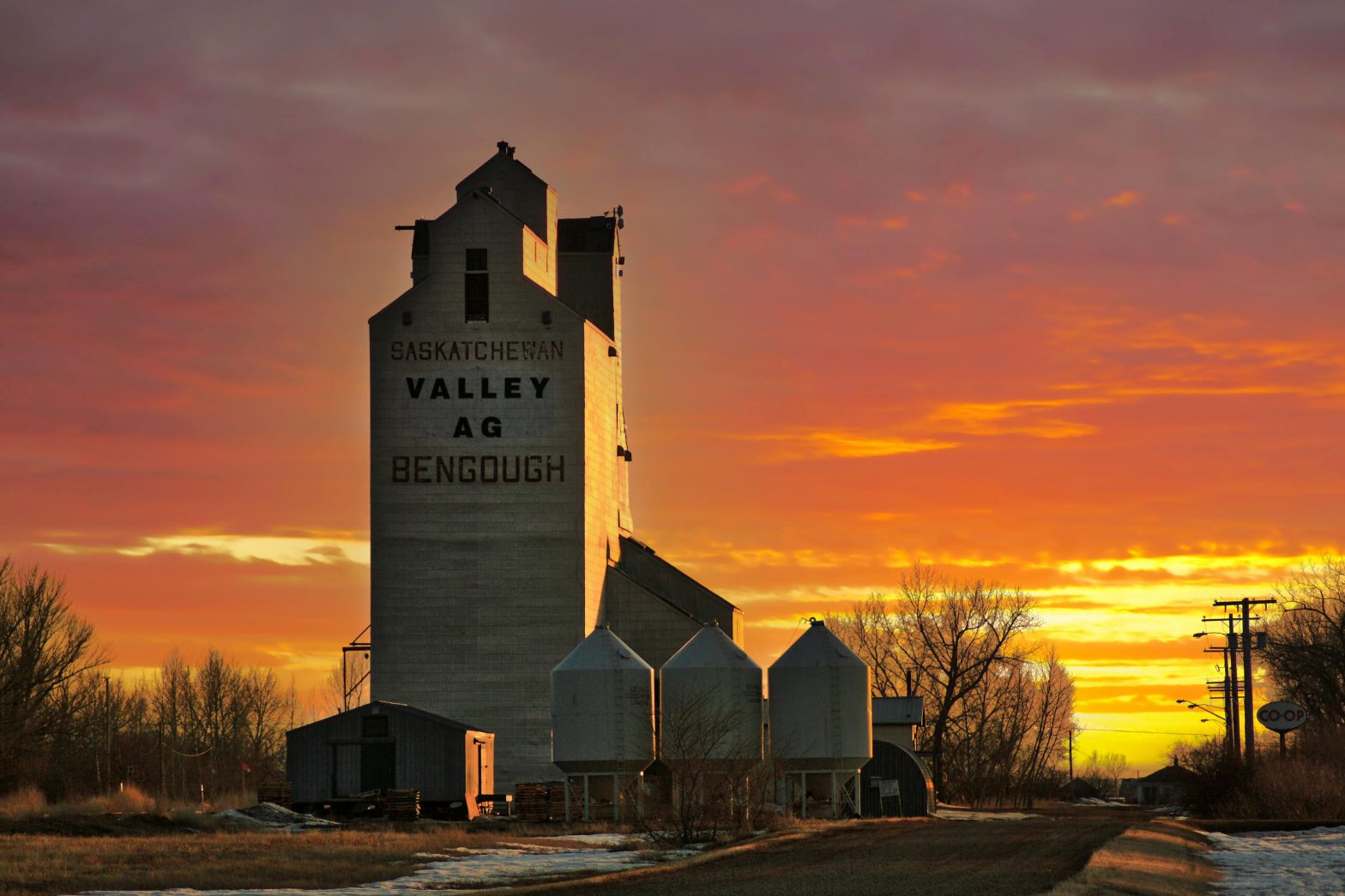
Saskatchewan’s agricultural economy continues to be the core of Canadian and global crop production, driven by the province’s expansive arable land, innovative production techniques, and strategic position within international markets. At the heart of this agricultural output are canola and wheat, which together form the fundamental pillar of the province’s crop sector. Beyond these stalwarts, Saskatchewan has seen significant growth in pulse crops such as lentils and chickpeas, further diversifying its production profile. The following analysis examines the province’s crop strengths, evolving niche crops and the policy landscape that shapes farming, and trade.
Canola: Oilseed Champion on the Prairies
Canola is arguably Saskatchewan’s most prominent crop, holding a dominant role in both provincial, and national agricultural production. Recent data from Statistics Canada indicate canola production in Saskatchewan reached record levels in 2025, with approximately 12 million tonnes harvested, reflecting an almost 17 percent increase from the previous year, and underscoring the resilience, and adaptability of Prairie farmers. This output not only solidifies Saskatchewan’s position as Canada’s premier canola producer, but also highlights the crop’s expanding footprint across global markets. Canola yields and seeding areas have grown consistently, contributing to higher production volumes that significantly impact the provincial economy, and export potential.
READ: How the U.S.-Israel War With Iran Is Disrupting Global Fertilizer Supply
Canola’s success in Saskatchewan is rooted in its versatility. Beyond its role as a food oil, canola seed and its derivatives — including canola meal and canola oil — are integral to livestock feed, industrial applications, and biofuel production. The crop’s adaptability to Prairie conditions and ongoing improvements in agronomy and genetics have enabled producers to manage variable weather patterns, including drought and sporadic rainfall, more effectively than many other oilseeds. For instance, in a 2015 study, researchers found that adoption of genetically modified (GM) varieties increased global farm income by approximately US $133 billion between the years 1996-2013, with financial gains shared between farmers and seed technology providers. More specifically, it showed that the glyphosate tolerant and glufosinate tolerant variants, increased farm income by roughly 30 and 121 percent respectively.
A more recent example is a Canadian project that is focusing on creating stable, uniform canola lines that deliver higher seed yields and improved tolerance to water stress for use in breeding programs. The work combines conventional breeding approaches with targeted CRISPR knock-in technology — a precise genome-editing method — followed by field and controlled testing to evaluate performance under both typical growing conditions, and drought stress.
Wheat: The Breadbasket Legacy Continues
Alongside canola, wheat remains foundational to Saskatchewan’s agricultural identity. Hard red spring wheat, durum, and other wheat classes contribute significantly to total crop production, with estimates exceeding 18 million tonnes in the most recent harvest year. This enduring strength underscores Saskatchewan’s role as Canada’s largest wheat-producing province, a status supported by favourable soil conditions and well-established agronomic practices.
READ: Inside the World of Canadian Horse Farming
Wheat production benefits from well-developed infrastructure, including a network of elevators, processors, and rail links that facilitate efficient movement to domestic, and international markets. The high quality of Saskatchewan wheat has traditionally ensured access to competitive global markets, particularly in food processing, and milling sectors. The top five destinations for non-durum wheat are Indonesia, China, Japan, United States, and Bangladesh, and together with all other exports, accounts for approximately $3.2 billion.
As global population growth and food security challenges intensify, demand for wheat — especially durum used in pasta and other staples — is expected to remain robust.
Beyond Staples: Pulses and Other Emerging Crops
In recent years, Saskatchewan has diversified its agricultural portfolio with significant gains in pulse crops, such as lentils and chickpeas. These crops are not niche anymore; they are substantial contributors to the province’s crop totals. In 2025, lentil production in Saskatchewan reached record highs of close to 2.9 million tonnes, an increase of 37 percent over the previous year. Similarly, chickpeas and dry peas have seen substantial production growth.
Pulse crops offer both agronomic and market advantages. Agronomically, lentils, chickpeas and dry peas contribute to soil health through nitrogen fixation, reducing the need for synthetic fertilizers, and enhancing the sustainability of crop rotations. These legumes are increasingly valued in global markets for their high protein content, and role in plant-based diets. They also represent strategic diversification for Saskatchewan producers facing price volatility in traditional crops.
READ: How Much of Canada Is Actually Farmland?
The surge in pulse production is mirrored by increased acreage devoted to these crops, as well as improvements in breeding, and disease management that have enhanced yield reliability. The growth in niche crops also aligns with changing dietary preferences and global demand, particularly in regions where pulses are dietary staples.
Policy Landscape: Provincial and Federal Dynamics
Saskatchewan’s agricultural success does not occur in a policy vacuum. Both provincial and federal governments play critical roles in shaping the conditions under which farmers operate.
On the federal side, the Sustainable Canadian Agricultural Partnership (Sustainable CAP) and associated programs such as AgriStability provide risk management support, income stability and encouragement for innovation, and competitiveness in crop production. In 2025, Canadian agriculture ministers agreed to enhanced AgriStability support, increasing compensation rates from 80 to 90 percent and doubling payment caps for the 2025 program year, reflecting a concerted effort to bolster producers against market volatility, and rising input costs. Additionally, adjustments to feed inventory pricing for future years aim to align support mechanisms more closely with farm realities. These changes underscore the importance of government-backed safety nets for farm operations dealing with unpredictable markets, and weather conditions.
READ: How Much of the U.S. Is Actually Farmland?
Trade policy has remained a central factor shaping Canada’s agricultural export outlook, with canola and pulses among the most directly affected commodities. In recent years, Canadian producers have faced a challenging tariff environment, including US duties of 25 percent on selected agricultural goods, which have added cost pressure and uncertainty to cross-border trade. At the same time, China’s tariffs on Canadian canola seed, originally set at approximately 75 percent, significantly disrupted export flows and market confidence, forcing producers and exporters to seek alternative destinations, and pricing strategies.
Momentum has since shifted following renewed diplomatic engagement and trade negotiations. As of March 1, 2026, Chinese tariffs on Canadian canola seed have been reduced to a combined rate of approximately 15 percent, while tariffs on canola meal will be fully eliminated from their previous 100 percent level. These changes are expected to materially improve market access, strengthen price signals and restore demand across key international markets. For Saskatchewan’s canola sector in particular, easing tariff barriers has the potential to unlock substantial export value, stabilize producer revenues, and reinforce the province’s role as a global leader in oilseed production.
At the provincial level, Saskatchewan’s 2030 Growth Plan sets ambitious goals for agriculture, including increasing local processing capacities, and value-added production. Targets such as processing a larger share of canola within the province and expanding crop diversification signal strategic efforts to retain value, attract investment, and create rural employment opportunities. These provincial directives work in tandem with federal programs to ensure Saskatchewan remains competitive on the global stage.
However, policy shifts are not without challenges. Federal budget reallocations and cutbacks have led to closures of research facilities, including long-standing research farms in Saskatchewan. These closures raise concerns among producers and industry analysts about the future of agronomic research and innovation critical to maintaining crop yields and resilience in the face of environmental stresses, and evolving pest pressures.
The Road Ahead: Growth with Resilience
Saskatchewan’s agricultural sector stands at a pivotal juncture. Its historical strengths in canola and wheat production remain firmly intact, supported by record output and continuous improvements in seed technology, and agronomic practices. Meanwhile, the rapid expansion of pulse crops such as lentils and chickpeas represents a diversification strategy that enhances both economic resilience and environmental sustainability.
READ: Next-Generation Strategies for Healthy Cattle Hooves
The interplay between provincial strategies and federal policies will continue to shape the future of Prairie agriculture. Trade agreements, risk management reforms, and investment in research and processing infrastructure are among the key levers that can ensure Saskatchewan maintains its leadership in global crop production. As global markets evolve and consumers prioritize sustainability and nutritional quality, Saskatchewan’s crop producers are well positioned to meet demand — provided that supportive, and adaptive policies guide the sector forward.
Its stature as an agricultural powerhouse is underpinned by its remarkable production of canola and wheat, and strengthened by its growing role in pulse, and niche crop markets. With dynamic policy frameworks and ongoing global engagement, the province is poised to navigate emerging challenges and opportunities, sustaining its essential role in feeding the world.
Record yields are one thing, but long-term resilience is another. Which crop do you believe will be Saskatchewan’s most critical economic driver over the next decade: the traditional wheat powerhouse or the rapidly expanding global pulse market?
Sources
- Brookes, G., & Barfoot, P. (2015). Global income and production impacts of using GM crop technology 1996–2013. GM Crops & Food, 6(1), 13–46. https://doi.org/10.1080/21645698.2015.1022310
- Brooks, T., & Brooks, T. (2025, July 25). OFA supports new improvements to AgriStability program, offering higher payouts and caps to support farmers. Ontario Federation of Agriculture. Retrieved March 31, 2026, from https://ofa.on.ca/ofa-supports-new-improvements-to-agristability-program-offering-higher-payouts-and-caps-to-support-farmers/
- Business Plan 2025-2026. (2025). Saskatchewan Ministry of Agriculture. Retrieved March 31, 2026, from https://share.google/VkUVDyBm5JAIsBRqp
- Canada, A. a. A. (2023, June 19). Sustainable Canadian Agricultural Partnership. agriculture.canada.ca. Retrieved March 31, 2026, from https://agriculture.canada.ca/en/department/initiatives/sustainable-canadian-agricultural-partnership
- Canada, A. a. A. (2026, January 26). AgriStability: 1. What this program offers. agriculture.canada.ca. Retrieved March 31, 2026, from https://agriculture.canada.ca/en/programs/agristability
- Canada, G. A. (2026, January 17). Backgrounder – Preliminary Agreement-In-Principle to Address Economic and Trade Issues between Canada and the People’s Republic of China. GAC. Retrieved March 31, 2026, from https://www.international.gc.ca/news-nouvelles/2026/2026-01-16-china-chine.aspx?lang=eng
- Developing canola lines with higher yield and better drought resilience through the regulation of transcription factors – SK Oilseeds. (2025, May 6). SK Oilseeds. Retrieved March 31, 2026, from https://saskoilseeds.com/research-results/developing-canola-lines-with-higher-yield-and-better-drought-resilience-through-the-regulation-of-transcription-factors
- Glacier FarmMedia. (2026, January 26). Scott and Indian Head research sites to close, Agriculture and Agri-Food Canada confirms. Moose Jaw Today. Retrieved March 31, 2026, from https://www.moosejawtoday.com/agriculture-news/scott-and-indian-head-research-sites-to-close-agriculture-and-agri-food-canada-confirms-11789392
- Government of Canada, Statistics Canada. (2025, December 4). The Daily — Production of principal field crops, November 2025. Retrieved March 31, 2026, from https://www150.statcan.gc.ca/n1/daily-quotidien/251204/dq251204a-eng.htm
- Saskatchewan Agriculture Exports 2024. (2025). Saskatchewan.ca. Retrieved March 31, 2026, from https://www.saskatchewan.ca/business/agriculture-natural-resources-and-industry/agribusiness-farmers-and-ranchers/saskatchewan-import-and-export-information/resources-for-importers/trade-statistics
- Saskatchewan’s Dashboard – Crop production. (2025, December 4). Government of Saskatchewan. Retrieved March 31, 2026, from https://dashboard.saskatchewan.ca/business-economy/business-industry-trade/crop-production