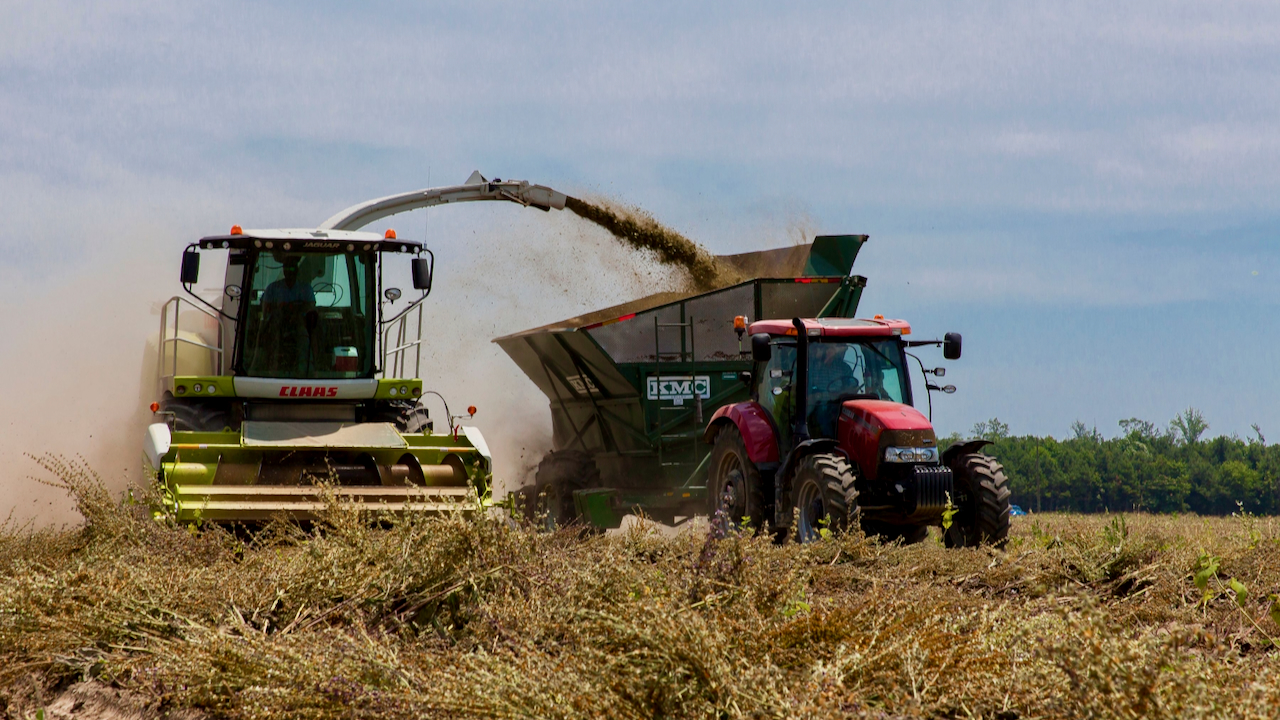
Agriculture feeds millions of people, but it remains one of the most hazardous industries in the United States. Tractors, harvesting machinery, livestock, grain storage facilities and long working hours expose farmers to potentially fatal accidents. Although engineering improvements and safety initiatives have reduced some risks, the past quarter-century demonstrates that modern equipment has not eliminated the dangers of farm work.
The U.S. Farm Death Toll: Historical and Current Trends
The U.S. agricultural sector has consistently recorded substantially higher fatal injury rates than the workforce overall. Data from the National Institute for Occupational Safety and Health (NIOSH), shows that the combined agriculture, forestry, fishing, and hunting sector suffered 18.6 fatal injuries per 100,000 full-time-equivalent (FTE) workers in 2022 — more than five times the all-industry national average of 3.7. Within that broader sector, crop production recorded 171 fatal occupational injuries in 2022, the largest total among its main agricultural production categories. These figures illustrate the disproportionate risks faced by workers in agriculture and related industries.
READ: Canada’s Fertilizer Advantage Tested as Middle East Crisis Drives Up Costs
The broader industry recorded 448 fatal occupational injuries in 2023 and 475 in 2024, according to the U.S. Bureau of Labor Statistics (BLS). These figures include forestry, fishing and hunting, so they should not be interpreted as farm-only death tolls. The total rose in both years following 417 fatalities in 2022. Although the 2024 figure remains well below historical highs — such as 1994, when the sector recorded 852 fatalities at a rate of 28.1 per 100,000 workers, or the more recent 2014 total of 568 deaths (24.9 per 100,000 FTE workers) — the continuing death toll demonstrates that significant safety challenges remain.
Over the last 25 years, changes in equipment, training and awareness have improved opportunities to prevent fatal accidents. Nevertheless, comparisons across decades require care: employment levels, farm sizes, reporting practices and statistical classifications change over time. Fatality rates per 100,000 workers are generally more informative than raw totals when assessing whether farming has become safer.
Which Farm Activities Are Most Dangerous?
Tractors and heavy machinery remain central concerns. Tractor rollovers, collisions, runovers and entanglement in moving machinery can cause catastrophic injuries. Combines, corn pickers, balers and other harvesting equipment introduce additional hazards, particularly when operators attempt to clear blockages or perform maintenance without shutting down machinery and isolating its power source.
Grain handling presents another serious risk. Workers entering grain bins can become trapped and suffocate when flowing grain pulls them under the surface. Augers, conveyors and other equipment can also cause fatal entanglement.
The BLS recorded 19 occupational deaths in corn farming in 2024, while oilseed and grain farming accounted for 54 deaths. These are industry-wide occupational counts, not deaths attributed exclusively to particular machines. They also cannot establish that corn farming is more dangerous per worker than another type of agriculture without comparable employment data.
Livestock operations create different hazards, including crushing, trampling and unpredictable animal behaviour. Orchard and field operations can involve falls, vehicle incidents and exposure to pesticides or extreme temperatures. Cotton harvesting and processing operations carry unique risks due to high-speed mechanical harvesters, exposed rotating parts, and air quality hazards from organic dust.
READ: Fertilizer and the Fragile Future of Feeding the World
Age is another important factor. NIOSH reported that workers aged 55 and older accounted for more than half of deaths in the broader agricultural, forestry, fishing and hunting industry in 2022. An aging farming population, combined with physically demanding work and seasonal time pressures, reinforces the importance of training, equipment maintenance and realistic work schedules.
Real Life Examples
Wisconsin 2004: Farmer killed in hillside tractor rollover
A 62-year-old Wisconsin farmer was spraying weeds along the edge of a field on a slope of approximately 25 degrees. He was operating an older Allis-Chalmers WD45 tractor that had neither a rollover protective structure (ROPS) nor a protective cab. The tractor overturned, leaving him pinned underneath. He was pronounced dead at the scene.
Investigators highlighted the danger of operating older tractors on sloping terrain, particularly when they lack rollover protection.
How could this have been prevented?
A ROPS or reinforced protective cab, used with a seat belt, helps prevent a driver from being crushed if a tractor overturns by maintaining a protective survival space around the operator. Older tractors can sometimes be upgraded with retrofit kits, while assessing slopes, maintaining tractor stability and choosing suitable equipment for uneven terrain can further reduce the risk of a rollover.
ROPS technology has been available for decades, and U.S. regulations required it on specified new employee-operated tractors manufactured after October 25, 1976. However, older tractors remain in use, and coverage gaps continue to put farmers at risk.
Missouri 2024: Worker suffocated in a corn-storage bin
A 25-year-old employee at MFA Inc., a grain cooperative operating a facility in Hamilton, Missouri, died after becoming engulfed while cleaning a storage bin containing corn screenings — clumps of corn dust and other grain material.
On May 17, 2024, the worker entered the bin to clear the accumulated material. The conveyor was running, and the bin’s bottom gate was open. When the material shifted, the worker was engulfed and suffocated. A second employee attempted a rescue and became trapped up to the waist before being rescued by emergency responders.
READ: Will Japan Survive Its Aging Farmer Crisis?
The U.S. Department of Labor’s Occupational Safety and Health Administration (OSHA) determined that the employer had failed to follow required safety procedures. Investigators identified several deficiencies, including the absence of a completed bin-entry permit, inadequate rescue equipment, failure to isolate and lock out machinery, and failure to ensure that the worker wore a suitable harness and lifeline. OSHA proposed $241,887 in penalties.
How could this have been prevented?
Preventing grain-bin fatalities requires isolating and locking out conveyors and other machinery before anyone enters the bin, ensuring equipment cannot restart unexpectedly. When entry is unavoidable, properly fitted harnesses and lifelines, suitable retrieval systems and trained attendants can improve worker protection. Remote tools that clear blockages from outside the bin can eliminate the need for entry in some situations, while specialized grain-rescue equipment can help emergency responders extract trapped workers more safely.
This case illustrates that even a modern commercial grain facility can experience a fatality when established safety systems are not properly implemented. The technology and procedures needed to reduce the risk were available; the investigation identified failures in their application.
Michigan 2016: Farmer killed by an unguarded power take-off shaft
A 54-year-old female farmer died after her clothing became entangled in an unguarded rotating power take-off shaft. She was using a tractor to power a corn elevator, which moves harvested corn into storage.
During the operation, her clothing caught on the rotating shaft, pulling her into the machinery. The ensuing investigation found that the equipment’s rotating components were not adequately protected and that safe practices for working around a power take-off (PTO) shaft had not been followed.
How could this have been prevented?
Properly maintained PTO guards should cover rotating shafts and their connections to powered equipment, preventing clothing or body parts from becoming entangled. Before inspecting, adjusting or repairing machinery, operators should shut down the tractor, disengage the PTO and ensure all moving parts have stopped. Safer equipment design, appropriate clothing and operator training provide additional protection against these hazards.
The final report after the incident emphasizes that existing, low-tech safeguards — rather than new innovations — were all that was required to prevent this tragedy.
How Policy and Technology Have Improved Safety
Several developments have helped make farming safer. ROPS, seat belts and enclosed tractor cabs can reduce the likelihood of fatal injuries when properly installed and used. Improved guards, emergency shutoffs, equipment interlocks and safer maintenance procedures help prevent contact with moving parts.
READ: Why Are Used Tractors So Expensive?
Government and industry initiatives have also expanded safety education, research and injury surveillance. NIOSH established its agricultural safety and health program in 1990, supporting research and prevention initiatives for farmers, workers and their families. Training programs increasingly emphasize rollover prevention, grain-bin entry procedures, lockout practices and the protection of children around farm equipment.
Precision agriculture, GPS-guided machinery, cameras, proximity sensors and automated systems can reduce some exposure to hazards. However, automation creates its own risks, and advanced equipment does not compensate for poor maintenance, inadequate training or unsafe operating decisions.
The central challenge is ensuring that safety improvements reach smaller farms and seasonal workers, not just large operations with the resources to purchase newer machinery.
Safety ultimately depends on the choices made on the ground every day. Workers must feel empowered to assess hazards, trust their judgment, and pause work when conditions feel unsafe, reporting defective machinery or missing guards immediately.
However, making that call can be difficult under tight deadlines or fear of retaliation. No crop or deadline is worth a life: workers should refuse tasks that present immediate danger until hazards are addressed, while employers remain responsible for providing safe equipment and an environment free of reprisal. A true safety culture relies on both sides treating warning signs seriously and prioritizing worker safety over speed.
International Comparisons: Canada, Europe, and India
Canada and the European Union offer useful comparisons because they have established occupational health and safety frameworks, although their legislation, enforcement and statistical methods differ. In the EU, agriculture, forestry and fishing recorded approximately 6 fatal accidents per 100,000 employed people in 2023, according to Eurostat. The rate had increased from 4.55 in 2010, illustrating that progress is not necessarily continuous. These figures cover a broader sector than farming alone and are not directly comparable with U.S. rates calculated using full-time-equivalent employment.
Canada likewise has provincial and territorial workplace safety legislation, agricultural safety programs and machinery standards. According to the Canadian Agricultural Injury Reporting (CAIR) program, there were 624 agriculture-related fatalities in Canada between 2011 and 2020, averaging approximately 62 deaths annually. The report calculated an average annual fatality rate of 10.7 per 100,000 farm population. Importantly, this measure includes people exposed to agricultural hazards, not just employed workers, and 94% of the recorded fatalities were classified as work-related. Consequently, just like with the EU, Canada’s rate should not be directly compared with U.S. rates calculated per 100,000 FTE workers. The Canadian figures nevertheless demonstrate that agricultural fatalities remain a significant safety concern.
READ: Agriculture in Guam and the Northern Mariana Islands
In India, a 2022 study published in Injury Prevention estimated an annual agricultural fatality rate of 22.0 per 100,000 agricultural workers — a figure the authors noted aligns with historical international baseline rates, such as 22.0 in the USA and 20.6 in Australia. Another study examined agricultural injuries in selected rural communities across eight Indian states. It also found that tractor-related machinery accounted for approximately 36.2% of reported fatalities in its study population, highlighting the importance of machinery safeguards, operator training and access to safer equipment. Although these findings offer valuable insight into agricultural hazards, the study’s estimated rate and selected study population should be considered when comparing its results with national statistics from other countries.
A separate and serious issue is suicide among India’s farming communities. An analysis of National Crime Records Bureau data reported that 394,206 farmers and agricultural labourers died by suicide between 1995 and 2023. These deaths are distinct from accidental occupational fatalities and should not be combined with workplace-death statistics. Financial pressures, debt, crop losses and insecure agricultural incomes are among the factors associated with distress in farming communities.
The Road Ahead
Farm safety has improved through better engineering, protective equipment, training and research, but dangerous machinery, grain handling, livestock and demanding working conditions continue to claim lives. The priority for the next 25 years should be wider adoption of proven safeguards, stronger reporting, effective enforcement and affordable access to safer technology. Ultimately, agricultural productivity should be measured not only in crops harvested, but also in the lives protected while producing them.
Do you think modern farm machinery has made agriculture safer, or do too many preventable accidents still occur?
Sources
- Agriculture Worker Safety and Health. (2024, May 16). https://www.cdc.gov. Retrieved October 12, 2026, from https://www.cdc.gov/niosh/agriculture/about/
- Belton, K., & Drul, C. (2023). Canadian Agriculture Injury Reporting Agriculture-related fatalities in Canada 1990 – 2020. In Injury Prevention Centre & CASA (Eds.), https://www.casa-acsa.ca/. Canadian Agricultural Injury Reporting. Retrieved October 12, 2026, from https://www.casa-acsa.ca/wp-content/uploads/CAIR_Ag_Fatalities_1990-2020_en_V6.pdf
- Department of Labor investigation into worker’s fatal grain engulfment finds Missouri farm cooperative lacked adequate rescue equipment. (2024, October 29). https://www.dol.gov. Retrieved October 12, 2026, from https://www.dol.gov/newsroom/releases/osha/osha20241029
- Government of Canada, Statistics Canada. (2026, October 9). Employment by industry, monthly, seasonally adjusted and unadjusted, and trend-cycle, last 5 months. https://www150.statcan.gc.ca/. Retrieved October 12, 2026, from https://www150.statcan.gc.ca/t1/tbl1/en/tv.action?pid=1410035501&pickMembers%5B0%5D=1.1&pickMembers%5B1%5D=3.1&pickMembers%5B2%5D=4.1&cubeTimeFrame.startMonth=05&cubeTimeFrame.startYear=2025&cubeTimeFrame.endMonth=09&cubeTimeFrame.endYear=2026&referencePeriods=20250501%2C20260901
- Islam, K., Anderson, A., & Lins, M. (2005). Farmer dies when he is pinned under his tractor that rolled over on an incline. In https://stacks.cdc.gov. CDC. https://stacks.cdc.gov/view/cdc/166853
- Khadatkar, A., Agarwal, K. N., Gite, L. P., & Kot, L. S. (2022). Work-related injuries among farm workers engaged in agricultural operations in India: a cross-sectional study. Injury Prevention, 28(5), 415–421. https://doi.org/10.1136/injuryprev-2022-044541
- Lohan, S. K., Singh, P., & Kumar, S. (2022). Agricultural work-related fatalities and injuries in Punjab (India). Injury Prevention, 28(5), 459–464. https://doi.org/10.1136/injuryprev-2022-044566
- Michigan Fatality Assessment and Control Evaluation (Project) (MIFACE) & Michigan State University. Department of Medicine. Occupational and Environmental Medicine. (2018, April 25). Farmer Died When Clothing Was Entangled in a Rotating Power Take Off Shaft – Michigan: Report 16MI149. https://stacks.cdc.gov. Retrieved October 12, 2026, from https://stacks.cdc.gov/view/cdc/164965
- Shagun. (2025, December 31). Farmer suicides in India: What 28 years of data shows. Down to Earth. https://www.downtoearth.org.in/agriculture/farmer-suicides-in-india-what-28-years-of-data-shows
- Statistics Explained. (2026). SDG 8 – Decent work and economic growth. In Statistics Explained [Report]. Eurostat. Retrieved October 12, 2026, from https://ec.europa.eu/eurostat/statistics-explained/SEPDF/cache/63139.pdf?v=9236698070873293
- U.S. Department of Labor, Bureau of Labor Statistics, Census of Fatal Occupational Injuries. (1999). Fatal occupational injuries by industry, 1994-99. In https://www.bls.gov/. Retrieved October 14, 2026, from https://www.bls.gov/iif/fatal-injuries-tables/archive/fatal-occupational-injuries-table-a-10-1994-99.pdf
- U.S. Bureau of Labor Statistics. (2016, December 14). Census of Fatal Occupational Injuries News Release. https://www.bls.gov. Retrieved October 12, 2026, from https://www.bls.gov/news.release/archives/cfoi_09172015.htm
- U.S. Bureau of Labor Statistics. (2023, December). Injuries, Illnesses, and Fatalities. https://www.bls.gov/. Retrieved October 12, 2026, from https://www.bls.gov/iif/fatal-injuries-tables/fatal-occupational-injuries-table-a-1-2022.htm
- U.S. Bureau of Labor Statistics. (2024, December 19). Injuries, Illnesses, and Fatalities. https://www.bls.gov. Retrieved October 12, 2026, from https://www.bls.gov/iif/fatal-injuries-tables/fatal-occupational-injuries-table-a-1-2023.htm
- U.S. Bureau of Labor Statistics. (2026, February 19). Injuries, Illnesses, and Fatalities. https://www.bls.gov. Retrieved October 12, 2026, from https://www.bls.gov/iif/fatal-injuries-tables/fatal-occupational-injuries-table-a-1-2024.htm