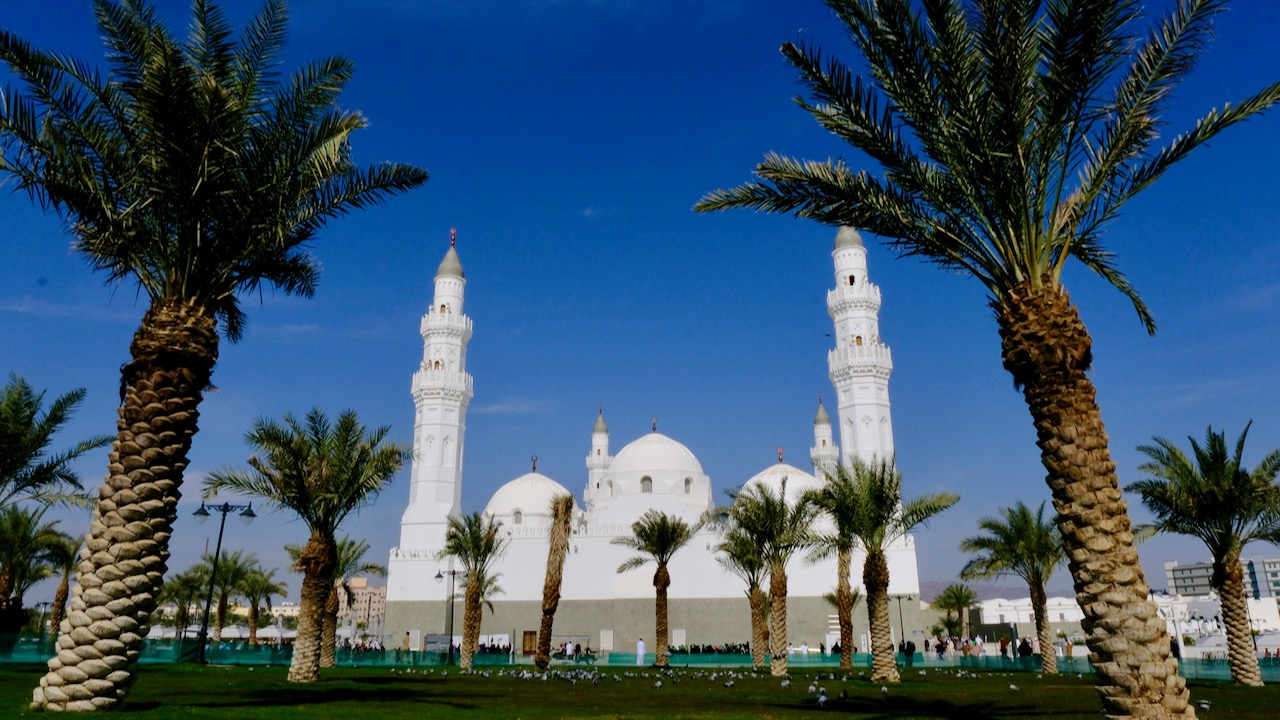
Saudi Arabia may be synonymous with desert landscapes, vast oil reserves and towering cities such as Riyadh and Jeddah, but the country — a total land mass of 2,149,690 square kilometres — is far from barren when it comes to agriculture. While it has long been true that Saudi Arabia relies heavily on food imports, domestic farming has not only existed for decades, but is now the focus of some of the most ambitious agricultural transformations in the world. Increasingly, the Kingdom is reshaping its agricultural sector through innovation, investment and policy reforms aimed at bolstering food security, and reducing dependency on foreign supplies.
Agriculture in an Arid Land
For much of the past century, the physical geography of Saudi Arabia — roughly 95 percent desert — has posed formidable barriers to conventional agriculture. With minimal rainfall, extreme temperatures, and poor soil quality, traditional crop farming has never been straightforward. According to the Food and Agriculture Organization of the United Nations (FAO), around 81 percent of the country’s land area is classified as agricultural land, but only 1.98 percent is actually considered arable for the growing of crops. Indeed, for many years the Kingdom depended on food imports to meet domestic demand, with over 80 percent of its food supply coming from overseas sources. Grains such as rice, essential staples like edible oils, and significant proportions of fresh fruits and vegetables have been imported from around the world, often through intricate supply chains linking Saudi Arabia with producers in Asia, Africa, Europe, and the Americas.
This reliance has remained significant into the mid-2020s, with corn imports alone for feed projected to rise sharply as domestic livestock production grows. Saudi Arabia’s domestic corn output remains minimal, meaning the Kingdom continues to import large volumes primarily for poultry, and dairy industries. For instance, according to a December 2025 report published by the United States Department of Agriculture (USDA), around 4.7 million metric tonnes of corn was imported in 2024/2025, with 60 percent used as poultry feed.
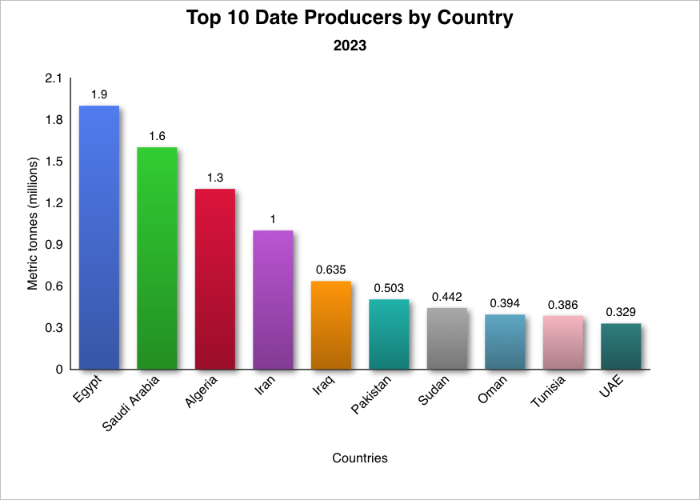
Yet, this is only half the picture. Locally, there has always been agricultural activity, particularly in oases and irrigated areas. The cultivation of dates — a crop hardy to arid climates — has deep cultural roots and today Saudi Arabia is one of the world’s largest producers, growing roughly 1.6 million metric tonnes in 2023. Traditional date farms coexist with modern irrigated vegetable plots, fruit orchards, greenhouse facilities, and livestock operations. Pastoralism and animal husbandry have also been practiced for generations, centred on sheep and goats and, more recently, commercial poultry farms.
A New Agricultural Frontier: Local Production Today
Recent years have seen a dramatic shift in how the Saudi government and private sector view agriculture. Rather than merely mitigating import dependence, the focus has turned towards building robust, sustainable domestic production that can supply a larger share of the population, and even generate export opportunities.
Official data from the Kingdom’s Ministry of Environment, Water and Agriculture (MEWA) shows domestic agricultural and food output exceeded 16 million tonnes in 2024, signalling a growing role for local production. Total crop cultivation expanded as the cultivated area of open-field vegetables reached nearly 90,000 hectares, with production up on previous years, and both fresh produce, and staple categories increasing.
READ: Land, Law and Legacy: Agricultural Differences in Upper and Lower Canada
Perhaps most strikingly, Saudi Arabia has achieved full self-sufficiency in several key food products. Dairy production and the table egg industry reportedly covers 109 percent and 116 percent of local consumption, respectively.
Poultry production in Saudi Arabia has expanded markedly over the past decade, driven by sustained investment, vertical integration, and explicit government targets to reduce reliance on imported chicken. According to official data published by MEWA, domestic broiler production has steadily increased under Vision 2030, a national objective intended to raise poultry self-sufficiency to 80 percent by 2025. Large-scale producers have expanded hatcheries, feed mills and processing facilities, while biosecurity standards, and cold chain infrastructure have been strengthened to support year-round supply. As a result, locally produced chicken now covers a significantly larger share of national consumption than it did ten years ago, narrowing the import gap and stabilizing prices in the domestic market.
Seafood production, meanwhile, is being developed through aquaculture rather than reliance on wild capture fisheries alone. While Saudi Arabia has traditional fishing along the Red Sea and Arabian Gulf coasts (ex. mackerel, hamour, emperors, parrotfish), recent growth has been concentrated in farmed shrimp, and finfish operations. Government strategies have prioritized aquaculture as a high-potential sector capable of expanding output without placing additional pressure on marine stocks. The National Fisheries Development Program has outlined targets to increase aquaculture production substantially by 2030, positioning fish farming as a core component of food security, and rural economic diversification. In this sense, the Kingdom’s rising seafood output is primarily the result of controlled, farm-based systems, including inland recirculating facilities and coastal marine cages, rather than expanded wild catch alone.
Another example of local farming resilience comes from the Kingdom’s success in cantaloupe production, where it has reportedly achieved 100 percent self-sufficiency. While this is not representative of all crops, it does illustrate how targeted efforts can overcome environmental constraints.
These strides towards domestic production are mirrored in the establishment of large-scale meat processing facilities operated by global agribusinesses within Saudi territory. In early 2026, JBS — the world’s largest meatpacker from Brazil — announced plans to double the output of its chicken processing plant in Jeddah by the end of the year. This expansion directly supports the strategic aim of increasing local food production, and reducing reliance on imports.
Innovation in the Desert: Agritech and Water Efficiency
Crucial to Saudi Arabia’s agricultural expansion has been the embrace of agritech innovations that address the very limitations of its environment. Water scarcity is perhaps the most significant challenge, with agriculture historically accounting for a high proportion of national water use. To manage this, the Kingdom has invested heavily in technologies such as drip irrigation, precision irrigation systems, and controlled environment agriculture. Drip and precision irrigation — which deliver water directly to plant roots — have now been adopted across tens of thousands of hectares, saving significant volumes of freshwater, and boosting yields.
Hydroponics, vertical farming, and greenhouse production also play an increasingly important role. These methods allow crops to be grown with minimal soil and water use, making them well-suited to Saudi Arabia’s arid conditions. Combined with technologies such as Internet of Things (IoT)-enabled sensors, climate control systems and artificial intelligence, such approaches optimize growth, and minimize environmental impact.
READ: The Long Rise of California’s Almond Industry
Water sustainability in Saudi Arabia is shaped by two major pillars: large-scale desalination and the treatment and reuse of wastewater. As the world’s most arid dominant country, Saudi Arabia has invested heavily in desalination to meet its freshwater needs and it now stands as the largest producer of desalinated water globally. Official reports estimate that the Kingdom’s desalination capacity exceeded 11 million cubic metres per day in 2024, delivered by a network of coastal plants (33 public, 8 private) that use technologies, such as reverse osmosis and other advanced systems to remove salt, and minerals from seawater. This enormous capacity has made desalination a bedrock of national water supply, accounting for half of the country’s distributed fresh water, and reducing pressure on finite groundwater resources.
The desalination infrastructure is continually expanding, with both public, and private projects under way. Investments include converting older, more energy-intensive plants to modern reverse osmosis systems, which are both more energy-efficient, and better suited to integration with renewable energy sources, such as solar power. Saudi Arabia is also piloting innovative desalination approaches, including solar-powered facilities and zero-liquid-discharge plants designed to minimize environmental impacts by reducing brine, and waste.
Alongside desalination, treated wastewater reuse is a strategic component of the Kingdom’s water sustainability efforts. Municipal and industrial wastewater is collected in hundreds of treatment facilities and the total volume treated annually reached nearly 1.93 billion cubic metres in 2022. Of that treated wastewater, approximately 23 percent was reused, with a portion being used for agricultural irrigation, and other non-potable purposes. This reuse helps alleviate demand on both groundwater and desalinated supplies and supports crop irrigation in regions where freshwater is scarce.
Despite progress, reuse of treated wastewater in agriculture remains underdeveloped relative to its potential. One study indicates that while treated wastewater is technically feasible and already used in some regions — such as Al-Ahsa and Riyadh — farmers may be hesitant due to concerns about water quality, soil salinity, and crop acceptance. Efforts to expand reuse include improving treatment technologies to reduce salts and contaminants, and increasing infrastructure that channels treated water directly to farms.
Taken together, desalination and wastewater reuse are central to Saudi Arabia’s strategy to secure sustainable water supplies, preserve groundwater, and support a growing agricultural sector within one of the most water-challenged environments on Earth.
Policy and Strategic Reforms: Vision 2030 and Beyond
The transformation of Saudi agriculture cannot be understood without reference to Vision 2030 noted earlier, the Kingdom’s sweeping economic diversification and development program. Under Vision 2030, reducing food import dependency and strengthening food security are core objectives. Agricultural innovation, sustainability and self-sufficiency are therefore prioritized across government strategy, and funding frameworks.
National policies have introduced incentives that support farmers, agritech startups, and foreign investors in the agricultural value chain. The Agricultural Development Fund, established in 2009, offers financing for greenhouse projects, irrigation systems, and modern farming technologies, in some cases covering up to 75 percent of costs, and providing long-term tax incentives.
READ: Why Rice Remains the Backbone of Bangladesh’s Rural Economy
Alongside financial incentives, regulatory reforms aim to enhance quality and sustainability. New packaging and labelling rules for fruits and vegetables, introduced by MEWA, reflect efforts to boost food safety, and environmental stewardship in domestic markets.
Saudi Arabia has expanded the role of Public-Private Partnerships (PPPs) as a strategic tool to accelerate investment in critical infrastructure and economic diversification under Vision 2030. In early 2026, the government unveiled a National Privatization Strategy aimed at mobilizing more than $64 billion in private capital and contracting over 220 PPP projects by 2030 across sectors such as water, transport, health, education, and utilities. This initiative shifts the government’s role toward regulation and oversight while inviting private firms to bring capital, technology and operational expertise into long-term projects, thereby reducing public financing burdens, and fostering innovation. In the water and wastewater sector alone, state bodies like the Saudi Water Partnership Company (SWPC) have tendered and awarded multiple desalination, transmission and treatment plants under PPP models that leverage global finance and advanced technologies to meet growing demand, and sustainable water management goals.
These strategies and commitments acknowledge that self-sufficiency does not mean isolation, but rather resilience through diversified production, and stable supply chains.
Future Outlook: Balancing Imports and Domestic Growth
Even as Saudi Arabia expands its domestic agriculture, imports remain essential. Certain crops like rice and feed grains are unlikely to be produced locally at scale due to either climatic constraints or water limitations, and the complex global trade in food commodities means that imports will continue to play a role in balancing supply, and demand.
Nevertheless, Saudi Arabia’s agricultural sector today is far more dynamic than its desert reputation might suggest. With billions invested in agritech, irrigation and self-sufficiency programs, and with official production figures growing year-on-year, the Kingdom is charting a course toward significant reductions in import dependency. Far from being purely reliant on foreign food, Saudi Arabia is redefining what agricultural production can look like in one of the planet’s most water-starved landscapes.
While Saudi Arabia has historically imported large portions of its food supply, it also has a substantial and increasingly innovative domestic agricultural sector. From dairy and egg production to advanced greenhouse horticulture and precision irrigation, local farming is not only possible, but expanding in scale, and sophistication. Policy reforms and strategic investments under Vision 2030 have been central to this transformation, encouraging both self-sufficiency, and technological adoption. Although imports remain important for certain commodities, the Kingdom’s approach to farming and food production continue to evolve rapidly, positioning Saudi Arabia as a noteworthy example of agricultural revolution, resilience, and innovation in arid environments.
Sources
- Arab News. (2022, July 24). Saudi Arabia plans $5bn investment to become self-sufficient in poultry meat production. Retrieved March 10, 2026, from https://www.arabnews.com/node/2128406/amp
- Elfeky, A. M., Alfaisal, F. M., & El-Shafei, A. (2025). Analyzing Riyadh treated wastewater parameters for irrigation suitability through multivariate statistical analysis and water quality indices. Water, 17(5), 709. https://doi.org/10.3390/w17050709
- Food and Agriculture Organization of the United Nations (FAO). (2025). Country Brief – Saudi Arabia. Retrieved March 10, 2026, from https://openknowledge.fao.org/server/api/core/bitstreams/f697c249-5e50-4636-8531-8bb046b1776a/content
- Food and Agriculture Organization of the United Nations (FAO). (2026). World Bank Open Data. World Bank Open Data. Retrieved March 10, 2026, from https://data.worldbank.org/indicator/AG.SRF.TOTL.K2?locations=SA
- Gazette, S. (2024, July 28). Saudi Arabia achieves 100% self-sufficiency in cantaloupe production. Saudi Gazette. Retrieved March 10, 2026, from https://saudigazette.com.sa/article/644510/SAUDI-ARABIA/Saudi-Arabia-achieves-100-self-sufficiency-in-cantaloupe-production
- Global Ag Media. (2026, January 23). JBS to double output at Saudi chicken plant by end-2026. The Poultry Site. Retrieved March 10, 2026, from https://www.thepoultrysite.com/news/2026/01/jbs-to-double-output-at-saudi-chicken-plant-by-end-2026
- Government of Saudi Arabia. (2026). Vision 30. Retrieved March 10, 2026, from https://www.vision2030.gov.sa/ar/
- Kingdom of Saudi Arabia. (2024). The second Biennial Update Report (BUR 2). In United Nations Framework Convention on Climate Change (UNFCCC). Retrieved March 10, 2026, from https://unfccc.int/sites/default/files/resource/Kingdom%20of%20Saudi%20Arabia%C2%A0Bur2.pdf
- Market Research Saudi Arabia. (2025, October 9). Saudi Agritech market growth Forecast 2025–2030. Saudi Market Research | Consulting Firm. Retrieved March 10, 2026, from https://saudimarketresearchconsulting.com/insights/articles/saudi-agritech-market-outlook-2025-2030
- Ministry of Environment, Water and Agriculture. (2025, October 25). Saudi Arabia commits to regional and global cooperation for resilient food systems and food security | Ministry of Environment, Water and Agriculture. Retrieved March 10, 2026, from https://www.mewa.gov.sa/en/MediaCenter/News/Pages/News12982020.aspx
- National Privatization Strategy. (2026). National Privatization Strategy – Government of Saudi Arabia. Retrieved March 10, 2026, from https://ncp.gov.sa/en/NationalStrategy/Pages/default.aspx
- New Zealand Ministry of Foreign Affairs and Trade. (2024, February 1). Saudi Arabia: Food Security Strategy – February 2024. Retrieved March 10, 2026, from https://www.mfat.govt.nz/en/trade/mfat-market-reports/saudi-arabia-food-security-strategy-february-2024
- Production of desalinated water in Saudi Arabia. (2025, October 10). Saudipedia. Retrieved March 10, 2026, from https://saudipedia.com/en/production-of-desalinated-water-in-saudi-arabia
- Rabba’, O. (2025). Grain and Feed Semi-Annual – Saudi Arabia. In United States Department of Agriculture – Foreign Agricultural Service. Retrieved March 10, 2026, from https://apps.fas.usda.gov/newgainapi/api/Report/DownloadReportByFileName?fileName=Grain%20and%20Feed%20Semi-Annual_Riyadh_Saudi%20Arabia_SA2025-0020.pdf
- Saudi Water Partnership Company. (2026). SWPC – Saudi Water Partnership Company. Retrieved March 10, 2026, from https://www.swpc.sa/
- System. (2026, January 28). Beyond import: Cultivating world-class fresh produce ecosystem in Saudi Arabia. Sharikat Mubasher. Retrieved March 10, 2026, from https://www.sharikatmubasher.com/media-hub/experts-thoughts/20065
- Tawfik, R., Turk, K. G. B., Alomair, M., Sidahmed, S., Alqurashi, R. M., Ebrahim, A., El-Kafrawy, M., Hamad, S., & Al-Karablieh, E. (2025). Enhancing treated wastewater reuse in Saudi agriculture: Farmers’ perspectives. Sustainability, 17(17), 7633. https://doi.org/10.3390/su17177633
- World Population Review. (2026, February 12). Date production by country. Retrieved March 10, 2026, from https://worldpopulationreview.com/country-rankings/date-production-by-country