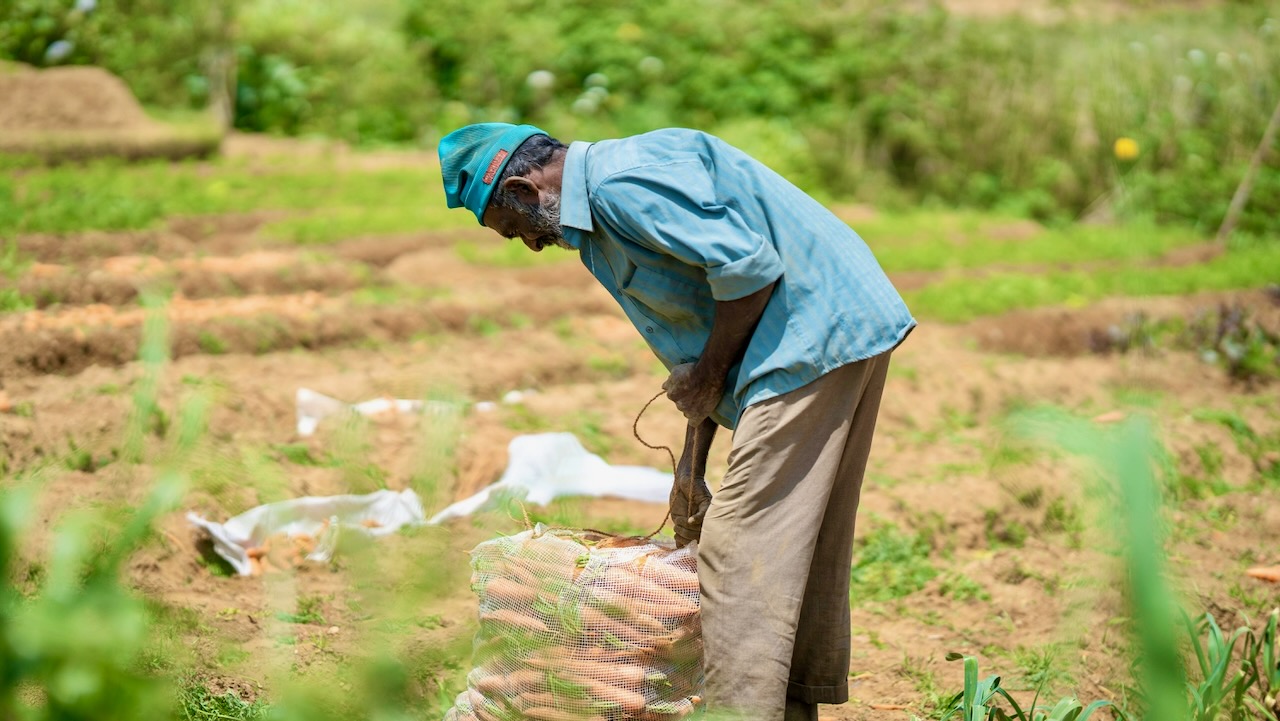
In April 2021, President Gotabaya Rajapaksa launched a sweeping policy to eliminate the import and use of synthetic fertilizers and agrochemicals across Sri Lanka — framed as a bold transition toward fully organic agriculture, with the goal of improving public health, protecting soil quality, and reducing environmental damage. The move, however, departed sharply from his 2019 campaign pledge of a gradual ten-year transition.
Part of the rationale centred on longstanding concerns about chemical exposure in rural communities, particularly among farmers. While the scientific link between fertilizers and certain health issues remained debated, the perception of risk had gained political traction. Rajapaksa positioned the policy as a corrective step toward safer, more sustainable food production.
READ: How the U.S.-Israel War With Iran Is Disrupting Global Fertilizer Supply
Equally important, however, were economic realities. Sri Lanka was facing a mounting foreign exchange crisis, with limited U.S. dollar reserves to pay for essential imports. For instance, official reserves hovered at around $7.6 billion at the end of 2019 and plummeted under $400 million by June of 2022. Fertilizer purchases accounted for a significant annual outflow of foreign currency. By banning imports, the government aimed to ease pressure on its balance of payments while promoting domestic alternatives.
The policy, however, was introduced abruptly. There was no phased transition, and the country lacked the organic fertilizer supply, distribution systems, and technical training needed to support such a dramatic shift.
What Happened to Agriculture?
The agricultural impact was immediate and severe. Farmers were forced to abandon synthetic inputs almost overnight, but organic substitutes proved insufficient in both quantity and effectiveness.
Rice production, a cornerstone of the country’s food security, fell sharply within a single growing season. Sri Lanka, which had previously been largely self-sufficient in rice, was forced to import it to meet domestic demand. This reversal placed additional strain on already depleted foreign reserves.
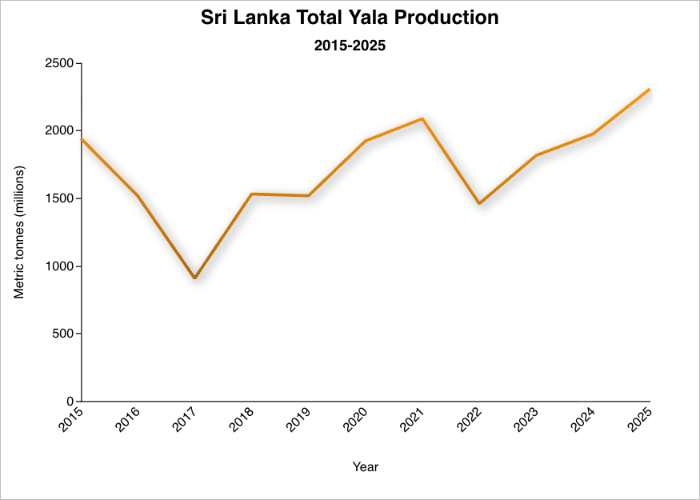
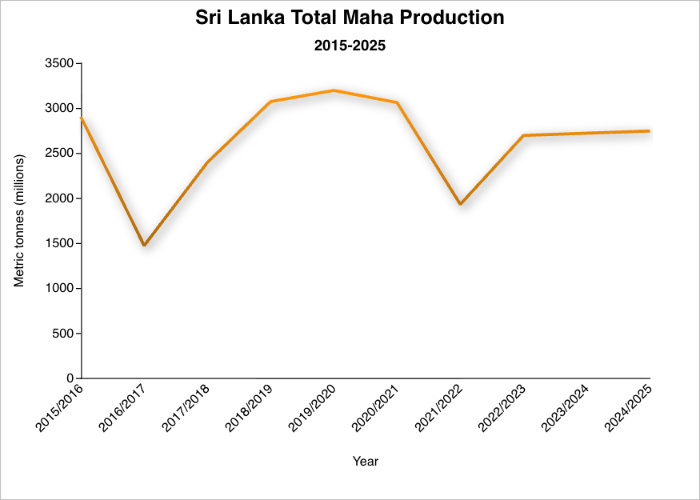
The tea sector — one of Sri Lanka’s most important export industries — also experienced significant declines. According to the 2022 Sri Lanka Tea Board Annual Report, total production fell 16% to 251,500 metric tonnes compared to 299,500 metric tonnes in 2021. Tea plantations depend on consistent nutrient inputs to maintain yields and quality. Without chemical fertilizers, output dropped, reducing export earnings at a time when the country desperately needed foreign currency.
READ: How India Became the World Leader in Rice Production
Across multiple crops, farmers reported lower productivity, increased labour demands and inconsistent results. Organic fertilizers required larger volumes and more time to produce effects, making them impractical for many commercial operations. The result was a broad contraction in agricultural output, rising food prices, and declining rural incomes.
Rajapaksa’s Presidency Under Pressure
Rajapaksa’s presidency, which began in 2019, was already navigating a series of economic challenges, including reduced tourism revenues, and the effects of the global pandemic. The fertilizer ban became one of the most controversial decisions of his administration.
Critics argued that the policy reflected a top-down approach that sidelined agricultural experts and ignored warnings from economists and scientists. Farmer protests grew as incomes fell and uncertainty spread across rural regions. Urban consumers also began to feel the effects through rising food costs and shortages.
Within months, the government began to reverse course. Restrictions on fertilizer imports were gradually eased, and subsidies were reintroduced to stabilize production. However, the policy reversal came only after significant damage had already been done to both agricultural output and market confidence.
The broader economic crisis deepened, eventually leading to widespread public unrest. In 2022, amid severe shortages of fuel, food, medicine, and foreign currency — and after protestors stormed his official residence — Rajapaksa stepped down and left the country, marking a dramatic end to his presidency.
Economic Fallout and Long-Term Effects
The fertilizer ban contributed directly to Sri Lanka’s wider economic collapse. Reduced agricultural production meant lower export revenues, particularly from tea, while increased food imports placed additional pressure on scarce foreign reserves.
Inflation accelerated as food supplies tightened, and the national currency came under significant pressure. The country eventually defaulted on its external debt, entering a period of economic restructuring and austerity.
READ: The Long Rise of California’s Almond Industry
Even today, Sri Lanka’s agricultural sector continues to recover unevenly. Farmers face higher input costs, disrupted supply chains, and reduced financial resilience. The sudden policy shift also eroded trust in government planning, making future reforms more difficult to implement.
The Iran Conflict and Ongoing Fertilizer Risks
Similar to other regions, Sri Lanka’s recovery remains highly sensitive to global fertilizer markets, which are deeply interconnected with energy prices and geopolitical stability. Fertilizer production — especially nitrogen-based products — depends heavily on natural gas, while other key nutrients such as phosphate and potash are sourced from a limited number of exporting countries.
The U.S.-Israel war with Iran has already disrupted global energy markets and shipping routes, particularly in critical transit areas, such as the Strait of Hormuz and potentially the Bab al-Mandab Strait. Any further escalation can drive up fuel costs even more, which in turn will raise the price of fertilizer production and transportation worldwide.
READ: The World’s Most Agriculturally Self-Sufficient Nations
For Sri Lanka, which relies heavily on imports for agricultural inputs, these external pressures create renewed vulnerability. Higher fertilizer costs can discourage usage, reduce crop yields, and contribute to food inflation — echoing, in a different form, the challenges experienced during the 2021 ban.
A Costly Experiment with Lasting Consequences
The legacy of Sri Lanka’s fertilizer ban continues to unfold well beyond its initial economic impact. What was intended as a bold transformation of the agricultural system instead exposed the risks of sweeping policy changes introduced without the necessary groundwork, infrastructure, or transition planning.
The sharp declines in rice and tea production were not merely short-term disruptions — they revealed how dependent modern agriculture remains on stable input systems and global supply chains. More importantly, the episode reshaped how policymakers, farmers, and international observers approach large-scale agricultural reform. It underscored that sustainability goals, while important, must be aligned with practical implementation, local capacity and economic realities.
Direct losses in rice and tea production alone likely exceeded $600 million USD. When accounting for broader knock-on effects — import costs, currency depreciation, lost export revenue across other crops, and supply chain disruption — total agricultural damage to the economy is estimated to have surpassed $1 billion USD.
Today, Sri Lanka’s experience stands as a cautionary example. The policy did not simply fall short in execution, it altered the country’s agricultural trajectory, weakened confidence in institutional decision-making, and left the system more vulnerable to external shocks. Its legacy is defined not only by what was lost, but by the enduring lesson that in a globally connected food system, abrupt change can carry consequences far beyond the field.
What is the biggest takeaway from Sri Lanka’s crisis when balancing ambitious environmental targets with national food security and farm viability?
Sources
- Agriculture and Environment Statistics Division of the Department of Census and Statistics. (2026). Department of Census and Statistics. statistics.gov.lk. Retrieved April 7, 2026, from https://www.statistics.gov.lk/Agriculture/StaticalInformation/PaddyStatistics
- Sri Lanka Tea Board. (2022). Annual Report 2022. In Sri Lanka Tea Board. Retrieved April 7, 2026, from https://www.srilankateaboard.lk/wp-content/uploads/2024/01/Annual-Report-2022.pdf
- World Bank. (2022). SRI LANKA. In WDI, Macro Poverty Outlook. Retrieved April 7, 2026, from https://documents1.worldbank.org/curated/en/099836110132231642/pdf/IDU0a9e32121089e804762099000dd1b0932c748.pdf