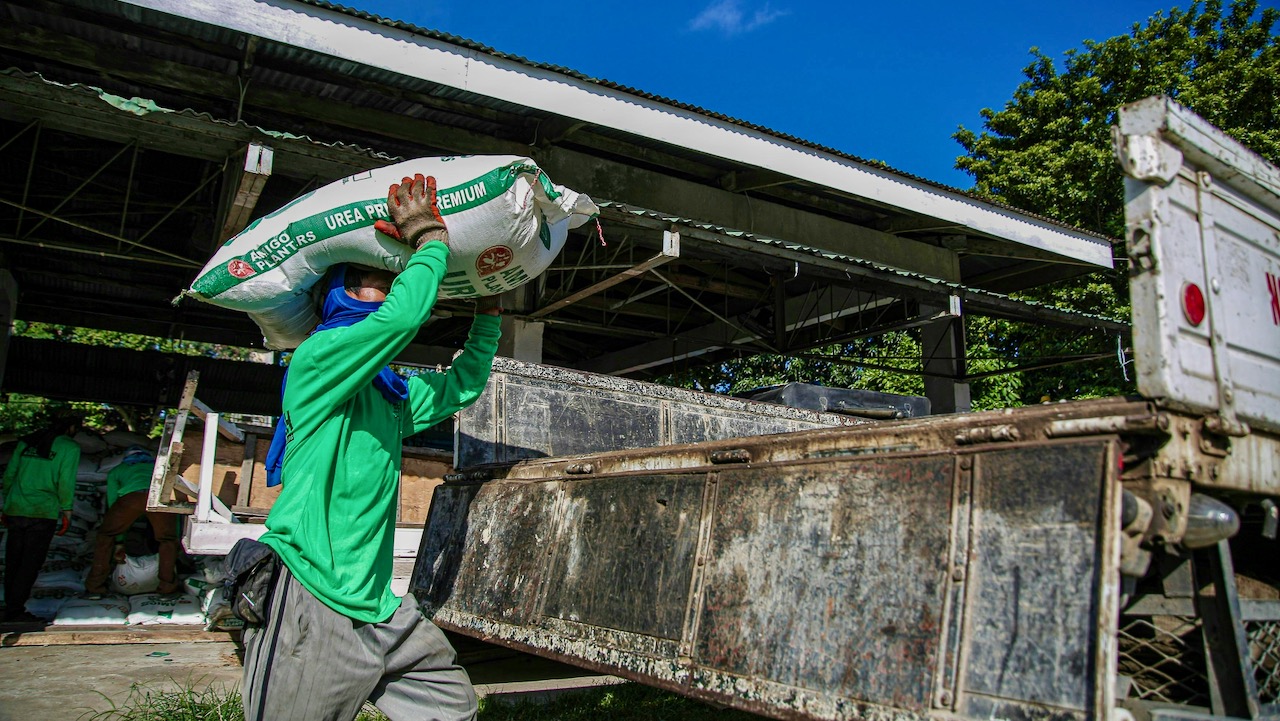
The ongoing U.S.–Israel war against Iran, which escalated in February 2026, is rapidly evolving into more than a regional military conflict. It has become a global economic shock with far-reaching consequences — particularly for fertilizer markets and, by extension, global agriculture. While oil disruptions dominate headlines, the fertilizer supply crisis emerging from the conflict may ultimately prove more consequential for food security, inflation, and geopolitical trade realignment.
The Strait of Hormuz: A Global Chokepoint
At the centre of this disruption is the Strait of Hormuz, one of the most strategically important maritime chokepoints in the world. Even before the war, roughly one-third of globally traded fertilizers—along with key inputs such as ammonia, urea, and sulfur — passed through this narrow waterway. With Iran effectively restricting or threatening shipping through the strait, a substantial share of global fertilizer supply has been curtailed almost overnight, removing a critical flow of product from international markets and placing immediate pressure on prices, and availability.
READ: Saudi Arabia, the Desert Kingdom that Decided to Feed Itself
This supply shock is compounded by the structure of fertilizer production itself. Nitrogen-based fertilizers, which underpin modern agriculture, are heavily dependent on natural gas as a feedstock. The Persian Gulf region is a major exporter of both natural gas and downstream fertilizer products. With energy infrastructure targeted and shipping routes constrained, production and export capacity have been severely reduced.
Price Spikes and the Cost Burden on Farmers
The immediate result has been a sharp spike in fertilizer prices worldwide. Urea prices have surged up to 50% in key markets within weeks, while nitrogen fertilizer prices in the United States have risen more than 30% in some regions. These increases are not occurring in isolation — they are coinciding with tariff constraints and surging diesel fuel costs, further amplifying the financial pressure on farmers. In the U.S., fertilizer costs have risen alongside a 43% jump in diesel prices, further compounding the situation.
READ: Saskatchewan Agriculture 2026: Leading the Way in Canola, Wheat, and Pulses
For agriculture, timing is everything, and the war has struck at a particularly vulnerable moment: the spring planting season in North America and other key growing regions. Fertilizer must be applied before planting for many crops such as corn, and supply chain delays — often requiring 30 to 60 days for delivery — mean that disruptions today will directly affect yields later in the year. Farmers are already making difficult decisions, including switching crops from corn (which requires high nitrogen inputs) to soybeans or even leaving fields unplanted. Those who do move forward, however, are likely to face sharply higher input costs, with many paying tens of thousands of dollars more than in seasons prior to the war.
Global Food Production at Risk
The implications for global food production are profound. Fertilizers are responsible for supporting roughly half of the world’s food output, meaning that even modest shortages can translate into significant declines in crop yields. Countries heavily dependent on fertilizer imports — such as Brazil, India, and much of Africa — are particularly vulnerable, facing the prospect of reduced harvests, and rising food prices.
One of the most critical vulnerabilities exposed by this crisis is the lack of strategic fertilizer reserves in most countries. Unlike oil, which is widely stockpiled in strategic reserves, fertilizers are typically stored in limited quantities due to storage challenges, and market structures. The United States, for example, does not maintain a formal strategic fertilizer reserve, and much of its supply chain operates on a just-in-time basis. While some inventory carried over from early 2026 imports has provided a short-term buffer, this cushion is expected to erode quickly if disruptions persist.
READ: Why Are Used Tractors So Expensive?
Canada is in a somewhat stronger position structurally, particularly in potash production. As one of the world’s largest producers of potash — primarily through Saskatchewan — Canada is less exposed to potassium shortages. However, it remains dependent on global markets for nitrogen fertilizers, leaving Canadian agriculture vulnerable to the same price spikes and supply constraints affecting the United States. The integrated nature of North American agriculture means that shocks in one country quickly spill over into the other.
Can Other Producers Fill the Gap?
China, by contrast, appears better positioned in the short term. It is one of the world’s largest producers of fertilizers and has already imposed export restrictions to prioritize domestic supply. Unlike the U.S., China maintains tighter state control over strategic commodities, allowing it to build and manage reserves more effectively. However, this advantage comes at a cost to global markets, as reduced Chinese exports further tighten international supply, and exacerbate price volatility.
Russia, another major fertilizer exporter, might seem like a natural alternative supplier. Yet its ability to offset the shortfall is limited by existing geopolitical constraints, logistical bottlenecks, and its own production limitations. As a result, no single country or region can fully replace the lost supply from the Persian Gulf in the near term.
A Structural Shift: Rethinking Fertilizer Supply Chains
This raises a critical long-term question: will the crisis permanently reshape global fertilizer trade? There is growing evidence that it will. The vulnerability of relying on a single chokepoint like the Strait of Hormuz has become undeniable. Countries are already exploring diversification strategies, including expanding domestic fertilizer production, increasing imports from alternative suppliers such as North America, and investing in “green ammonia” technologies that rely less on fossil fuels.
READ: Inside the World of Canadian Horse Farming
Not unlike the global semiconductor industry — where a heavy concentration of advanced chip manufacturing in Taiwan exposed critical supply chain risks and ultimately pushed the United States to accelerate domestic production and reshoring efforts — the current fertilizer shock is forcing a similar strategic rethink. Governments are beginning to view fertilizer not simply as a commodity, but as a matter of national security tied directly to food sovereignty. Just as semiconductor shortages led to massive public and private investment in domestic fabrication plants, the disruption in fertilizer flows is likely to trigger long-term capital investment in regional production hubs, built-in redundancy across supply chains through diversified production and transport routes, and reduced dependence on geopolitically sensitive regions.
In the United States, for example, natural gas-based fertilizer production — particularly in the Gulf Coast and Midwest — may see renewed investment, as domestic producers benefit from relatively stable feedstock supplies. Similarly, regions such as North Africa and Latin America could emerge as alternative suppliers over time, although scaling production will require significant capital, and years of development.
From Conflict to Food Security Crisis
Ultimately, the fertilizer crisis triggered by the Iran war underscores the deep interconnection between geopolitics, energy, and food systems. What began as a regional military conflict has exposed systemic vulnerabilities in global agriculture, from supply chain concentration to the absence of strategic reserves. If the disruption continues, the world may face not only higher food prices, but also structural shifts in how and where fertilizers are produced, and traded.
In that sense, perhaps unintentionally, the war’s most enduring legacy may not be measured in barrels of oil or a regime change — but in bushels of crops, and in the cost of feeding a growing global population — a cost that will drastically affect the average person’s bottom line.
Has the rise in fertilizer prices changed your planting decisions this spring? Tell us what you’re seeing on the ground.
Sources
- Hanrahan, R. (2026, March 4). Fertilizer prices have ‘Significant’ rise after attack on Iran. Farm Policy News. Retrieved March 29, 2026, from https://farmpolicynews.illinois.edu/2026/03/fertilizer-prices-have-significant-rise-after-attack-on-iran/
- Herzlich, T. (2026, March 25). American farmers struggle with higher prices from Iran war, tariffs: “Double whammy.” New York Post. Retrieved March 29, 2026, from https://nypost.com/2026/03/25/business/american-farmers-struggle-with-higher-prices-from-iran-war-tariffs-double-whammy/
- Mills, R. (2026, March 16). Protect fertilizer supply chains to safeguard global food security. Fertilizer. Retrieved March 29, 2026, from https://www.fertilizer.org/news/protect-fertilizer-supply-chains-to-safeguard-global-food-security/
- Siemens, H. (2026, March 10). Middle East conflict sends shock waves through global fertilizer markets. Ontario Farmer. Retrieved March 29, 2026, from https://www.ontariofarmer.com/market/middle-east-conflict-sends-shock-waves-through-global-fertilizer-markets
- Taylor, C., & Meredith, S. (2026, March 26). It’s not just oil and gas. The Strait of Hormuz blockage is rattling another vital commodity. CNBC. Retrieved March 29, 2026, from https://www.cnbc.com/2026/03/25/fertilizer-price-iran-war-food-security-inflation-urea-potash-nitrogen-farmers.html
- White, E. (2026, March 13). Iran war deprives US farmers of affordable fertilizer as spring planting looms. Reuters. Retrieved March 29, 2026, from https://www.reuters.com/business/iran-war-deprives-us-farmers-affordable-fertilizer-spring-planting-looms-2026-03-13/