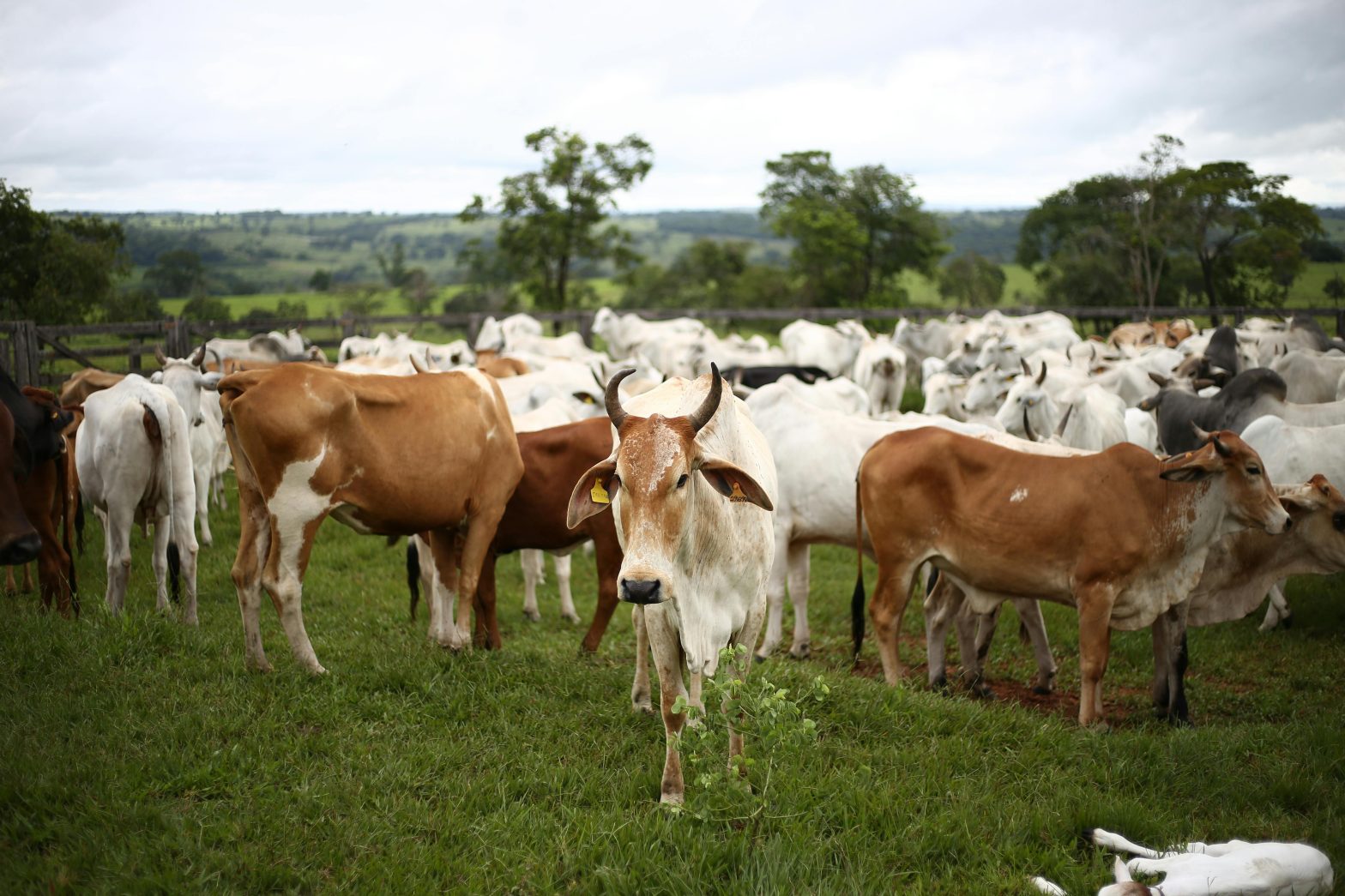
Across the world, cattle farming is evolving from tradition-heavy methods to data-driven, tech-powered practices. As global demands for sustainable, efficient, and ethical beef and dairy production rise, farmers and ranchers are adopting innovations that enhance animal welfare, boost productivity, and protect the environment. Here are the top five technological advancements shaping the future of cattle farming.
1. Virtual Fencing: Redefining Farm Boundaries
One of the most impactful innovations in pasture management is virtual fencing. Instead of physical barriers, this technology relies on GPS-enabled collars or ear tags to create digital boundaries across grazing land. When cattle approach the edge of a designated zone, they first receive an audio cue and, if they continue forward, a mild and safe stimulus encourages them to turn back. Over time, cattle learn to respond to the sound alone. Virtual fencing significantly reduces the labour, materials, and ongoing maintenance associated with building and repairing traditional fences. It also allows ranchers and dairy farmers to rotate grazing areas remotely, improving forage utilization and preventing overgrazing. Because boundaries can be adjusted instantly, sensitive areas such as waterways, newly restored land, or wildlife habitats can be protected with greater precision.
READ: The Fertilizer Ban That Broke Sri Lanka
2. Precision Livestock Monitoring: Smarter Cattle, Healthier Herds
Wearable sensors and connected monitoring devices are transforming how farmers track cattle health and behaviour. These technologies collect real-time data on movement, body temperature, feeding patterns, and rumination, providing a detailed picture of each animal’s condition. Subtle changes in activity or feeding behavior can indicate illness or stress long before visible symptoms appear, allowing farmers to intervene earlier and reduce veterinary costs. Over time, the collected data also supports improved breeding decisions, better nutrition planning, and higher overall herd efficiency. By reducing the need for constant manual checks, precision monitoring saves time while improving animal welfare.
For example, a study of dairy farms in Lombardy, Italy, found that precision livestock technologies have already been widely adopted and are delivering measurable benefits. In this study, about 78 percent of farms were using activity sensors such as accelerometers to monitor individual cow movement, behaviour, and activity levels, and roughly 73 percent had systems measuring milk yield as part of their precision dairy monitoring setup. These technologies helped farmers track subtle changes in feeding and activity patterns that can signal health issues or reproductive status earlier than visual observation alone. As a result, many farms reported improved timeliness of interventions and better overall herd management, with farmers highlighting enhanced animal welfare and more effective detection of reproduction‑related events among the key benefits of adopting these monitoring tools.
READ: The World’s Most Agriculturally Self-Sufficient Nations
3. Autonomous and Robotic Systems: Labour Support on the Farm
As labour shortages become more common in agriculture, autonomous and robotic systems are playing a growing role in cattle operations. Self-driving feed wagons are capable of delivering precise rations consistently, reducing waste, and improving feed efficiency. In dairy operations, robotic milking systems allow cows to be milked when they choose, which can reduce stress and support steady milk production. Drones are also being used to survey pasture conditions, inspect water sources, and monitor herd movement, particularly in large or rugged areas. These technologies increase productivity while allowing ranchers and dairy farmers to focus more on strategic management rather than repetitive daily tasks.
4. Smart Watering Systems: Hydration Meets Efficiency
Water management is critical to both animal health and environmental sustainability, and smart watering systems are helping cattle producers use water more efficiently. Sensors installed in tanks and troughs monitor water levels, temperature and flow, sending alerts when leaks, failures, or shortages occur. Automated valves help reduce waste by preventing overflow and ensuring consistent access to clean water. Reliable hydration improves feed intake, growth rates, and overall cattle performance, while reduced runoff and water loss help protect surrounding land and water resources. In dry or drought-prone regions, these systems are especially valuable for conserving limited supplies.
READ: Will Japan Survive Its Aging Farmer Crisis?
For example, research on water intake monitoring systems deployed in the southwestern United States demonstrates how smart technologies can provide useful data on actual water use by cattle. In one trial conducted on a grazing site in New Mexico, researchers installed a sensor‑based water monitoring setup that automatically recorded water consumption, drinking duration, and individual animal visits to the trough. Over a two‑week period, the system tracked watering behaviour for 29 cows continuously, capturing both the number of visits and the exact water intake each time an animal drank. By combining motion detectors, Radio-Frequency Identification (RFID) animal identification, and water‑level sensors, the system gave farmers detailed insights into how, when, and how much each cow drank throughout the study. This data can help ranchers and dairy producers not only ensure adequate hydration, but also identify shifts in drinking patterns that may signal health issues or problems with the watering infrastructure itself — something that would be difficult to observe manually every day on large pastures.
In addition to individual watering behaviour, broader industry data on precision water systems suggests that farms adopting smart water technologies — including automated level monitoring and real‑time alerts — can reduce overall water use by significant margins. For instance, agricultural reports indicate that precision watering solutions have contributed to as much as 25 percent reductions in water consumption on operations that integrate monitoring tools with automated control systems, compared with traditional unmanaged setups. These kinds of savings not only conserve a critical resource, but also translate into lower energy and labour costs for producers.
5. Data Management Platforms: Turning Information into Action
Modern farming generates large amounts of data, but its real value comes from how it is organized and used. Agricultural data management platforms integrate information from livestock sensors, GPS systems, feeding equipment, and environmental monitors into a single interface. These platforms analyze trends in herd health, grazing efficiency, and operational costs, presenting insights through clear dashboards and alerts. With centralized data, farmers can make more informed decisions, forecast future needs, and evaluate long-term performance. This data-driven approach supports smarter investments and more sustainable farm management.
READ: How the U.S.-Israel War With Iran Is Disrupting Global Fertilizer Supply
Key Takeaways for Modern Producers
Technology is not replacing the core values of cattle farming, it is enhancing them. Innovations such as virtual fencing, livestock monitoring, automation, smart water systems, and integrated data platforms are helping farmers operate more efficiently, responsibly, and sustainably. As cattle operations face tightening labour availability, rising input costs, and greater management complexity at scale, these technologies will play an increasingly central role in shaping the future of cattle farming.
Which of these 5 cattle technologies offers the highest return on investment for small-to-midsize livestock operations today?
Sources
- Bianchi, M. C., et al. “Diffusion of Precision Livestock Farming Technologies in Dairy Cattle Farms.” Animal, vol. 16, no. 11, 1 Nov. 2022, p. 100650, https://www.sciencedirect.com/science/article/pii/S1751731122002075
- PW Consulting. “Livestock Waterers Market.” PW Consulting Ltd., 4 Dec. 2024. Retrieved on April 9, 2026 from pmarketresearch.com/hc/livestock-waterers-market/
- Tang, Wei, et al. “A Smart Sensing System of Water Quality and Intake Monitoring for Livestock and Wild Animals.” Sensors, vol. 21, no. 8, 20 Apr. 2021, p. 2885, https://www.mdpi.com/1424-8220/21/8/2885