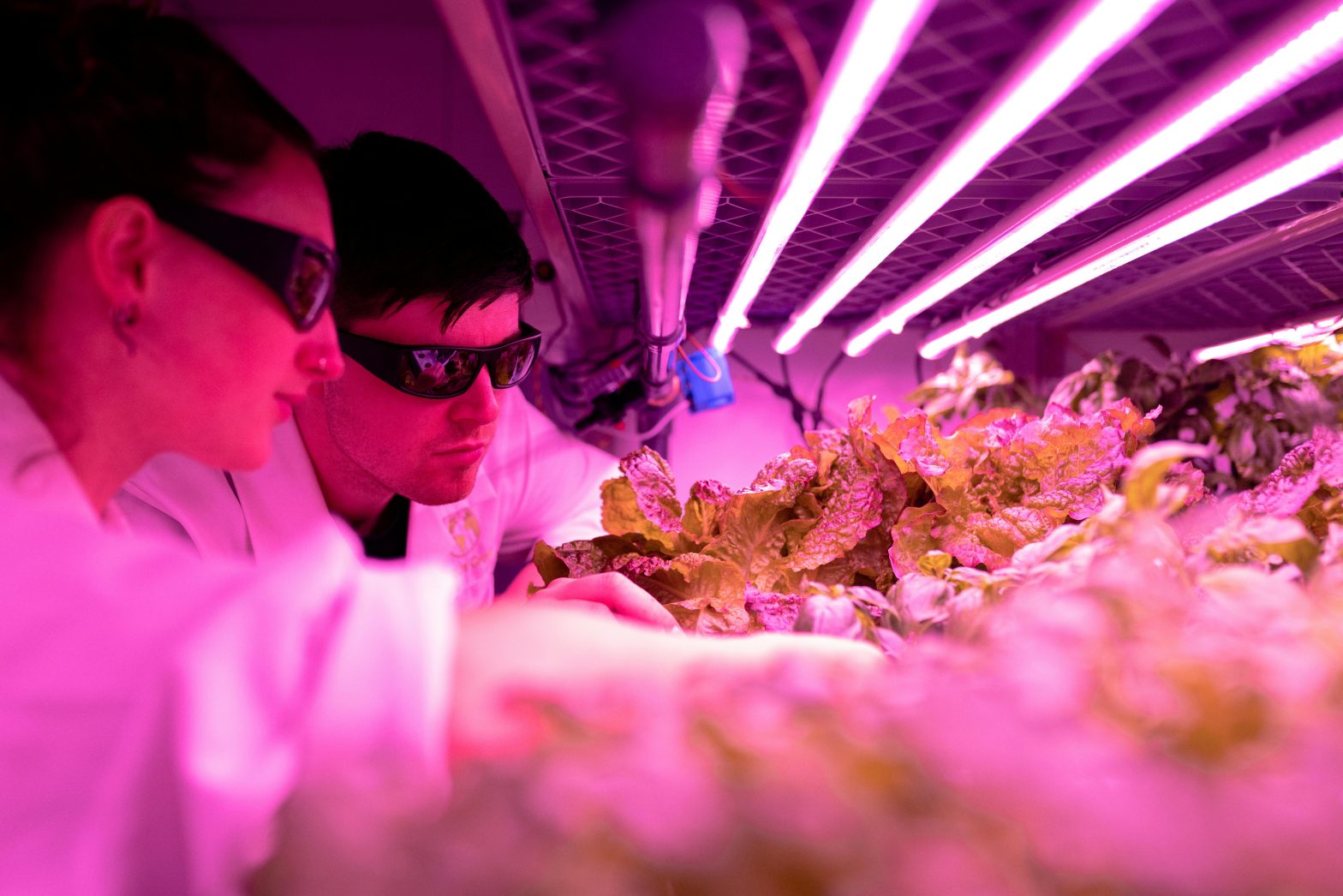
Indoor vertical farming and controlled environment agriculture, commonly referred to as CEA, are increasingly shaping the future of food production in Canada. As growers face rising pressures from weather variability, land constraints, and evolving supply chain dynamics, innovative production models that reduce dependency on outdoor conditions are gaining momentum. Canada has become increasingly active in the indoor agriculture sector, reflecting broader global shifts in how food is grown, distributed and consumed. Canada’s experience offers insight into how advanced indoor systems can support agricultural resilience in both developed and emerging markets.
Understanding Indoor Vertical Farming
Indoor vertical farming is the practice of growing crops in vertically stacked layers within enclosed, controlled facilities. These environments allow producers to manage every element of plant growth, including light exposure, temperature, humidity, airflow and nutrient delivery. In a country like Canada that endures harsh winters and where growing seasons vary significantly by region and are often limited, vertical farming enables year-round production that is independent of external weather patterns.
READ: Is Chicken Farming in Kentucky the New Agricultural Gold Rush?
Urbanization has played a major role in the adoption of vertical farming systems. Population density in metropolitan areas such as Toronto, Vancouver and Montréal has increased demand for locally produced food while reducing the availability of nearby arable land. Indoor farms located within or near urban centres shorten supply chains, improve freshness, and reduce logistical complexity. These benefits resonate internationally, particularly in regions experiencing similar urban growth and land-use pressures.
Controlled Environment Agriculture as the Foundation
CEA provides the technological framework that makes indoor vertical farming possible. CEA systems rely on precise control of temperature, humidity, lighting, water, and nutrients to deliver consistent growing conditions regardless of external influences. Through the integration of advanced sensors, automation software, and artificial lighting, producers are able to closely manage crop development, resulting in predictable yields and reliable year-round production.
In Canada, CEA has become a practical response to the production volatility often associated with outdoor farming. From large-scale greenhouse operations in Ontario to fully enclosed vertical farms in Western Canada, controlled environments allow growers to stabilize output and plan production cycles with a higher degree of certainty. One company that spans multiple regions and production models is GoodLeaf Farms. Founded in Halifax, Nova Scotia in 2011, the company expanded its operations to include a 50,000 square foot facility in Guelph, Ontario, followed by larger indoor farms in Calgary, Alberta and Montréal, Québec, each measuring approximately 115,000 square feet. Through its controlled environment systems, GoodLeaf produces microgreens, baby greens, and salad blends year-round without the use of pesticides or genetically modified seeds. This ability to maintain consistent volume and quality throughout the year is particularly valuable for retailers and food service operators that depend on stable, uninterrupted supply.
READ: Is Newfoundland & Labrador Under-utilizing Its Farming Potential?
UP Vertical Farms, located in Pitt Meadows, British Columbia, serves as another example. The facility focuses on producing microgreens, salad kits, and various leafy green blends using a highly automated, dense vertical cultivation setup. By utilizing a hands-free operational model that spans from the initial planting phase to final collection, the farm functions within a highly regulated ecosystem. In this setting, vital growth factors — including temperature, lighting, moisture, irrigation, and nutrition — are constantly monitored and adjusted. This approach highlights how automation and precision control are being used to improve crop uniformity, operational efficiency, and overall product quality within modern indoor farming systems.
From an international perspective, the scalability of CEA is one of its most compelling attributes. While initial infrastructure costs can be high, controlled systems can be adapted to a wide range of climates and geographies, making them relevant far beyond Canada’s borders.
Technology and Automation in Modern Indoor Farms
Technology integration is central to the efficiency and competitiveness of CEA operations. Modern indoor farms increasingly rely on data-driven systems to monitor plant health, nutrient uptake and environmental stability. Artificial intelligence and machine learning tools are being deployed to optimize lighting schedules, reduce waste and identify performance trends across growing cycles.
Canadian producers have been early adopters of energy-efficient LED lighting, advanced HVAC systems, and automated irrigation technologies. These innovations reduce resource inputs while improving yield per square foot. As these technologies mature and costs decline, their adoption is accelerating globally, positioning Canada as both a producer and contributor of agricultural innovation.
Microgreens and Their Role in Indoor Agriculture
As noted above, microgreens have become one of the most commercially successful crops within indoor vertical farming systems. These young vegetable greens are harvested shortly after germination and are valued for their concentrated flavours, vibrant appearance and nutritional density. Common varieties include radishes, kale, mustard, broccoli and sunflowers.
READ: Fertilizer and the Fragile Future of Feeding the World
The short growth cycle of microgreens makes them particularly well suited to controlled environments. Many varieties can be harvested within two to three weeks, allowing for rapid turnover and efficient use of growing space. In Canada, this efficiency has helped offset higher operating costs associated with indoor production, especially in urban facilities.
Microgreens are widely used by chefs, specialty grocers, and meal service providers, and their appeal extends beyond national borders. As global demand for fresh, nutrient-dense foods continues to rise, microgreens represent a high-value crop well suited to local supply chains, with long-term potential to contribute to international markets as indoor farming capacity and logistics mature.
Economic Implications of CEA in Canada
The expansion of indoor vertical farming and CEA has generated economic activity well beyond primary food production. These operations require expertise in engineering, software development, horticulture, logistics, and facility management, encouraging post-secondary institutions to expand programs aligned with emerging industry needs. As a result, CEA is contributing to the diversification of the agricultural workforce and attracting talent from outside traditional farming backgrounds.
In Canada, partnerships between universities, private companies, and research institutions have supported innovation in plant science and agricultural engineering. One example is the University of Toronto (Scarborough) recently installing multiple Harvest Wall indoor vertical growing systems within its greenhouse facilities, giving faculty and students hands-on research tools to study plant growth, controlled environments, and urban food production under precisely managed conditions.
Another academic example can be found at Queen’s University in Kingston, Ontario, where advanced plant research is supported through its Biosciences Complex. The building features a rooftop greenhouse that forms part of the university’s Phytotron, a specialized research facility designed for controlled environment plant studies. Developed in collaboration with Globe Florex, an AgriTech company based in India, the facility incorporates multiple climate-controlled greenhouse zones, dozens of environmental growth chambers, and dedicated laboratory space to support research in plant science and CEA.
READ: Why 99 Percent of Canadians Are Denied Entry into Farming
These types of collaborations are producing knowledge and technologies that have applications across global food systems. Exporting CEA expertise, equipment, and operational models represents a growing opportunity for Canadian firms operating in international markets.
Sustainability and Resource Efficiency
One of the most frequently cited advantages of indoor vertical farming is its efficient use of resources. CEA systems typically use significantly less water than conventional outdoor agriculture due to recirculating irrigation methods. Nutrients are delivered directly to plant roots, reducing runoff and waste.
Land-use efficiency is another key benefit. By stacking crops vertically and producing food in urban or industrial spaces, indoor farms reduce pressure on traditional farmland and limit expansion into undeveloped areas. These efficiencies are increasingly relevant as global agriculture seeks to balance production growth with responsible land management.
Energy consumption remains an important consideration for indoor systems, particularly in regions with higher electricity costs. In response, Canadian operators are investing in renewable energy integration, waste heat recovery, and increasingly efficient lighting technologies. For instance, in Manitoba, a pilot project is exploring how surplus heat generated by nearby industrial and data-processing operations can be captured and redirected to support greenhouse heating, illustrating how alternative heat sources may play a role in improving energy efficiency within CEA systems.
READ: Banana Farming in the Heart of the Colorado Rockies
In parallel, growers across Canada are increasingly adopting energy-efficient LED lighting and advanced environmental controls, supported in part by provincial utility incentive programs. These initiatives encourage greenhouse and vertical farming operators to upgrade lighting and HVAC systems, reducing electricity consumption while maintaining precise control over plant growth conditions.
These efforts mirror global initiatives aimed at improving the long-term viability of controlled environment production.
Challenges Facing Indoor Agriculture
Despite its advantages, indoor vertical farming is not without challenges. High start-up costs, technical complexity, and energy demands can present barriers to entry. Market education is also required, as consumers may need reassurance regarding the quality, safety, and value of indoor-grown food.
In Canada, regulatory clarity has been essential to supporting industry growth. Food safety standards, zoning regulations, and energy policies all influence the feasibility of indoor operations. Similar regulatory considerations apply internationally, highlighting the importance of consistent, science-based frameworks that encourage innovation while protecting consumers.
Canada’s Role in a Global Agricultural Shift
The implications of indoor vertical farming and CEA extend well beyond national borders. The challenges Canada faces, including long winters, variable weather, long supply chains, and concentrated urban populations, are shared by many countries. The solutions being developed through CEA offer transferable models that can be adapted worldwide.
Although not at the forefront compared to countries such as the U.S., Netherlands or Singapore, Canada’s indoor agriculture sector demonstrates how technology, data, and controlled environments can complement traditional farming rather than replace it. As global food systems evolve, the integration of CEA with conventional agriculture is likely to play an increasingly important role in ensuring stable, efficient and locally responsive production.
As technology advances and operational models mature, CEA is poised to become a permanent and influential component of the agricultural landscape. Canada’s experience provides valuable insight into how controlled environments can support both national food systems and international agricultural innovation, offering lessons that resonate far beyond its borders.
With high energy rates and capital expenses across Canada, can controlled-environment agriculture expand beyond high-margin greens and herbs into staple food crops profitably?
Sources
- Gazette, Q. (2025, August 5). Advancing smarter, more energy-efficient farming. Queen’s Gazette. Retrieved May 28, 2026, from https://www.queensu.ca/gazette/stories/advancing-smarter-more-energy-efficient-farming
- GoodLeaf Farms. (2022, December 7). Latest Capital Raise Fuels GoodLeaf Farms’ National Expansion [Press release]. Retrieved May 28, 2026, from https://www.newswire.ca/news-releases/latest-capital-raise-fuels-goodleaf-farms-national-expansion-873030262.html
- GoodLeaf Farms. (2025). GoodLeaf’s Canada Indoor Vertical Farm | Sustainable Farming. Retrieved May 28, 2026, from https://www.goodleaffarms.com/our-farms
- How Bitcoin mining heat is being tested to warm Canadian greenhouses. (2026, January 19). TradingView. Retrieved May 28, 2026, from https://www.tradingview.com/news/cointelegraph:8efce1154094b:0-how-bitcoin-mining-heat-is-being-tested-to-warm-canadian-greenhouses/
- Schaer, L. (2025, June 16). GoodLeaf Farms is on track to become first vertical farm worldwide with all facilities profitable. Farmtario. Retrieved May 28, 2026, from https://farmtario.com/news/goodleaf-farms-is-on-track-to-become-first-vertical-farm-worldwide-with-all-facilities-profitable/
- UP Vertical Farms. (2025, November 6). A cut aboveTM | UP Vertical Farms. Retrieved May 26, 2026, from https://upverticalfarms.com/
- U of T Scarborough’s Harvest Walls provide new research opportunities in vertical farming | Office of the Vice-Principal Research & Innovation. (2025, April 16). Retrieved May 28, 2026, from https://www.utsc.utoronto.ca/research/articles/u-t-scarboroughs-harvest-walls-provide-new-research-opportunities-vertical-farming