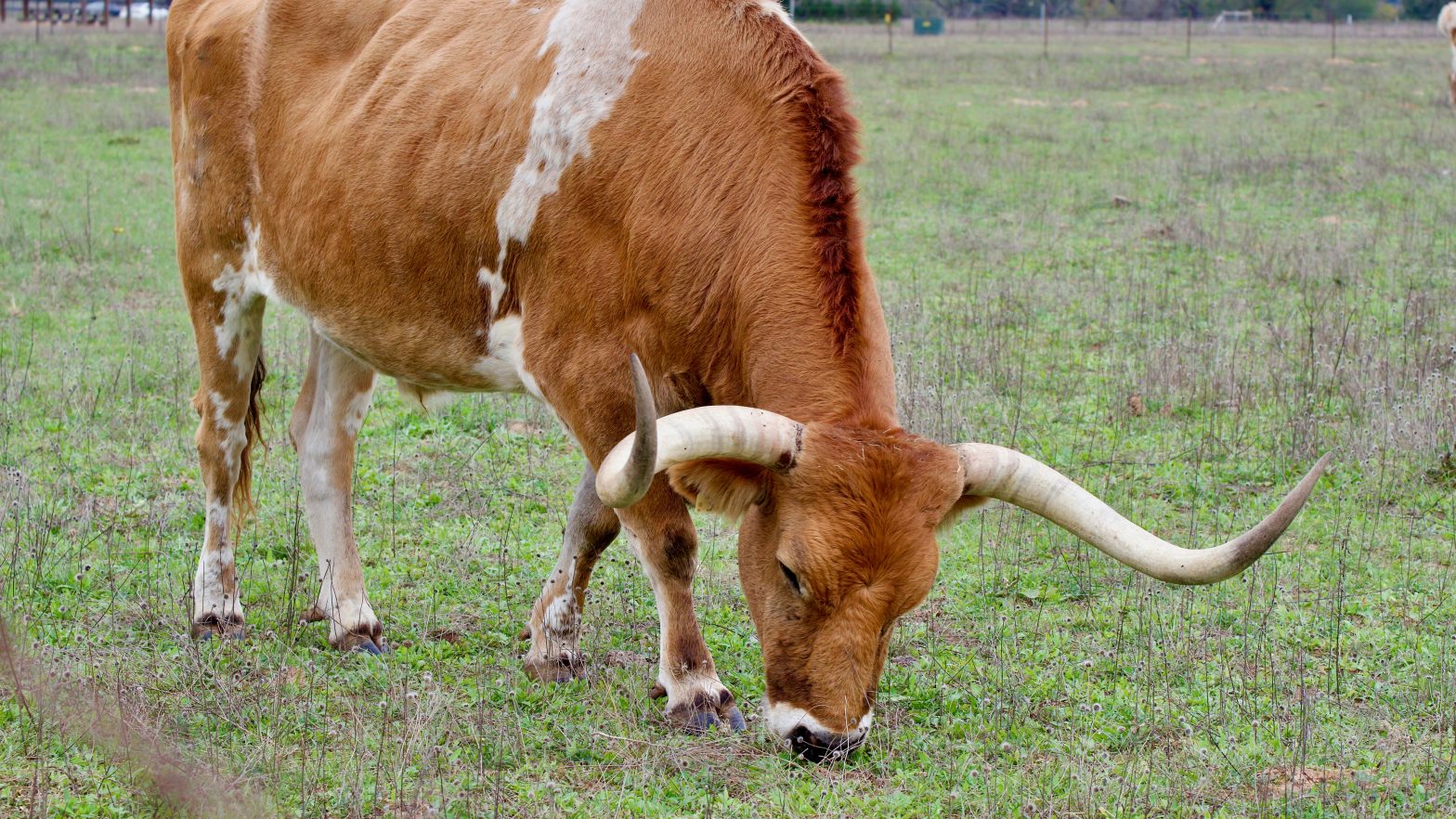
For many years now, Texas cattle producers have faced a compounding set of challenges that continue to test the sustainability of beef production across the state. At the centre of these ongoing struggles lies persistent drought, a climatic condition that has intensified in both duration and impact. Drought in Texas has become more than a temporary setback, it has evolved into a structural pressure that influences nearly every aspect of cattle operations. From forage shortages and reduced herd sizes to water scarcity, labour challenges, disease risks, market volatility, and logistical constraints, the drought’s effects are interconnected and far-reaching. Despite these hardships, producers are actively adapting through a range of mitigation strategies aimed at maintaining operational viability and long-term resilience.
Drought as a Long-Term Structural Challenge
Texas has always been susceptible to periods of low rainfall, but the frequency and severity of drought over the last several years have fundamentally changed the operating environment for cattle producers. Extended dry conditions reduce soil moisture, limit pasture regeneration, and disrupt long-established grazing cycles. In many regions, rainfall patterns have become less predictable, making it difficult for producers to plan forage production and stocking rates with confidence. This prolonged uncertainty has forced ranchers to shift from short-term coping strategies to longer-term structural adjustments that affect herd composition, land management, and financial planning.
READ: Why 99 Percent of Canadians Are Denied Entry into Farming
The cumulative nature of drought means that even when rain does arrive, it is often insufficient to restore pastures or replenish water sources fully. Recovery periods are longer, input costs remain elevated, and the margin for error narrows with each dry season.
Forage Shortages and the Rising Cost of Hay
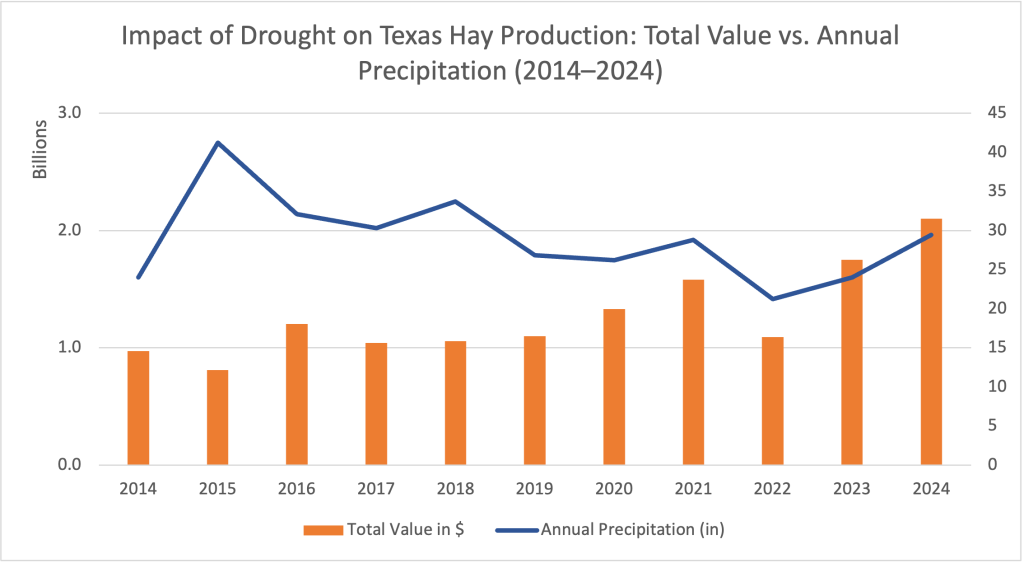
One of the most immediate and visible consequences of drought is the shortage of forage. Pastures that once provided reliable grazing now struggle to produce adequate biomass, leaving cattle producers increasingly dependent on stored feed. Hay shortages have become a defining issue, as reduced yields and limited regional availability push prices upward. Although the Lone Star State consistently produces the highest amounts of hay in the U.S., in many cases, locally sourced hay is no longer sufficient, forcing producers to import feed from other states at significantly higher transportation costs.
READ: Mounting Pressures on Louisiana Farmers
The financial strain caused by elevated hay prices extends beyond feed budgets. Transportation logistics, fuel costs, and storage requirements add layers of expense that erode profitability. For smaller and mid-sized operations, these costs can be especially difficult to absorb, increasing the risk of financial instability during prolonged drought periods.
Reduced Herd Sizes and Long-Term Production Impacts
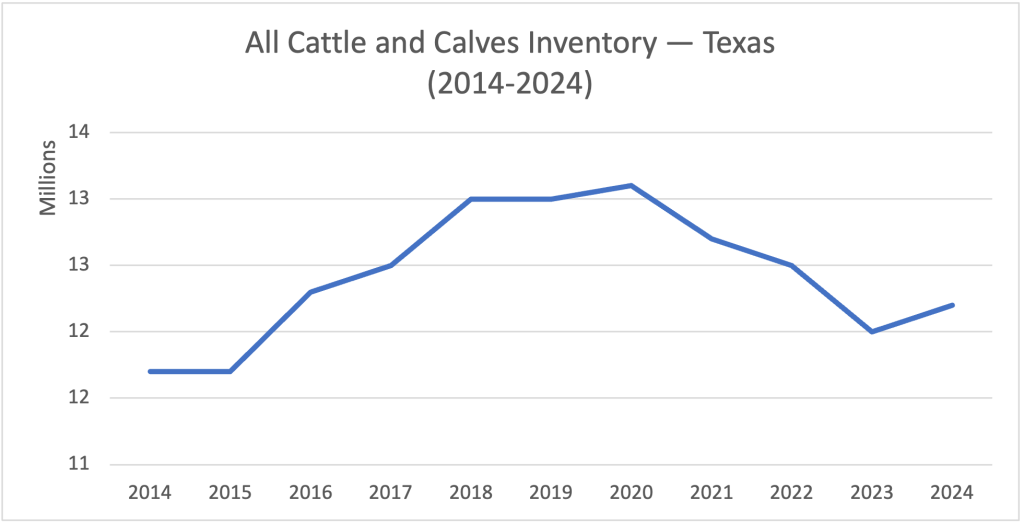
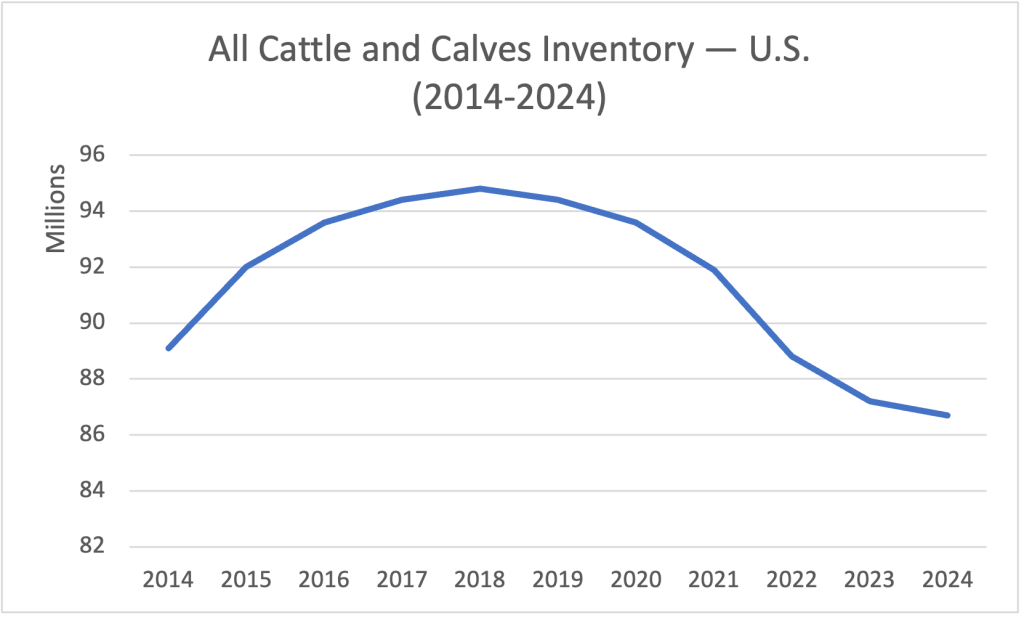
As forage availability declines, many Texas cattle producers have been forced to reduce herd sizes to align stocking rates with available feed resources. While downsizing can help preserve land health and reduce immediate costs, it carries long-term consequences. Selling off breeding stock, particularly cows and heifers, diminishes future production capacity and slows recovery once conditions improve.
Herd reduction decisions are often made under financial and environmental pressure, leaving little room for strategic planning. The loss of genetic investment, combined with reduced calf crops in subsequent years, creates a lag effect that can persist long after drought conditions ease. For multigenerational ranching families, these decisions also carry emotional weight, as herd size is closely tied to legacy and identity.
Water Scarcity and Infrastructure Strain
Water scarcity is another critical issue intensified by long-term drought. Surface water sources such as ponds, tanks, and creeks frequently dry up under prolonged heat and limited rainfall. Groundwater levels are also declining in many areas, requiring deeper wells and more energy-intensive pumping systems. These infrastructure demands place additional financial stress on producers already facing elevated feed costs.
READ: Banana Farming in the Heart of the Colorado Rockies
Some operations have resorted to hauling water to remote pastures, a practice that is both costly and labour-intensive. The increased reliance on mechanical systems for water delivery also raises vulnerability to equipment failures, particularly during peak summer months when demand is highest. Reliable water access has become one of the most significant determinants of operational survival in drought-prone regions.
Labour and Staffing Challenges in a Strained Industry
Labour shortages have become increasingly pronounced across rural Texas, and drought conditions have intensified these challenges for cattle producers. Ranch work requires long hours, physical endurance, and specialized knowledge, yet shrinking margins make it difficult to offer competitive wages or benefits. As a result, many producers struggle to recruit and retain skilled workers.
When staffing levels are reduced, operational efficiency suffers. Producers often assume additional responsibilities themselves, increasing fatigue and burnout. Limited labour availability can also delay critical tasks such as herd health checks, pasture monitoring, and infrastructure maintenance, further amplifying operational risk during already stressful conditions.
Disease Risks Heightened by Drought Conditions
Drought-related stress can weaken cattle immune systems, increasing susceptibility to disease. Limited water sources often cause cattle to congregate in smaller areas, elevating the risk of disease transmission. Poor forage quality can also lead to nutritional deficiencies, compounding health challenges and reducing overall herd resilience.
READ: The Digital Frontier: 5 Tech Advancements You Need to Know in Cattle Farming
Managing disease under these conditions requires heightened vigilance and proactive health programs. However, veterinary services, medications, and preventive care add to operating costs at a time when cash flow is already constrained. Balancing animal welfare with financial realities is an ongoing challenge for producers navigating prolonged drought.
Market Volatility and Financial Uncertainty
Market volatility further complicates the drought-driven challenges faced by Texas cattle producers. Beef prices are influenced by global supply and demand dynamics, trade policies, consumer trends, and feed costs. While herd liquidation during drought can temporarily tighten supply, higher cattle prices do not always translate into improved profitability due to rising input costs.
Producers attempting to time sales or rebuild herds must navigate fluctuating markets with limited margin for error. Smaller operations often lack access to sophisticated risk management tools, leaving them more exposed to sudden price shifts. Financial uncertainty makes long-term planning difficult and discourages investment in infrastructure or herd expansion.
Logistics and Supply Chain Constraints
Logistical challenges have become more pronounced in recent years, affecting the movement of cattle, feed and supplies. Rising fuel prices, trucking shortages, and transportation delays increase costs and create scheduling uncertainties. Producers who rely on out-of-region feed sources or must transport cattle over long distances are particularly vulnerable to these disruptions.
Supply chain constraints also impact access to veterinary supplies, equipment parts, and nutritional supplements. Delays in obtaining essential inputs can disrupt operations and increase stress during critical periods such as calving or peak heat seasons.
Adaptive Strategies and Practical Innovations in Drought Resilience
Despite ongoing challenges, Texas cattle producers are actively implementing adaptive strategies to lessen the impacts of prolonged drought. Improved pasture management techniques, including rotational grazing systems and soil health practices are being used to maximize forage efficiency while supporting long-term land productivity. At the same time, many producers are transitioning toward drought-tolerant forage species that are better suited to arid and variable conditions, helping to reduce dependence on increasingly expensive hay supplies.
READ: The Fertilizer Ban That Broke Sri Lanka
One notable example is WW-B. Dahl Old World Bluestem grass, named after Dr. Bill Dahl and introduced to Texas and Oklahoma in 1994 through a collaboration involving the United States Department of Agriculture, Texas Tech University, and the Texas Agricultural Experiment Station. This forage variety continues to perform well decades later. In a long-term study evaluating three Old World bluestem species over a nine-year period, WW-B. Dahl (Bothriochloa bladhii) consistently matched or outperformed the alternatives in terms of plant growth, soil properties, animal health, and forage quality. More recent research has also highlighted reduced fly populations during grazing on this forage, improving cattle performance while lowering the need for chemical pest control.
Water management innovations are also gaining traction as producers seek more reliable and cost-effective solutions. Investments in solar-powered water pumps, expanded storage systems, and rainwater catchment infrastructure are helping ranchers improve water access while reducing long-term operating costs. One example comes from Jeff Grove, a rancher and producer from Minnesota, who installed a solar-powered water pump system in 2023 at a cost of approximately $2,000, providing sufficient water for a herd of roughly 100 cattle.
Broader research conducted by the Meadows Center for Water and the Environment at Texas State University further reinforces the practicality of rainwater harvesting across Texas, even during extreme drought events. In a 2025 study, researchers developed a method for estimating the dependable, long-term water output of rainwater capture systems, showing that well-designed storage infrastructure can remain a reliable water source during drought-of-record conditions throughout the state. Findings such as these provide valuable support for the wider adoption of rainwater catchment and expanded storage solutions by agricultural producers and water planners seeking greater drought resilience.
READ: The World’s Most Agriculturally Self-Sufficient Nations
Together, these types of pasture and water system upgrades are enhancing drought resilience across operations and reducing reliance on emergency measures such as water hauling, which can be costly, labour-intensive and unsustainable over extended dry periods.
Technology, Herd Health, and Market Adaptation
Technological adoption is helping address labour and efficiency challenges. Remote water monitoring, automated feeding systems, and aerial surveillance tools allow producers to manage larger areas with fewer personnel. These technologies also improve data-driven decision-making and early issue detection.
Herd health strategies are evolving to emphasize prevention and resilience. Targeted vaccination programs, improved nutrition plans, and closer collaboration with veterinarians help reduce disease risk under drought stress. At the same time, some producers are diversifying income through direct-to-consumer beef sales and niche markets, which offer pricing stability and closer connections to customers.
Looking Ahead: Resilience in Texas Cattle Production
The prolonged drought affecting Texas cattle producers has reshaped the industry, exposing vulnerabilities while also driving adaptation and innovation. Forage shortages, water scarcity, herd reductions, labour challenges, disease pressures, market volatility, and logistics issues continue to test producers across the state. Yet, the response has demonstrated resilience rooted in stewardship, adaptability, and problem-solving.
As climate variability persists, continued investment in sustainable practices, supportive policies, and collaborative industry efforts will be critical. Texas cattle producers are not merely enduring drought. They are redefining how cattle production can remain viable under increasingly challenging conditions, ensuring that the industry continues to play a vital role in the state’s agricultural economy for generations to come.
Are you a Texas cattle producer? What are some of the specific challenges you’re currently going through?
Sources
- 2019 Forage & Livestock Field Walk. (2019). Retrieved April 26, 2026, from https://www.depts.ttu.edu/tawc/events/field-walk/newdeal2019fieldwalk.pdf
- Jones, A. (2025, November 20). New study shows rainwater harvesting can provide reliable water supply anywhere in Texas, even in drought. Retrieved April 26, 2026, from https://news.txst.edu/research-and-innovation/2025/meadows-center-study-examines-rainwater-harvesting.html
- Minnesota NRCS. (2025, April 15). Using solar powered water pumps on rotationally grazed pasture in Minnesota [Video]. YouTube. Retrieved April 26, 2026, from https://www.youtube.com/watch?v=5VemNdsr7K8
- National Agricultural Statistics Service (NASS), Agricultural Statistics Board, United States Department of Agriculture (USDA), Johansson, R., & Hamer, H. (2015). Cattle [Statistical Report]. Cattle, 1–39. Retrieved April 26, 2026, from https://esmis.nal.usda.gov/sites/default/release-files/h702q636h/d791sj32h/x059c978b/Catt-01-30-2015.pdf
- National Agricultural Statistics Service (NASS), Agricultural Statistics Board, United States Department of Agriculture (USDA), Johansson, R., & Harris, J. M. (2016). Cattle. Retrieved April 26, 2026, from https://esmis.nal.usda.gov/sites/default/release-files/h702q636h/1n79h639b/1z40kw116/Catt-01-29-2016.pdf
- NCEI.Monitoring.Info@noaa.gov. (2026). Climate at a Glance | Statewide Time Series | National Centers for Environmental Information (NCEI). Retrieved April 26, 2026, from https://www.ncei.noaa.gov/access/monitoring/climate-at-a-glance/statewide/time-series/41/pcp/12/0/2014-2024
- Publication : USDA ARS. (2026). Retrieved April 26, 2026, from https://www.ars.usda.gov/research/publications/publication/?seqNo115=254826
- Texas State Historical Association (TSHA). (2026). Principal crops in Texas. Texas Almanac. Retrieved April 26, 2026, from https://www.texasalmanac.com/articles/principal-crops-in-texas
- USDA, National Agricultural Statistics Service. (2021). Cattle. Retrieved April 26, 2026, from https://downloads.usda.library.cornell.edu/usda-esmis/files/h702q636h/n009ww19g/9880wj45t/catl0121.pdf
- USDA, National Agricultural Statistics Service, Johansson, R., & Parsons, J. L. (2017). Cattle. Retrieved April 26, 2026, from https://esmis.nal.usda.gov/sites/default/release-files/h702q636h/zw12z762d/p2676x67d/Catt-01-31-2017.pdf
- USDA, National Agricultural Statistics Service, Johansson, R., & Parsons, J. L. (2018). Cattle. Retrieved April 26, 2026, from https://esmis.nal.usda.gov/sites/default/release-files/h702q636h/c534fr214/z316q364w/Catt-01-31-2018.pdf
- USDA, National Agricultural Statistics Service, Johansson, R., & Parsons, J. L. (2019). Cattle [Statistical Report]. Cattle, 1–13. Retrieved April 26, 2026, from https://esmis.nal.usda.gov/sites/default/release-files/h702q636h/765377121/bc386r54d/catl0219.pdf
- USDA, National Agricultural Statistics Service, Johansson, R., & Parsons, J. L. (2020). Cattle. In Cattle (pp. 1–5). Retrieved April 26, 2026, from https://www.nass.usda.gov/Publications/Todays_Reports/reports/catl0120.pdf
- USDA, National Agricultural Statistics Service, & Southern Plains Regional Field Office. (2023). Texas Annual Cattle Review (July 2023). In USDA-NASS January Cattle Report. Retrieved April 26, 2026, from https://www.nass.usda.gov/Statistics_by_State//Texas/Publications/Current_News_Release/2023_Rls/tx-cattle-review-2023.pdf
- USDA, National Agricultural Statistics Service, & Southern Plains Regional Field Office. (2024). USDA annual Cattle review [Report]. Retrieved April 26, 2026, from https://www.nass.usda.gov/Statistics_by_State/Texas/Publications/Current_News_Release/2024_Rls/tx-cattle-review-2024.pdf
- USDA & Southern Plains Regional Field Office. (2025). USDA annual Cattle review. In Texas Annual Cattle Review [Report]. Retrieved April 26, 2026, from https://data.nass.usda.gov/Statistics_by_State/Texas/Publications/Current_News_Release/2025_Rls/tx-cattle-review-2025.pdf
- USDA/NASS 2014 State agriculture Overview for Texas. (2015). Retrieved April 26, 2026, from https://www.nass.usda.gov/Quick_Stats/Ag_Overview/stateOverview.php?state=texas&year=2014
- USDA/NASS 2015 State Agriculture Overview for Texas. (2016). Retrieved April 26, 2026, from https://www.nass.usda.gov/Quick_Stats/Ag_Overview/stateOverview.php?state=texas&year=2015
- USDA/NASS 2016 State Agriculture Overview for Texas. (2017). Retrieved April 26, 2026, from https://www.nass.usda.gov/Quick_Stats/Ag_Overview/stateOverview.php?state=texas&year=2016
- USDA/NASS 2017 State agriculture Overview for Texas. (2018). Retrieved April 26, 2026, from https://www.nass.usda.gov/Quick_Stats/Ag_Overview/stateOverview.php?state=texas&year=2017
- USDA/NASS 2018 State agriculture Overview for Texas. (2019). Retrieved April 26, 2026, from https://www.nass.usda.gov/Quick_Stats/Ag_Overview/stateOverview.php?state=texas&year=2018
- USDA/NASS 2019 State agriculture Overview for Texas. (2020). Retrieved April 26, 2026, from https://www.nass.usda.gov/Quick_Stats/Ag_Overview/stateOverview.php?state=texas&year=2019
- USDA/NASS 2020 State agriculture Overview for Texas. (2021). Retrieved April 26, 2026, from https://www.nass.usda.gov/Quick_Stats/Ag_Overview/stateOverview.php?state=texas&year=2020
- USDA/NASS 2021 State Agriculture Overview for Texas. (2022). Retrieved April 26, 2026, from https://www.nass.usda.gov/Quick_Stats/Ag_Overview/stateOverview.php?state=texas&year=2021
- USDA/NASS 2022 State Agriculture Overview for Texas. (2023). Retrieved April 26, 2026, from https://www.nass.usda.gov/Quick_Stats/Ag_Overview/stateOverview.php?state=texas&year=2022
- USDA/NASS 2023 State Agriculture Overview for Texas. (2024). Retrieved April 26, 2026, from https://www.nass.usda.gov/Quick_Stats/Ag_Overview/stateOverview.php?state=texas&year=2023