Efficient water management is a foundational requirement for modern agriculture, influencing crop performance, environmental protection, labour efficiency, and long-term farm viability. As agricultural operations have become more specialized and data-driven, informal or improvised water distribution methods have largely been replaced by standardized engineering systems. These systems rely on proven design principles, best management practices (BMPs), and consistent infrastructure layouts to ensure that water is delivered accurately, efficiently, and reliably across a wide range of farm types and scales.
READ: Indoor Vertical Farming and Controlled Environment Agriculture in Canada
Agricultural water systems are designed not only to move water from source to crop, but to do so with minimal losses, uniform application and protection of both soil and water quality. While system complexity varies, most farms now rely on a common set of engineering approaches and components that allow irrigation infrastructure to be expanded, automated and maintained over time.
Engineering Categories of Agricultural Water Systems
Most farm irrigation systems fall into a limited number of engineering categories defined by how water is conveyed and applied. These categories form the structural backbone of agricultural water design and are selected based on crop type, field layout, climate, and available water resources.
Pressurized irrigation systems are among the most widely used irrigation methods in modern agriculture, particularly in regions emphasizing water-use efficiency and precision water management. These include drip irrigation and sprinkler-based systems that rely on pumps to move water through sealed pipe networks under controlled pressure. Pressurized systems are valued for their high water-use efficiency, uniform application, and compatibility with automation and fertigation.
Surface irrigation systems distribute water by gravity using furrows, basins, or border layouts. While mechanically simpler, surface systems require careful land grading, flow control, and soil management to prevent runoff, erosion, and uneven distribution. Their effectiveness is highly dependent on field slope and soil infiltration characteristics.
READ: Copra, Vanuatu’s Lifeline in Pacific Paradise
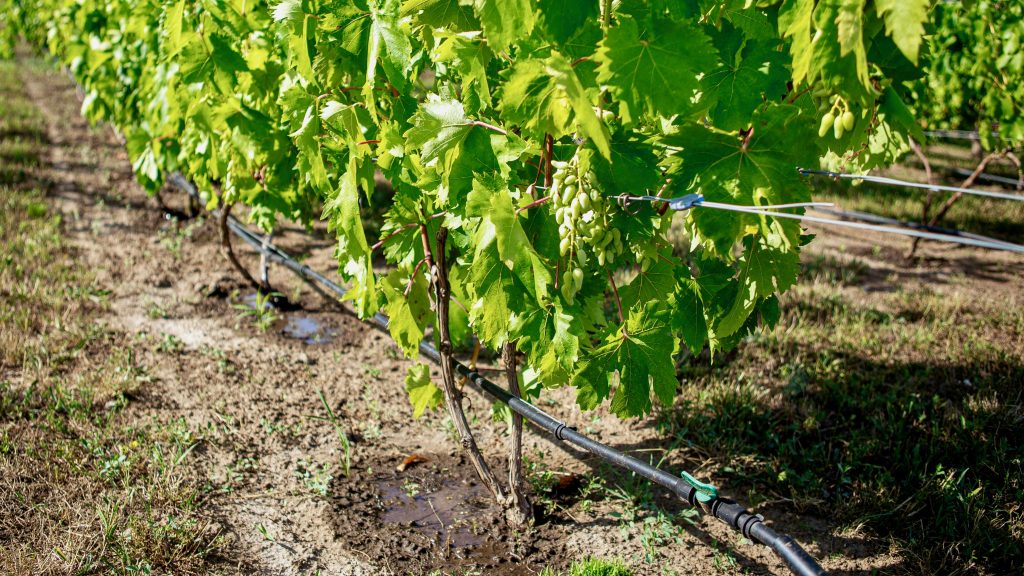
Subsurface irrigation systems deliver water below the soil surface through buried pipelines or drip lines. By reducing evaporation and surface interference, subsurface systems improve water efficiency and allow uninterrupted field operations. These systems are commonly used in permanent cropping systems and are increasingly being adopted for certain field crops in regions facing water availability constraints.
Despite differences in delivery methods, all categories share a reliance on standardized engineering components and layout principles.
Core Components of Agricultural Water Distribution Networks
Well-designed agricultural water systems are organized around a consistent set of components that work together as an integrated network. Each element plays a specific role in ensuring efficient delivery, pressure stability, and long-term reliability.
Water Source and Storage Infrastructure
Every system begins with a reliable water source, which may include groundwater wells, surface water diversions, municipal connections, or on-farm reservoirs. Storage infrastructure, such as tanks or ponds, is often incorporated to balance supply fluctuations, stabilize pressure, and allow irrigation during optimal application windows.
Engineering design at the source level focuses on intake protection, sufficient flow capacity, and safeguards against contamination or sediment intrusion.
Filtration and Control Units
Filtration is a critical requirement in modern irrigation systems, particularly for pressurized and drip-based designs. Filters remove sediment, organic matter, and debris that can clog emitters or damage valves. Control units typically include pressure regulators, flow meters, and automated valves that manage water movement throughout the system. Integrated backflow prevention assemblies — such as reduced pressure zone (RPZ) valves or double-check valves — are also vital at this stage, particularly when systems utilize fertigation. These mechanical barriers help prevent fertilizers, chemicals, or stagnant field water cannot reverse flow and contaminate the primary groundwater well or municipal source during pressure drops.
Together, filtration and control infrastructure protect downstream components and enable precise water application.
Mainlines, Sub-mains, and Distribution Piping
Mainlines transport water from the source to different areas of the farm, while sub-mains branch into specific zones or fields. Pipe sizing, material selection, and layout geometry are carefully engineered to minimize friction losses and ensure consistent pressure across long distances.
Buried pipelines are commonly used to protect infrastructure, reduce exposure to weather and equipment damage, and maintain unobstructed field access.
Lateral Lines, Emitters, and Application Devices
Lateral lines deliver water directly to crops and are fitted with emitters, sprinklers, or drip outlets engineered for specific flow rates and spacing. Uniformity at this stage is essential, as inconsistent application can lead to uneven growth, reduced yields, and wasted resources.
READ: Is Chicken Farming in Kentucky the New Agricultural Gold Rush?
Emitter selection and spacing are matched to soil infiltration rates, crop root depth, and system pressure characteristics.
Control Mechanisms and System Automation
Control mechanisms regulate when, where, and how much water is applied. Timers, solenoid valves, pressure sensors, and centralized controllers reduce labour demands and improve consistency. Advanced automated systems can allow irrigation to respond to environmental conditions rather than relying solely on fixed schedules, improving both efficiency and crop health.
Common Organizational Layouts in Farm Irrigation Systems
Standardized layouts are used to organize water lines in ways that simplify maintenance and improve performance.
Drip irrigation systems are typically arranged in straight rows aligned with planting patterns, providing efficient installation and consistent coverage for row crops, orchards, and vineyards.
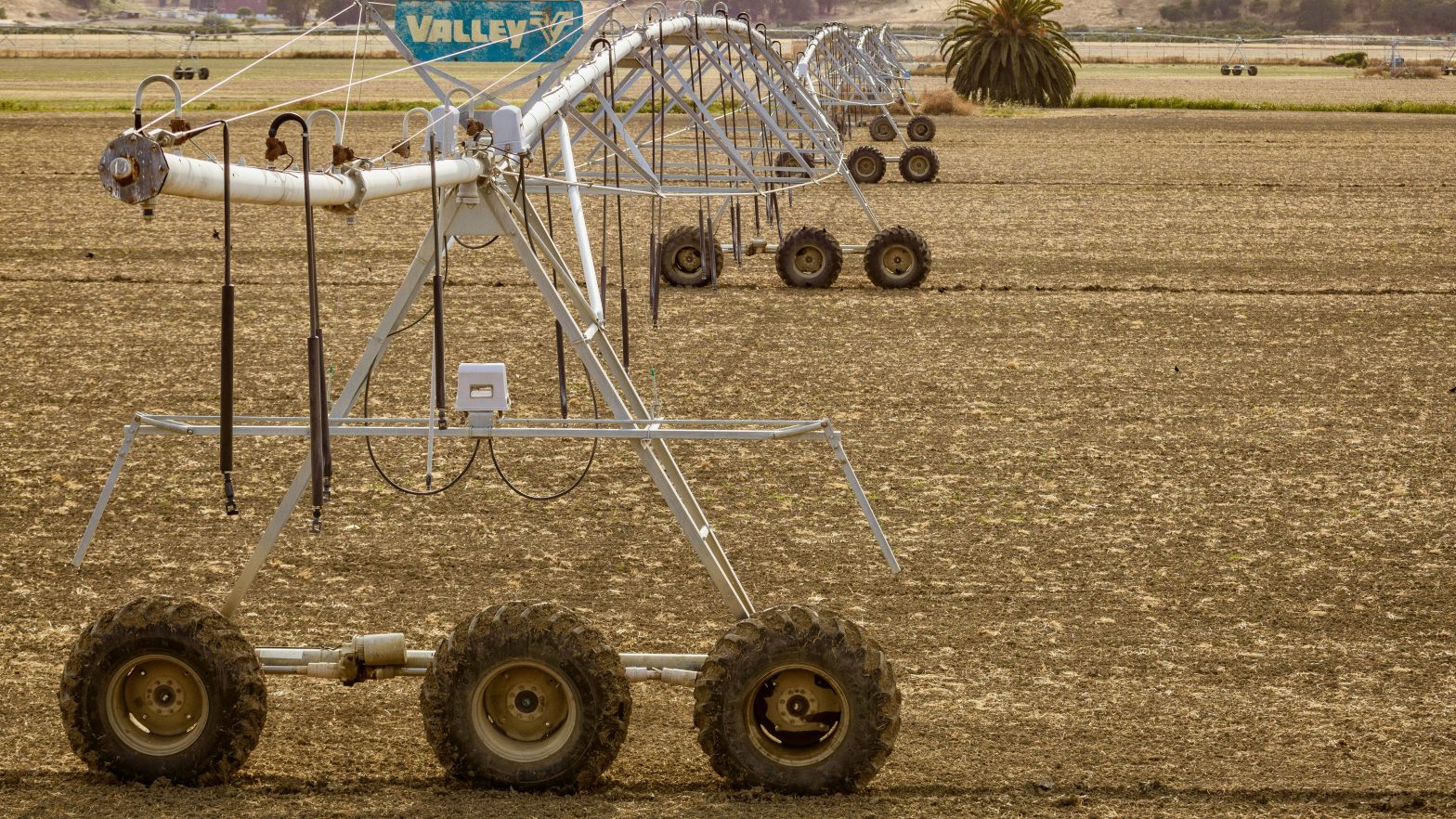
Centre pivot and lateral move systems are used in large, open fields where sprinkler systems rotate or traverse across crops, delivering uniform application with minimal labour input.
Zoned irrigation layouts divide farms into manageable sections based on elevation, soil type, or crop demand. Zoning allows operators to fine-tune irrigation schedules and volumes while maintaining system balance.
Buried pipeline networks form the backbone of many modern farms, enabling permanent, organized water delivery without surface obstructions.
Emerging Engineering Methods in the Last Decade
In the past five to ten years, agricultural water engineering has increasingly incorporated digital and data-driven technologies to enhance precision and adaptability. These advancements build upon traditional infrastructure rather than replacing it.
Sensor-based monitoring systems are increasingly integrated into irrigation networks, particularly on larger commercial operations. Soil moisture probes, in-line flow sensors, and localized weather stations feed real-time data into centralized control platforms. This enables water application to align closely with actual crop demand, reducing over-irrigation and improving consistency across variable field conditions.
READ: The Digital Frontier: 5 Tech Advancements You Need to Know in Cattle Farming
Variable-rate irrigation (VRI) has also expanded, particularly in centre pivot and lateral move systems. Using GPS mapping and field-level data, irrigation equipment can adjust application rates across different zones within the same field. This engineering approach accounts for soil variability, slope differences, and crop development stages.
Automation and remote system control have matured significantly. Modern irrigation systems can be monitored and adjusted remotely, allowing operators to detect pressure losses, leaks, or filter blockages early. These capabilities reduce downtime and support more proactive maintenance strategies.
In drip and subsurface systems, improvements in emitter materials, pressure compensation and clog resistance have extended system lifespan. For instance, earlier emitters made from basic plastics were more susceptible to deformation, ultraviolet degradation and buildup from minerals and organic matter. Modern designs now rely on enhanced polymer blends and engineered thermoplastics that better withstand temperature fluctuations, fertilizer exposure and long-term sunlight.
Internal flow pathways are formed from smoother, low-adhesion materials that reduce scaling and biofilm buildup, improving performance in variable water quality. Additionally, the use of root-resistant and intrusion-blocking polymers has extended operational longevity and reduced maintenance needs. These advances have shifted emitters from short-term consumables to long-life components capable of maintaining consistent water delivery over many growing seasons.
Fertigation systems have become more precise as well, allowing nutrients to be delivered in small, targeted doses that match crop uptake and reduce losses.
Influence of Farm Size on Irrigation System Design
While engineering principles remain consistent, farm size strongly influences which irrigation systems and layouts are most practical.
On farms of approximately 5 to 15 acres, irrigation systems are typically designed for simplicity and efficiency. Low-pressure drip irrigation and small fixed or movable sprinkler systems are common at this scale, particularly for market gardens, specialty crops and diversified operations where manual oversight is feasible and beneficial.
READ: Fertilizer and the Fragile Future of Feeding the World
Farms in the 15 to 100 acre range often transition to more permanent and semi-automated systems. Expanded drip networks, fixed sprinkler installations, and buried mainlines are frequently used to reduce labour while maintaining control. Zoned layouts are common, allowing different fields or crops to be irrigated independently.
Operations between 100 and 1,000 acres generally adopt fully engineered pressurized systems designed for scale. Centre pivot irrigation, lateral move systems and extensive buried pipeline networks dominate at this level. Automation becomes essential and system designs frequently account for elevation changes, long conveyance distances and multiple crop types.
Large commercial farms exceeding 1,000 acres typically implement highly integrated water management systems. These operations combine variable-rate irrigation, advanced sensor networks, automated fertigation and centralized control platforms capable of managing irrigation across multiple fields. Engineering priorities at this scale include redundancy, energy efficiency and seamless integration with broader precision agriculture systems.
While thresholds vary by region and crop type, the following examples illustrate how irrigation design often evolves with increasing farm size.
Protecting Water Quality and Long-Term System Performance
Standardized agricultural water systems play a critical role in protecting water quality and soil health. Proper filtration, controlled application rates, and engineered layouts reduce runoff, erosion and nutrient leaching. Routine system maintenance, regular monitoring and adherence to BMPs ensure long-term performance and regulatory compliance.
Well-designed systems lower operating costs over time, improve crop uniformity and provide the flexibility needed to adapt to changing environmental and market conditions.
Standardized engineering approaches form the foundation of efficient agricultural water management. By integrating reliable water sources, filtration and control infrastructure, properly sized pipelines, efficient application devices and modern automation, farms of all sizes can achieve consistent water delivery and improved resource stewardship. As recent engineering innovations continue to enhance precision and scalability, well-designed irrigation systems will remain essential to the productivity and sustainability of agriculture in the years ahead.